
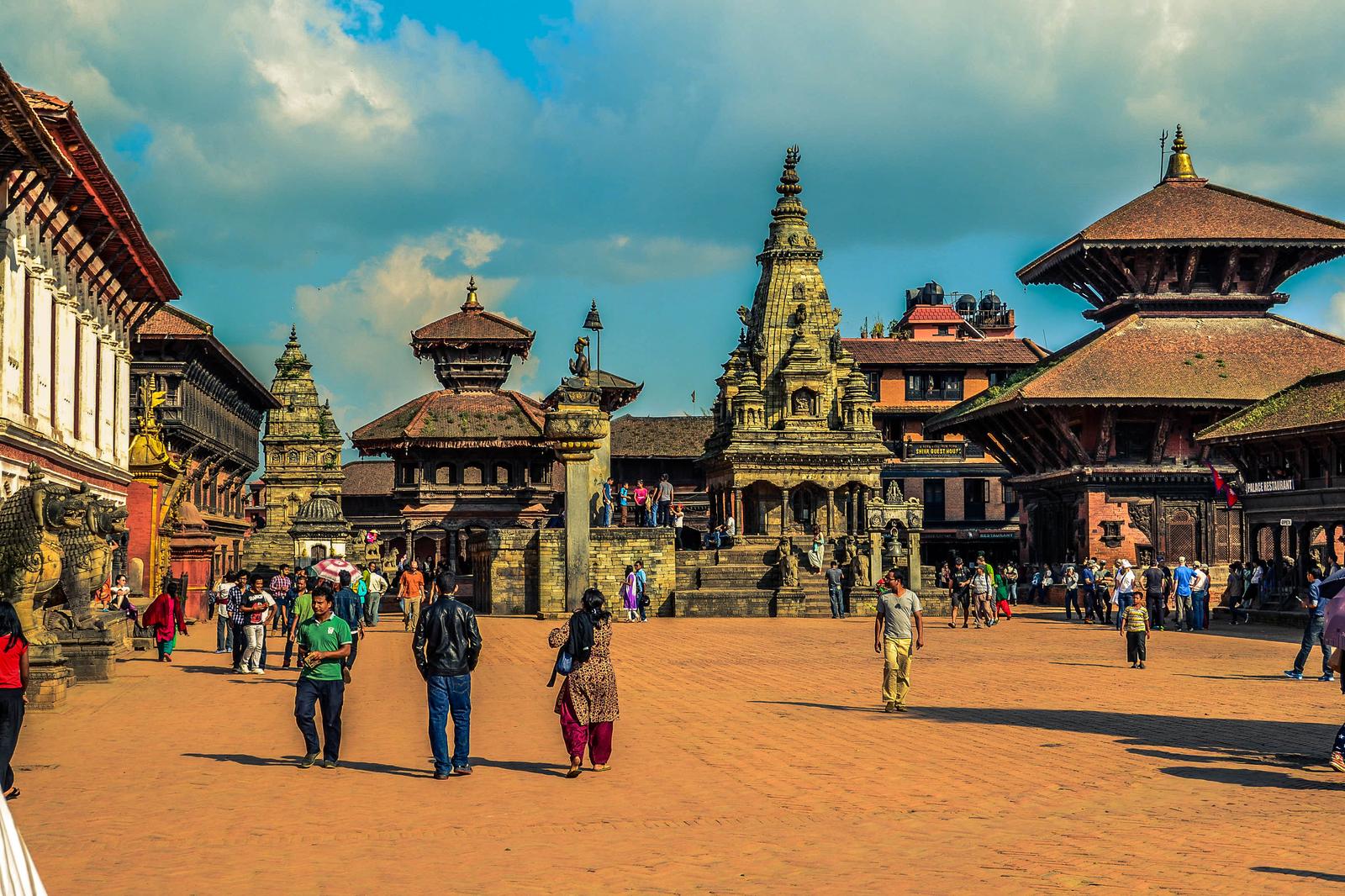
Short answer: Bhaktapur Durbar Square is the old royal square of Bhaktapur, a walled Newari city 14 km east of Thamel. One ticket covers the whole heritage zone, not just the square. Bhaktapur Municipality's heritage tourism site lists the fee for non-SAARC visitors as US$15 or NPR 2,000 from 17 July 2025 (checked 13 November 2026), but confirm the price at the gate. Allow half a day to walk the four main squares: Durbar Square, Taumadhi, Dattatreya and Pottery Square. Entry tickets are not included on Himalayan Social Journey's Bhaktapur tours.
What is Bhaktapur Durbar Square?
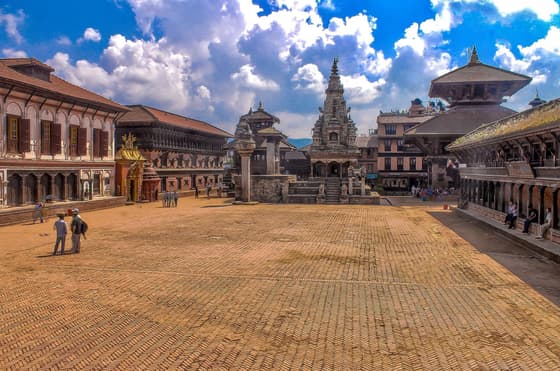
It was the royal courtyard of the Malla kings of Bhaktapur. Today it is part of the Kathmandu Valley UNESCO World Heritage Site, together with the valley's other monument zones. Of the three durbar-square cities, Bhaktapur has kept its medieval street plan most intact. Vehicles are kept out of the core, so you can walk it without traffic. The earthquakes of 1934 and 2015 brought down buildings, but they didn't change the shape of the city, and you may still see repair work on some monuments.
It is also a lived-in town. People worship at the temples every morning, potters work in the open, and grain dries on the brick paving. That's what makes a visit memorable, and it's also why the etiquette further down matters.
How much is the entry ticket?
The fee is collected by Bhaktapur Municipality, and one ticket covers the walled heritage zone. Taumadhi, Dattatreya and Pottery Square are all inside it. These are the figures on the municipality's heritage tourism site, infobhaktapur.com, checked 13 November 2026:
Visitor | Entry fee |
|---|---|
Non-SAARC nationals | US$15 or NPR 2,000 (adjusted from 17 July 2025) |
SAARC nationals | NPR 500 |
Chinese nationals | NPR 500 (passport compulsory) |
Nepali citizens | Free |
The Nepal Tourism Board's fee list still shows an older figure for Bhaktapur, and some websites quote older prices too. Treat the municipality's figure as the current one, and check the price at the gate on the day.
Staying more than a day? Ask when you buy your ticket and show your passport. The ticket can be extended to cover up to seven days. For longer stays, the municipality issues a visitor pass at the Tourist Information Centre on Durbar Square. You'll need an application form, two passport photos, copies of your passport and visa, and your original ticket.
Keep your ticket on you while you are inside the zone. Staff can ask to see it.
On an HSJ tour: the entry fee is not included in the tour price, so bring cash for the ticket.
The four-square walking route
Most of what people come for is within a ten-minute walk of Durbar Square. A comfortable order is the one below. It's all on foot, mostly on brick paving and stone, with some uneven lanes and steps.
1. Durbar Square
Start with the 55-Window Palace, a 15th-century royal palace named after the carved wooden windows on its upper floor. You enter its courtyard through the Golden Gate (Sun Dhoka), a gilded doorway often called the finest metalwork in the valley. The square is open and flat, and it's the easiest part of the walk.
2. Taumadhi Square
A short walk through the lanes brings you to Nyatapola Temple, a five-storey pagoda from 1702 dedicated to the goddess Siddhi Lakshmi and Nepal's tallest surviving pagoda. Its base is a steep stone stairway, flanked by pairs of guardian figures. The steps are high and uneven, so take them slowly and use your hands if you need to. The Bhairabnath Temple stands on the same square.
3. Pottery Square (Talako Tol)
A few minutes downhill from Taumadhi, potters shape clay on wheels and leave pots to dry in rows across the paving. This is a working space, not a set. Walk around the drying pots, never across them, and give people room to work. We wrote more about slowing down here in A Pause in Bhaktapur's Pottery Square.
4. Dattatreya Square (Tachapal)
This is the longest stretch of the walk, east through the old town to Dattatreya Temple, one of the main monuments of the Tachapal area. Nearby is the carved Peacock Window, one of Bhaktapur's best-known woodcarvings. The square is usually quieter than Durbar Square or Taumadhi, which makes it a good place to finish.
Museum extras
The National Art Museum is inside the palace complex on Durbar Square. The Nepal Tourism Board's fee list (undated, checked 13 November 2026) shows a separate ticket of NPR 150 for foreign nationals, extra for cameras, closing on Tuesdays, and says the same ticket covers the woodcarving museum and the brass and bronze museum in Dattatreya Square. The museums set their own days and hours, so confirm on the day. Allow an extra hour if you want to go in.
How long should you stay?
Short answer: half a day covers the four squares without hurrying. A full day gives you time for the museums, a clay cup of Juju Dhau (Bhaktapur's thick buffalo-milk yoghurt), and time to sit and watch the potters instead of walking past them.
Time you have | What fits |
|---|---|
2 hours | Durbar Square and Taumadhi only |
Half a day | All four squares at an easy pace, with a short break |
Full day | Four squares, museums, lunch and unhurried time at Pottery Square |
On HSJ's Bhaktapur Durbar Square Tour, pickup is at 9:00 am. You explore Durbar Square from about 10:00 am to 12:00 pm, then Nyatapola Temple and Pottery Square until about 1:30 pm, and drive back to your hotel in the early afternoon. Private transport, an English-speaking guide and a bottle of water are included. Groups run from 2 to 15 people. Entrance fees, meals and personal expenses are not included. If you want Dattatreya Square too, tell your guide at the start.
Getting there from Kathmandu
Taxi: the simplest way to get there on your own. Agree the fare before you get in.
Public bus: buses run from Ratna Park and Bag Bazar to the Bhaktapur bus park. From there it's a short walk uphill to the square. It's the cheapest option, but slow and crowded at peak times.
Guided tour: HSJ's tour includes private transport from your hotel.
Traffic on the Araniko Highway affects the journey time more than the distance does. Leaving Kathmandu before 9:00 am or after 11:00 am usually helps.
Frequently asked questions
Can I go inside the temples?
Some temple interiors and inner courtyards are open only to Hindus. Look for signs at the entrance, and if you're not sure, ask your guide and admire the temple from the outside.
Do I need to take my shoes off?
Yes, wherever you are asked to, and always before you step into a shrine. Leather items can be unwelcome in some temples, so follow the signs.
Is it all right to photograph people?
Ask first, especially people at prayer and people at work. If someone says no or turns away, respect that. Don't use a flash inside shrines.
What shouldn't I touch?
Leave offerings, flowers and tika powder alone, and don't climb on carvings or statues. Walk around shrines clockwise where people are circling them.
Is the entry fee included in HSJ's Bhaktapur tour?
No. Pay it at the gate in cash. Check the current price there; the municipality lists US$15 or NPR 2,000 for non-SAARC visitors.
Does one ticket cover Pottery Square and Dattatreya Square?
Yes. All four squares are inside the same ticketed zone.
How far is Bhaktapur from Kathmandu?
About 14 km east of Thamel along the Araniko Highway. Traffic decides how long it takes.
Can I see Bhaktapur with other UNESCO sites in one day?
Yes. Bhaktapur is one of the stops on our Kathmandu 7 UNESCO Heritage Sites Day Tour, though you'll have less time in each square.
Ready to plan it? See the Bhaktapur Durbar Square Tour for dates and a price for your group.
Reviewed by Amrit Sapkota, Himalayan Social Journey