
Langtang Valley Trek — 11 Days
Trip Highlights
- Trek through Langtang National Park — home to red pandas, Himalayan langurs, and over 250 bird species
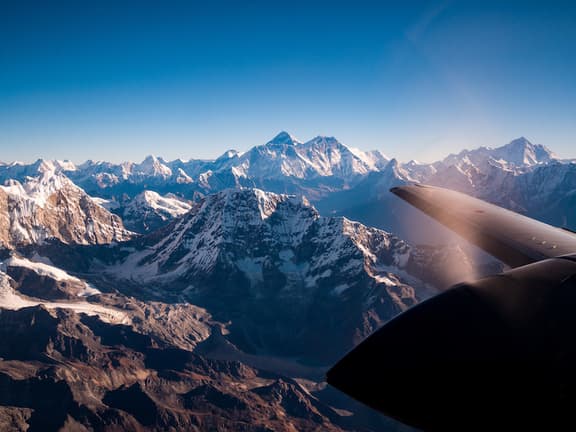
- Summit Tserko Ri (4,985m) for a 360° panorama of 20+ Himalayan peaks including Shishapangma across the Tibetan border
- Explore Kyanjin Gompa — an ancient Buddhist monastery surrounded by glaciers at 3,870m
- Visit the traditional Yak Cheese Factory, one of the oldest in Nepal
- Experience the warm hospitality of the Tamang people and their Tibetan-influenced culture
- Walk through rebuilt Langtang Village — a symbol of resilience after the 2015 earthquake
- HSJ has been the official Goodwill Ambassador of Langtang Region since 2016
- Small groups of max 12 trekkers, with 1 porter per 2 trekkers included
Trip Overview
Day-by-Day Itinerary
Our airport representative will receive you at Tribhuvan International Airport, Kathmandu, holding an HSJ signboard at the terminal exit. You will be transferred to your hotel in a private tourist vehicle.
In the evening, your trek leader will conduct a pre-departure briefing at our office. Please bring your passport, two passport-size photos, and a copy of your travel insurance policy. This is the moment to ask any questions about the route, gear, altitude sickness, or permits. We will introduce your guide and confirm the next day's schedule.
After the briefing, join us for a Welcome Dinner at a local Nepali restaurant — the perfect start to your Langtang adventure.
After breakfast, your HSJ guide escorts you on a private vehicle tour of Kathmandu's most iconic UNESCO-listed sites.
- Pashupatinath Temple — Nepal's holiest Hindu shrine, set on the banks of the sacred Bagmati River
- Boudhanath Stupa — one of the largest Buddhist stupas in the world, ringed by monasteries and prayer flags
- Swoyambhunath Stupa (Monkey Temple) — ancient hilltop stupa with panoramic city views
- Patan Durbar Square — a living museum of Newari architecture and craftsmanship
In the afternoon, explore Thamel — Kathmandu's trekker hub — for any last-minute gear, currency exchange, or SIM card. A good night's sleep in a comfortable hotel bed is your best preparation for the days ahead.
After an early breakfast, we depart Kathmandu by private tourist vehicle for Syabrubesi, the gateway to the Langtang Valley and our trek's starting point. The 122 km drive takes 6 to 7 hours, following the Trishuli River valley northward through terraced farmlands and traditional Newari villages.
As you pass Trishuli Bazaar and climb toward Dhunche, the landscape transforms dramatically. Keep your eyes on the ridgeline — on a clear day you'll catch your first views of the Manaslu Massif (8,163m), Ganesh Himal (7,422m), and the distant Langtang range. The final stretch from Dhunche to Syabrubesi is steep and winding but rewards you with spectacular gorge views of the Bhote Koshi River far below.
Syabrubesi is a charming village of stone houses, prayer flags, and teahouses sitting at 1,503m at the confluence of the Bhote Koshi and Langtang rivers. Check in, enjoy a warm meal, and rest well — the real trekking begins tomorrow.
Note: Travel time may vary due to traffic and road conditions.
Today's trek begins with a river crossing over the Bhote Koshi before following the Langtang Khola upstream through Langtang National Park. The trail immediately enters dense sub-tropical forest — a rich habitat for red pandas, common langur monkeys, Himalayan black bears, musk deer, and a dazzling variety of bird species including the colourful Himalayan Monal (Nepal's national bird).
The route climbs steadily through bamboo groves and rhododendron forests, passing the small villages of Bamboo (1,960m) and Rimche (2,400m), where you can stop for tea and take in the first views of rocky gorges carved by the Langtang Khola. The trail alternates between forested slopes and open clearings with occasional suspension bridges spanning thundering glacial streams.
By late afternoon you arrive at Lama Hotel (2,480m), a small but well-equipped cluster of teahouses nestled in the forest beside the river. Despite its name, it's not a hotel but a cosy teahouse settlement — a perfect overnight stop before the valley fully opens up tomorrow.
Note: Trail conditions and timing vary with weather and individual pace.
This is one of the most rewarding days on the trek. Leaving Lama Hotel, the trail climbs steadily through increasingly open forest before emerging into a wide, glacially-carved valley. The transformation is dramatic — dense forest gives way to open yak pastures, alpine meadows, and a sky dominated by towering white peaks.
The trail passes through Ghodatabela (3,030m) — meaning 'horse stable' — a historic rest stop where the valley broadens into green meadows often dotted with grazing yaks. The panorama from here includes your first clear views of Langtang Lirung (7,227m) and Gangchenpo (6,388m), rising dramatically above both sides of the valley.
Continuing through the small Tamang villages of Thyangsyap and Chyamki, the trail also passes through the area devastated by the 2015 earthquake, which triggered a catastrophic avalanche that destroyed the original Langtang village. The rebuilt Langtang Village (3,430m) now stands as a symbol of resilience, with a community health post, schools, small markets, and gompa. Stay in one of the comfortable new guesthouses and take time to walk around the village and meet the warm Tamang community.
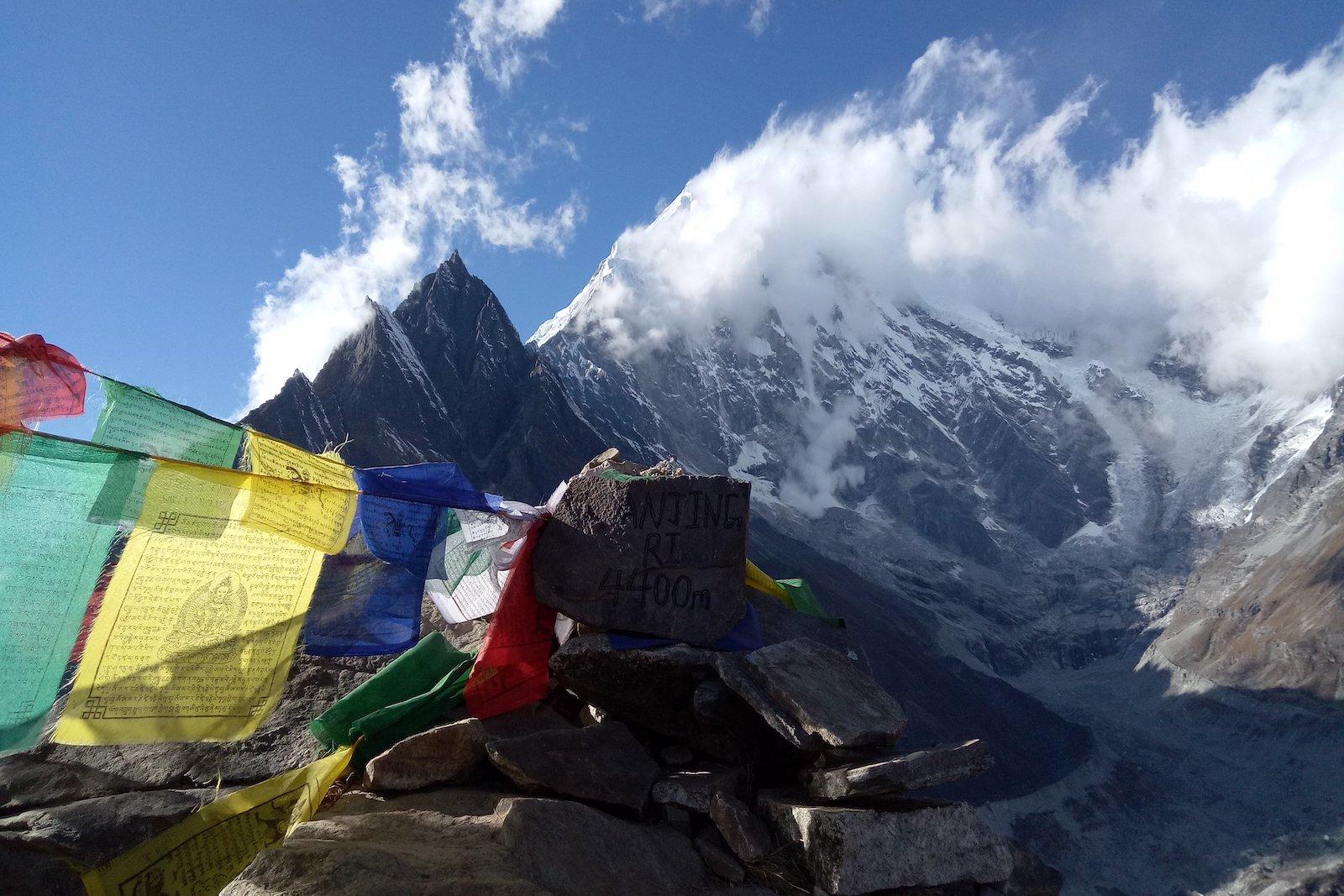
Today's walk is shorter but deeply atmospheric. The trail winds through a landscape of mani walls (stone walls carved with Buddhist prayers), chortens, and colourful prayer flags strung across the path — signs that you are entering an increasingly sacred zone of the Himalayas.
Passing through the small hamlets of Mundu and Sindum, the valley narrows and the peaks close in on both sides. The trail crosses glacial moraines and wooden footbridges before arriving at Kyanjin Gompa (3,870m) — the spiritual and geographic heart of the Langtang Valley.
Kyanjin is a remarkable high-altitude settlement built from local stone, home to an ancient Buddhist monastery, the famous Yak Cheese Factory (one of the oldest in Nepal — try the fresh chhurpi cheese), and stunning 360° views of Langtang Lirung (7,227m), Kimshung (6,781m), Yala Peak (5,500m) and dozens of glaciated summits.
Arriving by early afternoon gives you time to explore the monastery, visit the cheese factory, and acclimatise at altitude before tomorrow's high point. Drink plenty of water and avoid alcohol tonight.
Today is the highlight of the entire trek. You have two summit options depending on your fitness and acclimatisation:
Option A — Kyanjin Ri (4,773m / 15,659 ft): A 3 to 4 hour return hike from Kyanjin Gompa. The trail climbs steeply up the ridge above the village, rewarding you with extraordinary views of Langtang Lirung (7,227m), Dorje Lakpa (6,966m), Gangchenpo (6,388m), and the entire Langtang glacier. A fantastic choice if you want a challenging but manageable summit.
Option B — Tserko Ri (4,985m / 16,352 ft): The highest point on the Langtang Valley Trek and the more demanding option (8 to 9 hours return, 16km). The trail continues beyond Kyanjin Ri, gaining another 200+ metres of altitude across rocky high-alpine terrain. From the summit, on a clear day you can see over 20 Himalayan peaks including the entirety of the Langtang range, Shishapangma (8,027m) across the Tibetan border, and frozen high-altitude lakes far below. This is one of the most spectacular viewpoints in all of Nepal.
Start early (5:30–6:00 am) to maximise visibility before afternoon clouds build. Move slowly and steadily — altitude affects everyone differently at nearly 5,000m. Your guide will assess trail conditions on the morning and recommend the best option for your group.
After returning to Kyanjin Gompa, enjoy a hot lunch, visit the monastery, and rest. The descent begins tomorrow.
Leaving behind the high alpine world of Kyanjin Gompa, today's descent takes you 1,390 metres back down to the forested zone. The trail retraces your ascent route along the Langtang Khola, but the return journey feels completely different — the peaks now rise behind you, new angles reveal themselves, and the thickening forest air feels noticeably warmer with every hour of descent.
You'll pass through Langtang Village, Thyangsyap, Ghodatabela, and the meadows you crossed on the way up, this time with a broader sense of the full valley scale. Stop for lunch in Ghodatabela or Langtang Village and take one last look back at Langtang Lirung towering above the valley head.
The final section back into the forest is steep in places — trekking poles are a real asset on the downhill. By afternoon you arrive back at the familiar Lama Hotel teahouses, descending into birdsong and the sound of the river after the stark silence of the high mountains.
Note: Long downhill sections place strain on the knees. Take your time and use poles.
The final day of trekking follows the Langtang Khola back downstream through lush bamboo, rhododendron, and oak forest, retracing the first day's trail in reverse. The valley walls close in again as you descend, the vegetation grows denser, waterfalls tumble across the path, and the air fills with the scent of pine and damp earth.
Stop at Rimche and Bamboo for tea breaks and take a final moment to appreciate the national park forest — one of the most biodiverse zones in the entire Himalaya. Keep an eye out for red pandas and langurs in the canopy on your way down.
By mid-afternoon you arrive back in Syabrubesi (1,503m), completing the full Langtang Valley circuit. Check in to your guesthouse, enjoy a well-earned hot shower, and celebrate the trek over dinner with your guide. The return drive to Kathmandu is tomorrow.
Note: The trail can be slippery after rain — take care on the steeper descents and use poles.
After an early breakfast, your private tourist vehicle departs Syabrubesi for the return journey to Kathmandu. The scenic 6 to 7 hour drive follows the Trishuli River south through Rasuwa and Nuwakot districts, passing terraced rice fields, suspension bridges, small hilltop villages, and the busy Trishuli Bazaar.
As you re-enter the Kathmandu Valley, the city's sounds and smells gradually return — an interesting contrast after days in the silence of the high mountains. Upon arrival at your hotel, the rest of the afternoon is free to shower, rest, and explore Thamel for souvenirs.
In the evening, join your guide and team for a Farewell Dinner at a traditional Nepali restaurant. Share stories, exchange contacts, and celebrate the memories made in the Langtang Valley.
Note: Travel time may vary due to traffic conditions on the Kathmandu ring road.
Your Langtang Valley Trek adventure comes to a close. After breakfast at the hotel, our airport representative will transfer you to Tribhuvan International Airport in time for your departure flight.
Please confirm your airport transfer time with your guide the evening before — we recommend arriving at the airport at least 3 hours before international flights. If your flight departs late in the day, the morning is yours to explore Kathmandu one last time, pick up any final souvenirs in Thamel, or simply enjoy a relaxed final breakfast.
We hope this journey through the Langtang Valley — Nepal's closest Himalayan trek to Kathmandu and one of its most pristine — has left you with memories to last a lifetime. We look forward to welcoming you back on your next Himalayan adventure.
Route & altitude
Kathmandu → Kyanjin Ri → Nepal · 11 days · 325 km on foot
What’s Included
Departure dates
Recommended Gear
Video Gallery
Frequently Asked Questions
The best seasons are spring (March–May) and autumn (September–November). Spring brings blooming rhododendrons and warm temperatures; autumn offers the clearest skies and sharpest mountain views. The trek is also possible in winter (December–February) with cold nights but uncrowded trails. Monsoon (June–August) is not recommended due to leeches, landslides and poor visibility.
The Langtang Valley Trek is rated moderate. The trails are well defined throughout — no technical climbing, no scrambling, no ropes. The challenge comes from altitude rather than terrain: you sleep at 3,870 m at Kyanjin Gompa and climb to 4,985 m on Tserko Ri on day 7, where headaches and fatigue are common but normal. A typical day is 5–6 hours of walking on well-marked trail.
Who it suits. First-time trekkers with good general fitness — anyone who can walk 5–7 hours a day carrying a light daypack. No previous high-altitude experience is needed, and the typical age range on this trek is 15 to 65.
How to prepare. Thirty to forty-five minutes of cardio four or five days a week, for six weeks before departure, is enough. Stair climbing and hiking with a loaded pack are the most useful training.
Who should speak to a doctor first. Anyone with a heart or respiratory condition, and anyone who has had severe altitude sickness before.
The HSJ itinerary is 11 days including a Kathmandu sightseeing day, the full trek to Kyanjin Gompa and back, and the drive to/from Syabrubesi. The actual trekking portion is 7 days on the trail.
The highest point is the summit of Tserko Ri at 4,985m (16,352ft). The main valley destination, Kyanjin Gompa, sits at 3,870m. An alternative summit, Kyanjin Ri, reaches 4,773m and is a less demanding option.
Budget $15–25 per day in Nepali Rupees for personal expenses: hot showers ($2–4), Wi-Fi ($3–5), device charging ($2–4), drinks and snacks. There are no ATMs above Syabrubesi — exchange cash in Kathmandu before departing.
You need two permits — the Langtang National Park Entry Permit (NPR 3,000 / ~$25) and a TIMS Card (~$20). HSJ arranges and pays for both — they are fully included in your package price.
Yes, tipping is customary and greatly appreciated. We recommend: guide $8–12/day, porter $5–8/day. For an 11-day trip that's roughly $88–132 for your guide and $55–88 for your porter. Bring cash in Nepali Rupees — tips are always given in local currency.
You stay in teahouses — locally owned lodges with basic twin-sharing rooms, blankets and shared bathrooms. Most teahouses at lower elevations have hot showers (extra charge). At higher altitudes like Kyanjin Gompa, rooms are simpler but comfortable with warm blankets and clean beds.
Teahouses serve a wide variety of meals: dal bhat (rice and lentils), fried noodles, pasta, soups, momos (dumplings), pancakes, porridge, eggs and toast. Vegetarian options are widely available. All meals on the trek — breakfast, lunch and dinner — are included in the HSJ package.
Do not drink tap or stream water untreated. HSJ provides purified/filtered drinking water throughout the trek. You can also use your own purification tablets or a filter bottle. Bottled water is available at teahouses for purchase at an extra cost.
Wi-Fi is available at most teahouses for a small fee ($3–5). NTC network works best — Ncell signal is unreliable in the valley. Mobile signal is available in most villages but disappears above Kyanjin Gompa. Download offline maps (Maps.me or Gaia GPS) before you leave Kathmandu.
Altitude sickness (AMS) can affect anyone above 2,500m regardless of fitness. Symptoms include headache, nausea, dizziness and fatigue. The best prevention is ascending slowly, staying well hydrated and not skipping the acclimatisation day at Kyanjin Gompa. If symptoms worsen, descend immediately. Your HSJ guide is trained in altitude first aid. Consult your doctor about Diamox before travel.
Yes. The trail is well-marked, regularly used and lies within Langtang National Park. HSJ guides carry first aid kits and are trained in emergency response. All trekkers must carry travel insurance that covers helicopter evacuation up to 5,000m — this is mandatory for all HSJ treks.
Langtang National Park is one of Nepal's most biodiverse areas. You may spot red pandas (best chance in early morning), Himalayan langur monkeys, musk deer, Himalayan tahr, and over 250 bird species including the colourful Himalayan Monal — Nepal's national bird. Snow leopards exist in the park but are extremely rare to see.
A licensed guide is required for all trekking in Nepal as of 2023 government regulations. Beyond compliance, your HSJ guide is local — many are from Langtang itself — and adds enormous value: safety, cultural insight, trail knowledge and language support in remote villages.
Yes — HSJ runs private departures year-round for solo travellers. We can also match solo travellers with small groups for the standard group rate. Contact us to check upcoming departure dates and availability.
Each porter carries a maximum of 15kg for two trekkers combined. HSJ provides a duffle bag for porter luggage free of charge. Keep a small daypack (20–25L) for water, layers, camera and snacks that you carry yourself during the day.
Children aged 12 and above with good fitness can complete the Langtang Valley Trek. The main concern is altitude — children can be more susceptible to AMS. We recommend stopping at Kyanjin Gompa rather than attempting the Tserko Ri summit day for younger trekkers. Please consult your doctor before bringing children above 3,500m.
Inform your guide immediately — they are trained in first aid and altitude sickness management. For serious emergencies, helicopter evacuation to Kathmandu can be arranged within 2–3 hours from most points on the trail. This is why comprehensive travel insurance with helicopter evacuation cover is mandatory. HSJ will coordinate the full emergency response on your behalf.
Traveler Stories
Traveler Reviews
This was my wife and my second trip with Himalayan Social Journey (HSJ). Last trip was 13 years ago to ABC. The Langtang Valley is absolutely beautiful. Soaring peaks beautiful meadows, rainforest etc. Great snow capped mountain views the whole way. We were …
Read moreBeautiful experience in the Nepalese mountains. We reached the summit of Kianjin Ri (5000 m) and visited beautiful villages. A huge thank you to our guide, Krishna, who assisted us in every way but above all proved to be an extra friend.
I had the opportunity to go on the Langtang trek with this company. Overall, the whole experience was great! I received quick and proper answers to all my questions and was provided with a full list of the material needed. Payment was smooth and had a clear p…
Read moreMy guide Raam and I did 10 day Langtang Valley trek with Gosainkunda peak and through the Lauribina Pass at 4,610m. The first and last few days trekking were challenging and as weather in the shoulder season (early September) wasn't ideal. But without it the t…
Read moreCompare Similar Experiences