Everest Base Camp Trek with Helicopter Return — 12 Days 2026
Trip Highlights
- Land at Lukla airport (2,840m) — one of the world's most dramatic runways, cut into a Himalayan ridge
- Walk through Sagarmatha National Park — UNESCO World Heritage Site, home to snow leopard, red panda and Himalayan tahr
- Spend time in Namche Bazaar (3,440m) — the Sherpa heartland, with the best bakeries above 3,000m
- Visit Tengboche Monastery (3,860m) — framed by Ama Dablam, the most photographed monastery in the Khumbu
- Hike to Nangkartsang Peak (5,083m) — your first taste of what 5,000m actually feels like
- Walk the edge of the Khumbu Glacier — the world's highest glacier
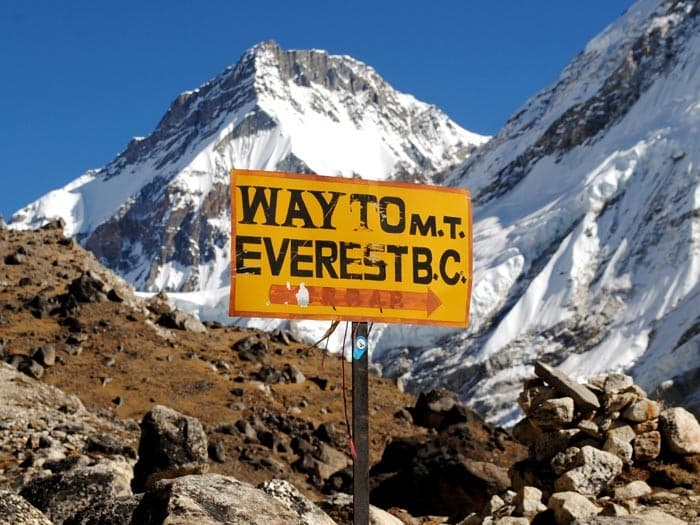
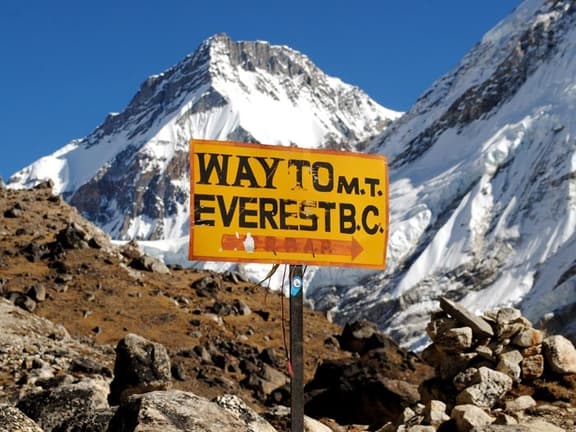
- Stand at Everest Base Camp (5,364m) at the foot of the world's highest mountain
- Watch the Everest sunrise from Kala Patthar (5,545m) — the definitive view, earned on foot
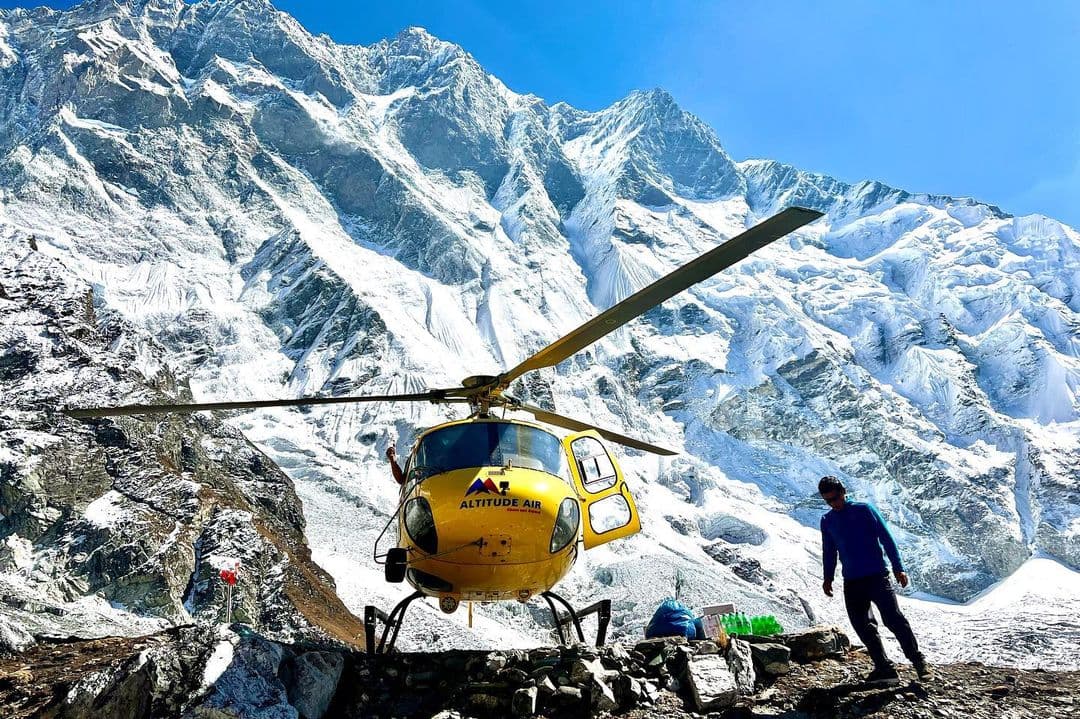
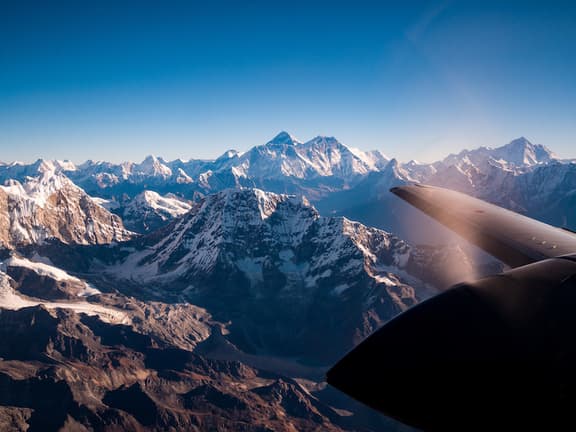
- Fly back from Lobuche to Lukla by helicopter — 15–20 minutes over the glacier and icefall, views no trail gives you
- Do it all in 12 days — without missing a single key highlight
Trip Overview
Day-by-Day Itinerary
Your HSJ representative meets you at Tribhuvan International Airport and transfers you to the Himalayan Suite Hotel in Kathmandu. The rest of the day is free to acclimatise to the city, explore the nearby streets of Thamel or rest after your journey. In the evening your guide conducts a full trek briefing — covering permits, daily schedule, gear requirements and what to expect on the Everest trail.
An early morning transfer to the airport for the 35-minute flight to Lukla (2,840 m) — one of the world's most dramatic airstrips, perched on a Himalayan ridgeline. From Lukla the trail descends through pine forests along the Dudh Koshi River to Phakding. The walk is relatively gentle and serves as a fine introduction to the Khumbu landscape — suspension bridges, prayer flags and the first Sherpa villages of the region.
The trail follows the Dudh Koshi upstream through several small settlements before a sustained 800 m climb to Namche Bazaar — the gateway to the high Himalayas. The ascent passes through the Hillary Suspension Bridge and enters the Sagarmatha National Park. Namche is the principal trading hub of the Khumbu, with teahouses, gear shops, bakeries and an energy unlike anywhere else on the route. On a clear afternoon, the first views of Everest appear above the surrounding ridgeline.
A rest day in Namche dedicated to the climb-high-sleep-low protocol that underpins safe acclimatisation. The morning hike ascends to the Hotel Everest View (3,880 m) — one of the finest vantage points in the Khumbu, with an unobstructed panorama of Everest, Lhotse and Ama Dablam. The afternoon is free to explore Namche's Sherpa cultural museum, the local market or simply rest and hydrate well in preparation for the days ahead.
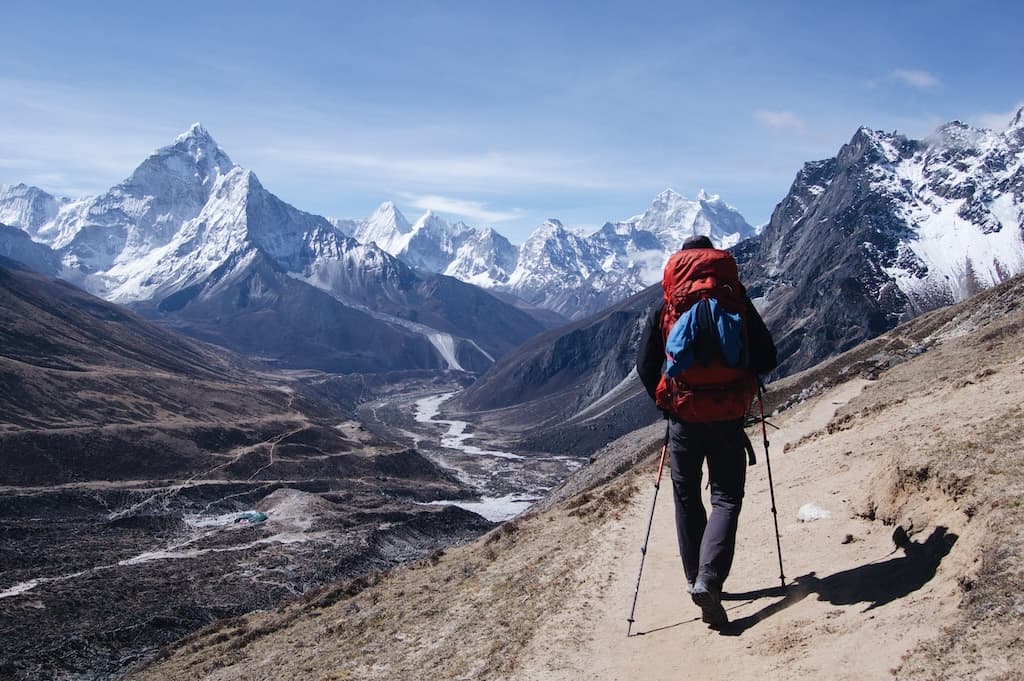
Leaving Namche, the trail traverses the high ridge above the Dudh Koshi valley with Ama Dablam commanding the skyline ahead. The route passes through Sanasa and Phungi Thenga before the final ascent to Tengboche at 3,860 m. The Tengboche Monastery — the largest in the Khumbu region — sits on a commanding promontory surrounded by a 270-degree panorama of Everest, Lhotse, Nuptse and Ama Dablam. Arriving in the late afternoon light, this is one of the most memorable settings on the entire route.
The trail descends from Tengboche through rhododendron and juniper forest before crossing the Imja Khola and climbing steadily to Pangboche — one of the oldest villages in the Khumbu, with a monastery reputedly housing a yeti skull. Continuing upward, the vegetation thins and the landscape opens into the wide, high-altitude valley of Dingboche at 4,410 m. The surrounding peaks — Ama Dablam, Island Peak and Lhotse — are seen in full for the first time from this elevation.
A second acclimatisation day, this time with a demanding hike to Nangkartsang Peak at 5,083 m — your first time above 5,000 m and an important test of your body's response to altitude. The views from the summit encompass Makalu (the world's fifth highest), Cho Oyu, Island Peak and the full Dingboche valley. The afternoon is spent resting at the lodge. Hydration, light meals and early rest are the priorities tonight.
The trail climbs gradually through alpine terrain to Thukla Pass at 4,620 m, where a hillside of stone memorials commemorates climbers and Sherpas who have lost their lives on Everest. The setting is sobering and powerful. From here the route continues along the lateral moraine of the Khumbu Glacier to Lobuche at 4,940 m. The landscape is stark and dramatic — bare rock, ice and the immense scale of the glacier make this one of the most visually striking days of the trek.
An early start from Lobuche to Gorak Shep (5,190 m), where bags are left and a light meal taken before the final push to Everest Base Camp. The trail crosses the Khumbu Glacier moraine — a challenging and rewarding approach of approximately two hours. Base Camp at 5,364 m sits beneath the Khumbu Icefall with Everest's southwest face rising directly above. The return to Gorak Shep takes two to three hours. Tonight is the highest night of the trek.
A pre-dawn start for the climb to Kala Patthar at 5,545 m — the highest point of the trek and the most celebrated viewpoint on the Everest approach. Sunrise over the summit pyramid of Everest, with Nuptse and Lhotse on either side, is the defining moment of this journey. After descending back to Gorak Shep, the trail continues down to Lobuche where the group boards a shared helicopter for the spectacular flight to Lukla — sweeping over the glaciers and valleys of the Khumbu in approximately 20 minutes. Overnight in Lukla.
Morning flight from Lukla back to Kathmandu or Manthali (Ramechhap) depending on weather and flight availability. On arrival, transfer to the Himalayan Suite Hotel. The evening is free for a celebratory dinner in Thamel, a massage at the hotel spa or simply a long rest in a comfortable bed at low altitude.
Your HSJ guide transfers you to Tribhuvan International Airport in time for your onward flight. If your departure is in the afternoon, there is time for a final visit to Pashupatinath, Boudhanath or the streets of Thamel before leaving Kathmandu.
Route & altitude
12 days · 74 km on foot
What’s Included
Departure dates
Accommodation and Meal Plan
Per person · every price below already includes your choices.
Recommended Gear
Video Gallery
Frequently Asked Questions
This is a moderate trek. You'll walk 5–8 hours a day on well-marked trails — no technical climbing or ropes required. The challenge is altitude, not terrain. You sleep up to 5,364m at Gorak Shep and summit Kala Patthar at 5,545m. Most healthy adults with reasonable fitness can complete it. Prior trekking experience is not required, but 4–6 weeks of cardio preparation (hiking, stair climbing, running) makes a significant difference.
The two best seasons are spring (March–May) and autumn (mid-September–November). Both offer stable weather, clear skies, and good mountain visibility. Spring has rhododendrons in bloom at lower elevations; autumn has the clearest air after the monsoon. Winter (Dec–Feb) is possible but cold and quiet. Monsoon (June–August) brings rain and leeches on lower trails but less crowding above Namche.
The helicopter picks you up from Lobuche (4,940m), not Gorak Shep. Lobuche is lower and more sheltered, which makes flights significantly more reliable. After your pre-dawn hike to Kala Patthar (5,545m) and sunrise views, you descend back to Lobuche where the helicopter is waiting. The flight to Lukla takes 15–20 minutes.
Yes. Helicopters operating in the Khumbu are flown by experienced, certified pilots under Civil Aviation Authority of Nepal (CAAN) regulations. Flights are weather-dependent — morning departures have the best conditions. Your guide monitors weather daily and will delay or reroute if conditions are unsafe. In the rare case of a weather hold, HSJ will make the best alternative arrangement at no extra cost to you.
Yes — the route up is identical. You walk the same trail: Lukla → Phakding → Namche → Tengboche → Dingboche → Lobuche → Gorak Shep → EBC → Kala Patthar. The only difference is the return: instead of walking back down over 3–4 days, you board a helicopter from Lobuche to Lukla. This saves 3–4 days of descent on tired legs while adding an aerial perspective that no one on foot ever gets.
Due to high-altitude performance constraints, each passenger is allowed a maximum of 10–15 kg total (duffel bag + daypack combined). HSJ will brief you on this before departure day. Your main duffel is carried by a porter for the trek portion; make sure it is within the helicopter limit by Day 10. Pack heavy items in what you'll leave in Kathmandu storage.
The domestic flight to Lukla has a 15 kg (33 lb) baggage limit including your main bag and daypack combined. HSJ provides a duffel bag — fill it up to 15 kg, and your guide carries a daypack separately. Excess baggage is charged by the airline. If you're flying from Manthali (Ramechhap) during peak season, the same limit applies.
Acute Mountain Sickness (AMS) is the most common medical concern on EBC treks. Symptoms — headache, nausea, fatigue, dizziness — typically appear above 3,000m. The itinerary is designed with proper acclimatisation days at Namche (3,440m) and Dingboche (4,410m) to allow your body to adjust. Your guide monitors your health daily with a pulse oximeter and knows the early signs of AMS. If you show serious symptoms, descent is the only cure and your guide will act fast. Discuss Diamox with your doctor before departure — many trekkers use it as a precaution.
Yes — travel insurance is mandatory, and it must explicitly cover high-altitude trekking above 5,000m and helicopter evacuation. Standard travel insurance does not cover this. Himalayan rescue and evacuation costs can reach USD 5,000–15,000 without insurance. HSJ will ask for a copy of your policy before the trek starts. World Nomads, IMG Global, and Trekkers Rescue are commonly used by EBC trekkers.
Two permits are required to trek in the Khumbu region — both are included in your HSJ package price:
- Sagarmatha National Park Entry Permit
- Khumbu Pasang Lhamu Rural Municipality Fee
You do not need to arrange these yourself. HSJ handles all permit paperwork before the trek starts. Your guide carries the permits throughout the trek.
Yes. HSJ provides both a sleeping bag (rated to −10°C to −15°C) and a duffle bags for free as part of your package. You do not need to bring or rent these. If you prefer to use your own gear, that's fine too. In either case, make sure your sleeping bag is rated for sub-zero temperatures — teahouse rooms above 4,500m get very cold at night.
Teahouses along the EBC route serve a surprisingly varied menu: dal bhat (lentil rice — unlimited refills), pasta, fried rice, noodle soups, momo (dumplings), eggs, pancakes, porridge, and Tibetan bread. The higher you go, the simpler and more expensive the menu gets. Breakfast is included in your HSJ package for all trek days; lunch and dinner are your own expense (budget USD 6–15 per meal depending on altitude). Stick to cooked food above Namche — raw vegetables and salads carry contamination risk at altitude.
Most teahouses up to Namche (3,440m) have Western-style flushing toilets with attached bathrooms. Above Namche, expect squat toilets (mostly clean) and shared bathrooms. Hot showers are available at most stops for an extra charge (USD 2–5). Above Lobuche, hot water becomes scarce — wet wipes become your friend. In Kathmandu, your hotel has full facilities.
Yes to both. HSJ regularly takes solo travellers — you'll trek with a dedicated guide who handles all logistics. Solo female travellers are very welcome; Nepal is widely regarded as safe for women trekking with a guide. For beginners: no prior trekking experience is needed, but physical fitness matters. If you can hike 5–6 hours on consecutive days and are prepared for altitude, you can complete this trek. The helicopter return also makes it more accessible — you're not adding 3 days of knee-punishing descent at the end.
For peak seasons (March–May and October–November), book at least 6–8 weeks in advance. Helicopter seats, domestic flights to Lukla, and quality teahouses fill up quickly during these months. For off-season travel, 2–3 weeks notice is usually fine. Last-minute bookings can be accommodated but carry risks of limited availability, especially for helicopter slots.
Yes. Most nationalities can get a tourist visa on arrival at Tribhuvan International Airport in Kathmandu. Cost: USD 50 for 30 days, USD 125 for 90 days. Bring passport photos (or use the photo machines at the airport) and USD cash or card for payment. Your passport must be valid for at least 6 months beyond your arrival date. Citizens of India, China, and a few other countries have different arrangements — check ahead.
The remaining balance can be paid in USD cash or by credit/debit card (Visa, Mastercard, American Express) at the HSJ office in Kathmandu. There are ATMs and currency exchange shops throughout Thamel. We recommend carrying some USD cash as backup — card machines occasionally have connectivity issues.
Traveler Stories
Traveler Reviews
I highly recommend this for anyone looking for a rewarding EBC trek experience. Dinesh was wonderful and made adjustments to the trekking plan as needed which made the experience more enjoyable. Trekking during the monsoon season was not recommended due to ra…
My group of three did the Everest Base Camp Trek with the Helicopter ride down and all I can say is, what an experience! In the best way possible! First off Himalayan Social Journey made the whole booking process super simple and they answered all of questions…
Read moreIts been a wonderful Everest Base Camp (EBC) experience with Himalayan Social Journey (HSJ). They made us stay in a luxury hotel in Kathmandu. During the trek, our HSJ guide Anil Nepali stayed us with through ups & downs. He patiently stayed during delays due …
Read moreGreat overall experience and especially our guide Mingmar. Incredibly knowledgeable helping the group with whatever was needed from taking pics, providing assistance when altitude sickness crept in, logistics at each tea house, and keeping on schedule. Our g…
Read moreCompare Similar Experiences