
★ 4.8/5 TripAdvisor★ 4.7/5 Google★ 4.7/5 TourRadar
Enjoy Up to 45% OffView Deals
+977 9810650405info@hsj.com.np
TripAdvisor · Travelers’ Choice 2026

Nepal · Manaslu Region

Manaslu Circuit Trek — 15 Days | Cost & Itinerary 2026

15 Days
Difficulty · 4/5
Max 5,160 m
Group 2–14 pax
Duration
15 Days
14 nights
Max Altitude
5,160 m
Highest point
Difficulty
4
4 out of 5
Group Size
2–14
people
Best Season
Spring (March to May) and Fall (September to November)
Activity / Day
5-6 Hours Walking

Trip Highlights

  • Cross the legendary Larkya La Pass at 5,160 m — one of the highest trekking passes in Nepal
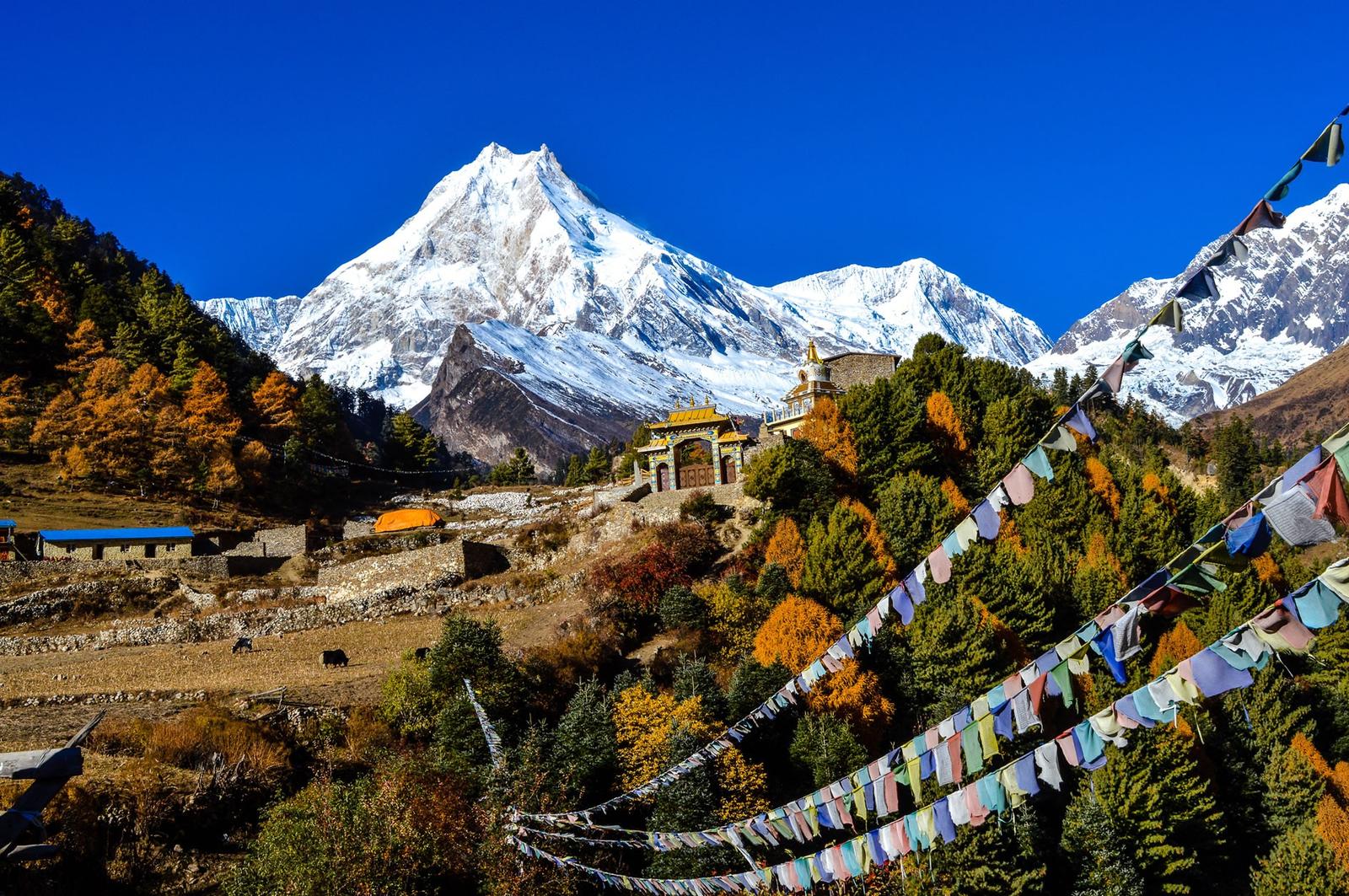
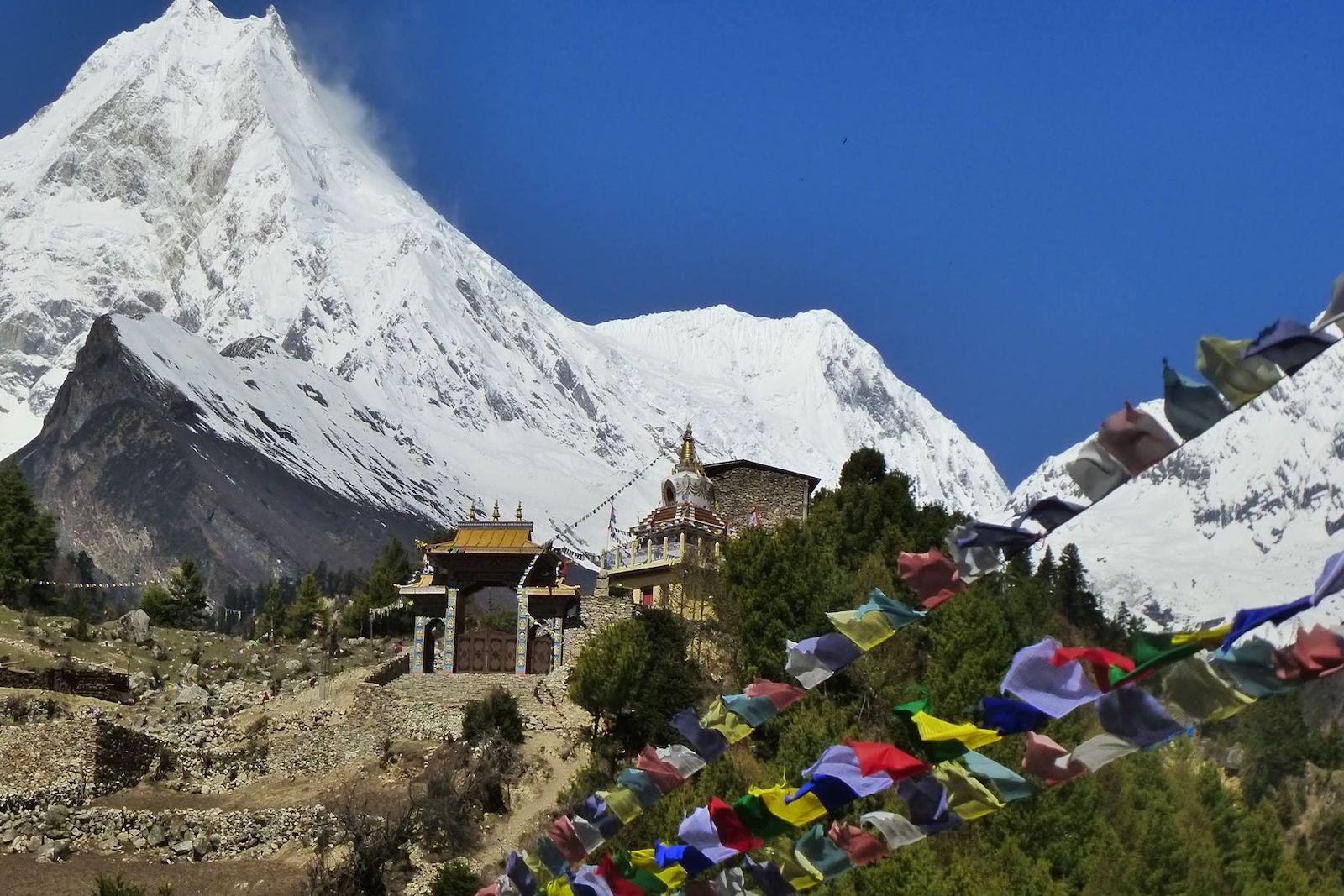
  • Stand beneath Mount Manaslu (8,163 m), the world's 8th highest peak
  • Trek through a restricted area with a fraction of the crowds of Annapurna or Everest
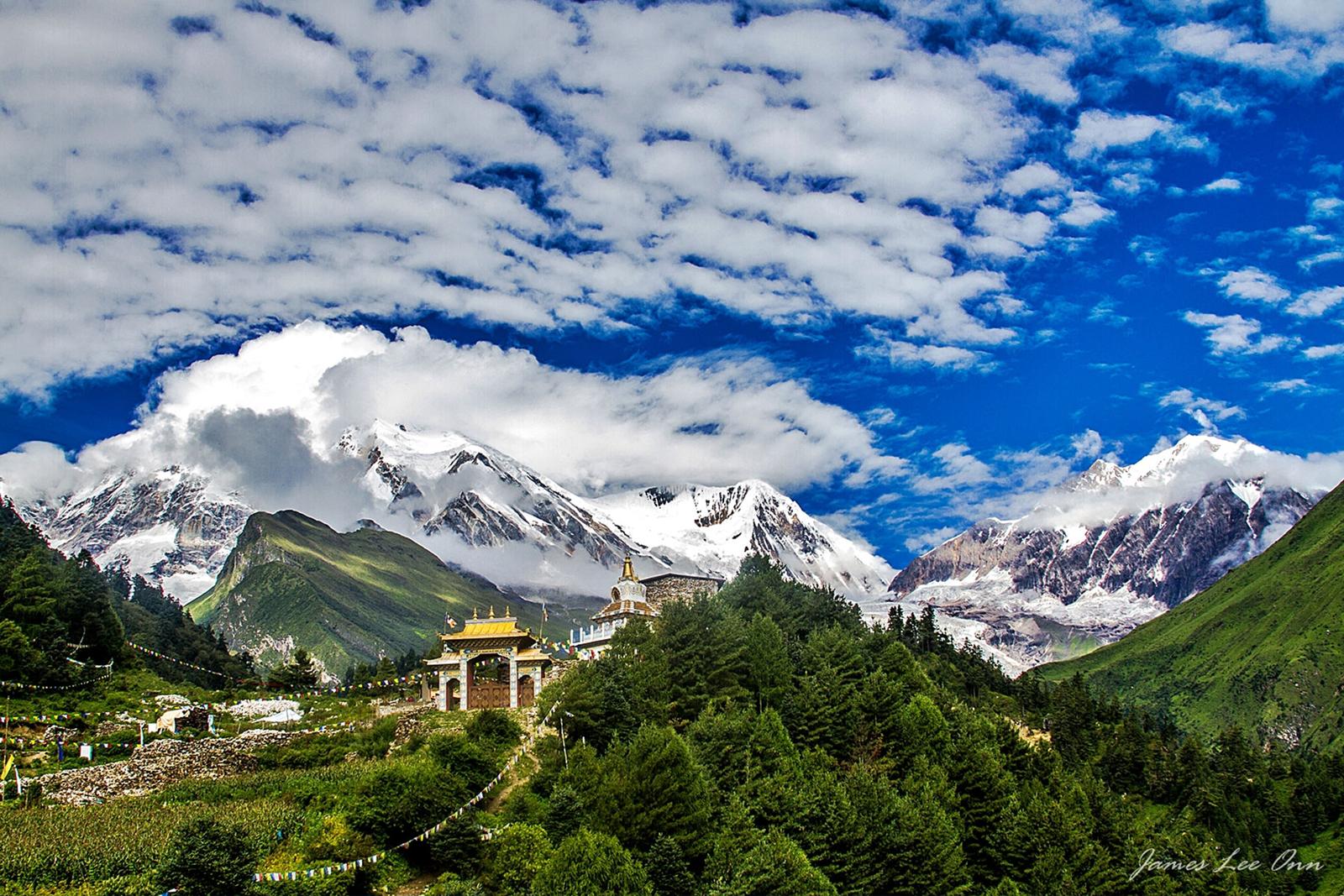
  • Walk ancient Buddhist villages of Sama Gaon, Samdo and Lho — Tibetan culture deep in the Himalayas
  • Cross the dramatic Budhi Gandaki gorge on suspension bridges high above turquoise rivers
  • Visit Manaslu Base Camp (4,800 m) as an optional acclimatisation hike
  • Spot Himalayan wildlife — Tahr, marmots, blue sheep and (with luck) snow leopards
  • 15 days perfectly paced with two acclimatisation days for safe altitude gain

Trip Overview

The Manaslu Circuit Trek is for trekkers who have heard the stories — about a route that feels like the Annapurna Circuit did twenty years ago, before the road came. It circles Mount Manaslu, the world's eighth highest peak at 8,163 m, through a restricted area of Nepal that sees a fraction of the crowds of Everest or Annapurna. In 15 days, you walk from subtropical river valleys to the snowbound 5,160 m Larkya La Pass — and you do it on trails that still feel wild.

The trek begins at Macha Khola, deep in the Budhi Gandaki gorge, where rice terraces and waterfalls give way to the river's turquoise rapids. Each day the valley climbs higher, the air grows thinner, and the architecture changes — wooden Gurung houses in the lowlands shift to flat-roofed Tibetan stone houses as you approach the border. By the time you reach Sama Gaon and Samdo, you are walking through villages that feel more Tibetan than Nepali, with prayer flags strung between every house and monasteries on every ridge.

The crescendo is the Larkya La Pass at 5,160 m — one of the highest and most spectacular trekking passes in Nepal. The pre-dawn climb from Dharamshala is cold and demanding, but the reward is a 360-degree panorama of Himlung Himal, Cheo Himal, Kang Guru and Annapurna II — peaks that few trekkers ever see from this angle. The descent down the other side into Bimthang is long, but the views of the Manaslu massif from the western side are among the most beautiful in all of Nepal.

This is a serious trek. Graded 4/5, it demands good fitness, prior trekking experience and respect for altitude. Daily walking is 6–8 hours on rough trails, with two acclimatisation days built in at Sama Gaon and Samdo. There is no technical climbing — but there is real altitude, real remoteness and real reward.

The Manaslu Circuit Trek from Kathmandu begins with a long but scenic drive to the trailhead at Macha Khola — there are no flights into the Manaslu region. Both ends of the trek connect by road back to Kathmandu, making this one of the few Himalayan circuits that requires no internal flights at all.

Best seasons: March–May offers rhododendrons in bloom and warming days. September–November brings the clearest mountain views and most stable weather of the year. The Manaslu region is also one of the few treks in Nepal that can be done in winter (December–February) by experienced trekkers prepared for cold and snow on the pass.

Permits required: Three permits are mandatory — the Manaslu Restricted Area Permit (RAP), the Manaslu Conservation Area Permit (MCAP) and the Annapurna Conservation Area Permit (ACAP, the trek exits through the Annapurna region). The RAP requires a minimum group size of two and must be obtained through a licensed agency. HSJ arranges all three permits — you do not need to queue at permit offices.

The Tsum Valley Extension

The Tsum Valley is one of Nepal's last great hidden corners — a high-altitude Buddhist sanctuary tucked between the Manaslu massif and the Tibetan border. The valley was officially opened to foreign trekkers only in 2008, and even now sees a fraction of the visitors who walk the main Manaslu circuit. It is the closest thing in the Himalayas to walking back in time.

Branching off the Manaslu Circuit at Lokpa, the Tsum trail climbs through pine forests and across high pastures into a wide glacial valley ringed by Ganesh Himal, Sringi Himal and Boudha Himal. Villages here — Chumling, Chhokangparo, Nile and Mu — are built of stone and timber and feel more Tibetan than anywhere else in Nepal. Prayer walls run for miles. Mani stones are stacked on every ridge. The light at altitude here has a quality that travellers struggle to describe.

The valley is home to two of the most extraordinary monasteries in Nepal — Mu Gompa at 3,700 m, the northernmost monastery on the route, and Rachen Gompa, a working nunnery housing around eighty Buddhist nuns. The Tsum are an ethnic group with their own distinct dialect, and the valley still practises polyandry — a tradition where one woman marries multiple brothers, kept alive here long after it disappeared elsewhere. Hunting has been banned for generations as a community-wide commitment to non-violence, which is why blue sheep and Himalayan tahr are unusually approachable.

Adding Tsum Valley extends the trek by 5–7 days and is best combined with the full Manaslu Circuit. Best seasons are the same as the main route — March–May and September–November.

Want to add Tsum Valley? Contact us and we will tailor a Manaslu + Tsum itinerary to your dates and pace.

Prefer a shorter trek? The Manaslu Circuit can also be completed in 13 days by skipping the Kathmandu sightseeing day and one acclimatisation day — best for experienced high-altitude trekkers. Contact us to arrange the 13-day version.

A Typical Day on the Manaslu Circuit

Breakfast is served at the teahouse by 7:00 am — dal bhat, eggs, porridge, pancakes or Tibetan bread, with tea or coffee. Most days start walking by 7:30–8:00 am to make the most of clear morning skies before clouds build by midday.

The trail averages 12–16 km with 500–900 m of ascent on the way up — longer and harder than treks in Annapurna or Everest. Your guide sets a comfortable pace; there is no racing at this altitude. Lunch is taken at a teahouse mid-route, usually between 11:30 am and 1:00 pm. Expect to arrive at the next village by 3:00–4:00 pm, leaving time to wash, rest, recharge devices and explore before dinner at 6:00–7:00 pm.

Evenings are quieter on Manaslu than on busier routes — the dining room fills with a handful of fellow trekkers and your guide, the wood stove keeps things warm, and the conversation moves easily across borders. Lights-out is usually by 9:00 pm. The pass day starts as early as 3:00 am — proper sleep on the days leading up to Larkya La is essential.

Photo Gallery

Day-by-Day Itinerary

01
Day 1
Arrival in Kathmandu
Max 1,400 mHimalayan Suite Hotel, Kathmandu

Your HSJ representative meets you at Tribhuvan International Airport and transfers you to the Himalayan Suite Hotel in Kathmandu. The rest of the day is free to rest, explore the streets of Thamel or settle in. In the evening your guide conducts a full trek briefing covering permits, gear, daily schedule and what to expect on the Manaslu route.

02
Day 2
Kathmandu Sightseeing and Trek Briefing
Max 1,400 mFull dayHimalayan Suite Hotel, Kathmandu

A guided tour of Kathmandu's most important heritage sites — Pashupatinath Temple, Boudhanath Stupa and either Swayambhunath or Kathmandu Durbar Square, depending on your preference. The afternoon is free for last-minute gear shopping in Thamel. Permits are checked and gear is finalised in preparation for an early start tomorrow.

03
Day 3
Drive to Macha Khola
Max 930 mDrive 7–8 hrsHotel Manaslu, Macha Khola

An early-morning departure from Kathmandu for the long drive west into the Gorkha district. The road follows the Trishuli river before turning north into the Budhi Gandaki valley — terraced hillsides, river crossings and small bazaar towns mark the route. Macha Khola is the trailhead for the Manaslu Circuit, a small village set beside the river where the road ends and the trek begins.

04
Day 4
Trek to Jagat
Max 1,340 mTrek 6–7 hrsTeahouse, Jagat

The trek opens along the Budhi Gandaki river through subtropical forest and stone-stepped villages. Suspension bridges cross side streams and the trail passes Khorla Beshi and Tatopani, where natural hot springs sit at the river's edge. Jagat is the official entry point to the Manaslu Restricted Area — permits are checked at the police post here.

05
Day 5
Trek to Deng
Max 1,860 mTrek 6–7 hrsTeahouse, Deng

The valley narrows and the trail climbs steadily through Salleri, Sirdibas and Philim. The Tsum Valley junction passes at Lokpa — beyond Lokpa the route enters the deepest section of the Budhi Gandaki gorge with dramatic cliffs and white-water rapids far below. Deng is a small Gurung village at the base of the climb toward the Tibetan upper villages.

06
Day 6
Trek to Namrung
Max 2,630 mTrek 6–7 hrsTeahouse, Namrung

A long ascent today as the trail crosses the Budhi Gandaki and climbs through Rana and Bihi Phedi into deeper forest. The villages here are Buddhist — prayer walls, chortens and rebuilt monasteries appear with increasing frequency. Namrung sits at the entrance to the upper Nubri valley, a checkpoint for the Manaslu Conservation Area and the first true mountain village on the route.

07
Day 7
Trek to Lho
Max 3,180 mTrek 5–6 hrsTeahouse, Lho

A shorter day, but the views begin to open. The trail passes through Lihi and Sho before climbing to Lho — a stunning Tibetan-style village set on a high terrace with full views of Manaslu rising directly to the east. The Lho monastery and adjacent chorten plaza are worth visiting in the late afternoon when the peak catches the evening light.

08
Day 8
Trek to Sama Gaon
Max 3,520 mTrek 5–6 hrsTeahouse, Sama Gaon

The trail enters the upper Nubri valley and the landscape opens completely — wide grazing pastures, yak herds and the eastern face of Manaslu dominating the skyline. The route passes through Shyala, with one of the best panoramic mountain views on the entire trek. Sama Gaon is the principal village of the upper Manaslu region and the base for tomorrow's acclimatisation hike.

09
Day 9
Acclimatisation — Hike to Manaslu Base Camp
Max 4,800 mHike 7–8 hrsTeahouse, Sama Gaon

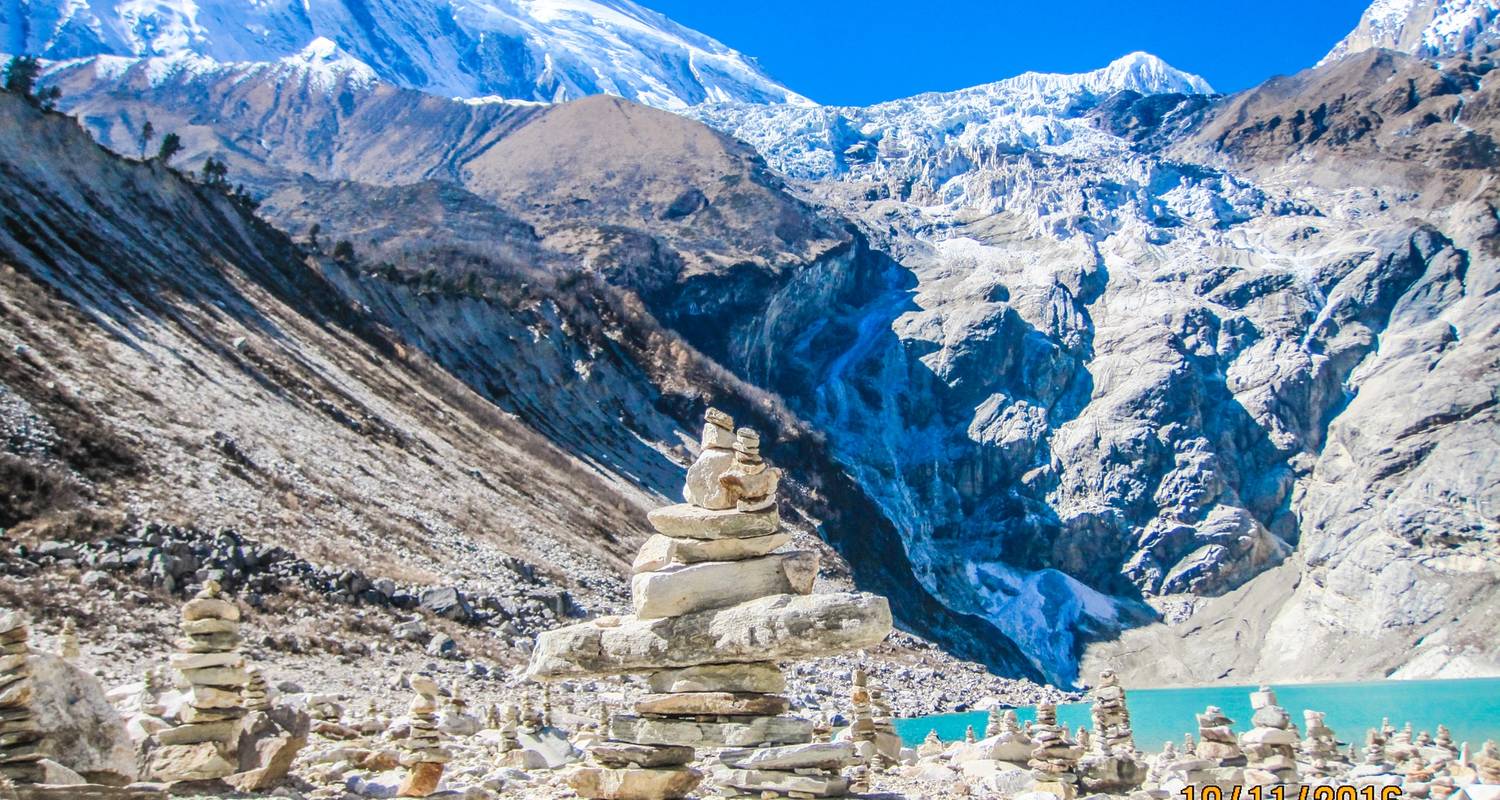
A demanding acclimatisation day. The trail climbs north of Sama Gaon past Birendra Tal — a turquoise glacial lake — and up steep moraines to Manaslu Base Camp at 4,800 m. The views from base camp encompass the south face of Manaslu, the Manaslu Glacier and the high peaks bordering Tibet. Return to Sama Gaon for the night. An alternative shorter hike to Pungyen Gompa is available for those who prefer a gentler day.

10
Day 10
Trek to Samdo
Max 3,875 mTrek 4–5 hrsTeahouse, Samdo

A short and gentle day designed to support continued acclimatisation. The trail follows the upper Budhi Gandaki north past yak pastures and into Samdo — a Tibetan refugee village just a few hours' walk from the Tibetan border. The afternoon is free to rest or take an optional walk toward the Tibet border viewpoint.

11
Day 11
Trek to Dharamshala (Larkya Phedi)
Max 4,460 mTrek 4–5 hrsTeahouse, Dharamshala

A demanding climb out of Samdo onto open, treeless high country. The trail crosses the Larkya Glacier moraine and reaches Dharamshala — a small cluster of stone huts and basic teahouses at the base of the pass, also known as Larkya Phedi. Facilities are minimal here. Early dinner, early bed — tomorrow is the longest day of the trek.

12
Day 12
Larkya La Pass and Descent to Bimthang
Max 5,160 mTrek 8–9 hrsTeahouse, Bimthang

A pre-dawn start in the cold and dark for the long climb to the Larkya La Pass at 5,160 m. The ascent is steady rather than steep, but the altitude and cold make it demanding. The pass is marked by prayer flags and a 360-degree panorama of Himlung Himal, Cheo Himal, Kang Guru and Annapurna II. The descent down the western side into Bimthang is long and steep — 1,500 m of altitude loss — but the views of Manaslu from this side are extraordinary.

13
Day 13
Trek to Dharapani
Max 1,860 mTrek 5–6 hrsTeahouse, Dharapani

The trail descends through rhododendron and pine forest, crosses the Dudh Khola at Karche and continues through the small villages of Tilche and Thonje. Dharapani sits at the junction of the Manaslu and Annapurna Circuit routes — the trek officially exits the restricted area here.

14
Day 14
Drive to Kathmandu
Max 1,400 mDrive 8–9 hrsHimalayan Suite Hotel, Kathmandu

An early morning jeep ride from Dharapani down the rough mountain road to Besi Sahar, followed by the bus or vehicle transfer back to Kathmandu along the Prithvi Highway. Late afternoon arrival at the Himalayan Suite Hotel. The evening is free for a celebratory dinner in Thamel.

15
Day 15
Departure
Max 1,400 m

Your HSJ representative transfers you to Tribhuvan International Airport in time for your onward flight. If your departure is in the afternoon, there is time for a final visit to Pashupatinath, Boudhanath or the streets of Thamel before leaving Kathmandu.

What’s Included

Included
Airport pick-up and drop-off (Kathmandu)
2 nights hotel in Kathmandu — Himalayan Suite Hotel (twin-sharing, bed & breakfast)
1 night hotel in Macha Khola (twin-sharing, bed & breakfast)
11 nights teahouse accommodation on trail
Tourist bus transfer: Kathmandu–Macha Khola
Jeep transfer: Dharapani–Besi Sahar
Bus transfer: Besi Sahar–Kathmandu
English-speaking licensed trekking guide (full 15 days)
One porter for every two trekkers (up to 15 kg per porter)
All guide and porter wages, meals, accommodation and insurance
Guided sightseeing in Kathmandu (Day 2) by private vehicle
Breakfast during the trekking days
Manaslu Restricted Area Permit (RAP)
Manaslu Conservation Area Permit (MCAP)
Annapurna Conservation Area Permit (ACAP)
HSJ duffel bag, trekking map and trip completion certificate
Sleeping bag (provided by HSJ if required)
First aid kit with pulse oximeter on trail
Welcome dinner on Day 1
30-minute massage after the trek at Himalayan Suite Spa
All government taxes, VAT and service charges
Not Included
Lunch and dinner during the trek (can be paid directly at teahouses, approx. $4–8 per meal, rising at altitude)
Lunch and dinner in Kathmandu
Personal trekking gear and clothing
Travel insurance (mandatory — must cover emergency helicopter evacuation)
Nepal entry visa fees and international flights
Tips for guide and porter (customary — approx. $10–15/day guide, $5–8/day porter)
Hot showers and battery charging on trail (small fee at each teahouse)
Kathmandu sightseeing monument entry fees (Pashupatinath NPR 1,000 / Boudhanath NPR 400 / Swayambhunath NPR 200 / Durbar Square NPR 1,000)
Personal expenses (drinks, snacks, souvenirs)

Manaslu Circuit Trek — 15 Days | Cost & Itinerary 2026 Departures

No scheduled departures right now.

Contact us to arrange a private departure →

Route Map

View Map
Starts
Arrival in Kathmandu
Ends
Departure

Altitude Profile

930m2.0km3.0km4.1km5.2km1.4km5.2km1.4kmD1D3D5D7D9D11D13D15
Highest Point5,160m

Recommended Gear

Moisture-wicking base layer (top and bottom)
Thermal mid-layer fleece
Down or insulated jacket (heavy, for the pass)
Waterproof and windproof outer shell
Trekking trousers (2 pairs)
Lightweight shorts
Warm hat covering ears
Sun hat or cap
Neck gaiter or buff
Gloves (liner + heavy outer for the pass)
Broken-in waterproof hiking boots
Lightweight camp sandals or flip-flops
Trekking socks (5–6 pairs, wool or synthetic)
Gaiters (essential for snow on Larkya La Pass)
Micro-spikes (recommended October–April)
Daypack 25–35 L with rain cover
Trekking poles (foldable)
Sleeping bag rated to -15°C
Headlamp with spare batteries
Power bank (20,000 mAh recommended)
Water bottles or hydration bladder (2 L total)
Water purification tablets or SteriPen
Sunglasses (UV400 wraparound, glacier-rated)
Sunscreen SPF 50
Lip balm with SPF
Lightweight microfibre towel
Cash in NPR (small denominations) — budget approx. $25–35/day for lunch and dinner on the trail (not included in package)
Passport and permit photos (6 copies — restricted area checks)
Travel insurance documents
Personal medications
Diamox (acetazolamide, for altitude)
Blister plasters and moleskin
Ibuprofen and paracetamol
Rehydration salts
Antiseptic wipes and small bandages
Hand sanitiser
Wet wipes
Toilet paper
Earplugs
Camera or phone with extra memory cards
Snacks (energy bars, nuts, dried fruit)
Insect repellent (lower trail leeches Mar–Oct)

Video Gallery

Traveler Reviews8 verified

J
Jenny P★★★★
Verified Purchase

We had an amazing experience on the Manaslu trek. Our guide Deepap changed the itiniery when my friend sprained her ankle to give her shorter days. Also he nursed me over the larke pass when I was running out of energy.…

Read More 👀
D
Daydream573927★★★★
Verified Purchase

Our Guide Deepak and our Porter Dilip were very professional and made our experience. What it was. I suffered an injury on day three, and Deepak quickly amended the itinerary to ensure that I rested and was safe, and ult…

Read More 👀
B
BackpackerNat★★★★★
Verified Purchase

We were a two person group that had a fantastic and smooth trekking experience in the manaslu region. Our guide Dipak was very attentive and on point the whole trip. He had a great sense of humour and ability to engage w…

Read More 👀
K
Kim H★★★★★
Verified Purchase

Originally booked as a family trekking tour for 4 people. Unfortunately, due to illness our sister and her husband has to cancel with 3 days of flying out. Refund was done promptly within the term and conditions of the …

Read More 👀
S
Stephanie K★★★★★
Verified Purchase

We had a great trek from the end of September to mid October. Everything went very smoothly from the air6pickup to our departure. The company adjusted their standard itinerary to our requests. Our guide Ram, was very he…

Read More 👀
G
guismeau1★★★★★
Verified Purchase

We did a 13 days trekk around Manaslu, thank to our guide and the agency everything was perfect. The only thing it was clear liste of materials to take with so here it is : Passport picture, copy of international assura…

Read More 👀
A
Andrew Cook★★★★★
Verified Purchase

We trekked to Achane Bensi a small village in the countryside. Along the way we had magnificent views of Annapurna, Manaslu, Ganesh Himal & Lang tang mountain range. We were originally planning on staying in tea houses …

Read More 👀
M
maria p★★★★★
Verified Purchase

We did a 14 day Manaslu Circuit Trek with Milan, our amazing guide. It was a challenging, interesting, authentic and very enriching experience. Since this trek is in a remote area and less-known than some other more comm…

Read More 👀

Traveler Stories

KimEverest Base Camp Trek
Deck and StrebellaNagarkot Sunrise Tour with Sallaghari-Changunarayan Hiking
DavidKathmandu - Pokhara Sightseeing with Everest Scenic Flight & Annapurna Heli tour

Frequently Asked Questions

Two windows are ideal: March–May and September–November. Spring brings rhododendrons in bloom and warming days at altitude. Autumn delivers the clearest mountain views and most stable weather of the year. Winter trekking (December–February) is possible for experienced trekkers prepared for cold and snow at the pass. Monsoon (June–August) brings heavy rain, leeches and frequent landslides — not recommended.
Graded 4/5 — strenuous. Daily walking is 6–8 hours on rough trails with significant altitude gain, culminating in the Larkya La Pass at 5,160 m. Good physical fitness and prior trekking experience are essential. There is no technical climbing, but the combination of altitude, remoteness and trail conditions makes this more demanding than ABC or standard EBC.
Three permits are mandatory: the Manaslu Restricted Area Permit (RAP), the Manaslu Conservation Area Permit (MCAP) and the Annapurna Conservation Area Permit (ACAP, the trek exits through Annapurna). RAP costs $100 per person for the first 7 days during peak season (Sep–Nov / Mar–May) and $75 off-season, plus $15/day after that. HSJ arranges all three permits — you do not need to queue at offices.
The Manaslu region borders Tibet and was opened to trekkers only in 1991. To protect the fragile environment and traditional Tibetan culture of the upper Nubri valley, the Nepalese government designated it a restricted area. This means independent trekking is not allowed — you must trek through a registered agency with a licensed guide, and groups must have a minimum of two trekkers.
No. Restricted area regulations require a minimum group size of two trekkers and a licensed guide. Solo travellers can still book — HSJ pairs solo travellers with other small groups, or you can book a private trip with a solo supplement.
Breakfast is included at the hotel in Kathmandu. On the trail, teahouse meals (lunch and dinner) are not included in the package price — you pay directly at each teahouse. Typical meal costs are $4–8 per dish at lower altitudes, rising to $7–12 at higher altitudes. Budget approximately $25–35 per day for trail meals.
The Larkya La Pass at 5,160 m is the highest point. The acclimatisation hike to Manaslu Base Camp reaches 4,800 m. Both are managed with a careful ascent profile — two acclimatisation days are built into the itinerary (at Sama Gaon and Samdo) to support safe altitude adaptation.
Altitude sickness is a real risk above 3,000 m and the Manaslu route crosses well above that. The itinerary is designed for safe acclimatisation with two rest days at altitude and a gradual ascent. Your guide carries a pulse oximeter and monitors your health daily. Stay hydrated, eat well, walk slowly and report any symptoms — your guide will adjust the plan if needed.
Larkya La at 5,160 m is one of the highest and most spectacular trekking passes in Nepal. The crossing day begins around 3:00–4:00 am from Dharamshala and takes 8–9 hours total. The ascent is steady (not steep) but cold and demanding. The descent to Bimthang is long — 1,500 m of altitude loss — but the views of the Manaslu massif from the western side are extraordinary.
Both are circuit treks. The Annapurna Circuit is now partially driveable, more developed and significantly more crowded. The Manaslu Circuit is the way Annapurna felt twenty years ago — wilder, more remote, fewer trekkers, more authentic Tibetan culture. Manaslu is generally considered more demanding and rewarding for trekkers seeking off-the-beaten-path experiences.
Teahouses on the Manaslu Circuit are simpler than those on the Annapurna or Everest routes. Most rooms are twin-share with shared bathrooms. Hot showers are available at most stops for a small fee ($2–4). Dharamshala (Larkya Phedi) has the most basic facilities — stone huts, communal sleeping arrangements, limited menu. The route is well served by family-run lodges that have improved significantly in recent years.
Yes. Tsum Valley is a sacred Buddhist valley branching off the main Manaslu route at Lokpa. It is one of the most culturally extraordinary corners of Nepal — a hidden sanctuary where the practice of polyandry still exists and hunting has been banned for generations. Adding Tsum Valley extends the trek by 5–7 days. Contact us to tailor the route.
On Day 9, the itinerary includes an acclimatisation hike from Sama Gaon to Manaslu Base Camp at 4,800 m and back. The trail passes Birendra Tal — a turquoise glacial lake — and climbs steep moraines to the south face of Manaslu. It is a demanding day but excellent for acclimatisation. A gentler alternative is the hike to Pungyen Gompa for those who prefer a less strenuous day.
Mobile signal is patchy throughout the Manaslu region — present in some villages, absent in others. Wi-Fi is available at most teahouses for a small fee, but expect slow speeds above Namrung and intermittent service at Dharamshala and Bimthang. Bring a power bank — charging facilities are limited and cost $2–5 per device at altitude.
A four-season sleeping bag rated to -15°C, broken-in waterproof hiking boots, proper down or insulated jacket, layered clothing system, gaiters, trekking poles, headlamp with spare batteries, and water purification. The Larkya La Pass crossing requires warm gloves and a windproof shell — temperatures at the pass can drop well below zero. HSJ provides a full packing list upon booking.
A 20% deposit secures your booking. The remaining balance is due 30 days before departure. Cancellations more than 30 days before departure receive a full refund of the deposit. Cancellations within 30 days are subject to a 50% fee. Permits for the restricted area must be applied for at least 7 days in advance — last-minute bookings may not be possible. Travel insurance covering emergency helicopter evacuation is mandatory.
Most nationalities can get a Nepal tourist visa on arrival at Kathmandu's Tribhuvan International Airport. Bring USD cash ($30 for 15 days, $50 for 30 days, $125 for 90 days) and a passport-size photo. Some nationalities require a visa in advance — check with the Nepal embassy in your country before travel. HSJ does not arrange visas.
Tap water and stream water on the trail must always be treated. Three options: (1) bring water purification tablets or a SteriPen and refill from teahouse taps, (2) use a filter bottle, or (3) buy bottled water at teahouses ($2–5 per litre, rising with altitude). HSJ recommends option 1 or 2 for environmental and cost reasons. Hot boiled water is also available at teahouses for $1–2 per litre.
Bring USD cash for visa, permits and Kathmandu expenses. For the trail, exchange to Nepali Rupees (NPR) in Kathmandu before departure — ATMs and money exchanges are not available between Macha Khola and Bimthang. Budget approximately NPR 4,000–5,000 per day on the trail (about $30–40) for meals, drinks, hot showers, charging and tips. Bring small denominations.
Yes. The Himalayan Suite Hotel provides free secure luggage storage for guests. Pack everything you do not need on the trail — formal clothes, laptops, additional electronics, souvenirs — into your spare bag and leave it at the hotel. Tag it clearly. Your duffel bag for the porter should contain only what you need on the trail.
Tipping is customary in Nepal and an important part of trekking crew income. The standard guideline is $10–15 per day for the guide and $5–8 per day for the porter, contributed by the group. For a 15-day Manaslu trek, this works out to roughly $150–225 per trekker for the guide and $75–120 for the porter, depending on group size. Tips are presented in an envelope at the end of the trek.
$ 795.00
/ person
$ 1,295.0039% OFF
Reserve with $ 159.00 — pay the rest later
Free cancellation · No hidden fees
4.9★ · 2,004+ TripAdvisor reviews
18 Years+ Experience
Why Trek with HSJ
Small GroupsMax 12 trekkers for a personal experience
Local Sherpa GuidesBorn & raised in the Himalaya
All Permits IncludedNo hidden fees or surprises
7% of profit donated

Through the Himalayan Community Project, we fund education, healthcare & conservation in rural Nepal.

Amrit SapkotaAswin SapkotaRam SapkotaUsha DhakalNirajan Khanal
Ram & TeamBased in Kathmandu 🇳🇵
Chat

Business Group

We have a whole business chain to cater to your different needs.

We Are Associated With

Partnered with trusted organizations to ensure quality and reliability.

Nepal Tourism Board
NATTA
TAAN
Nepal Mountaineering Association
$ 795.00per person