Nepal · Sightseeing Tours of Bhutan
Short Bhutan Tour
Trip Overview
Day-by-Day Itinerary
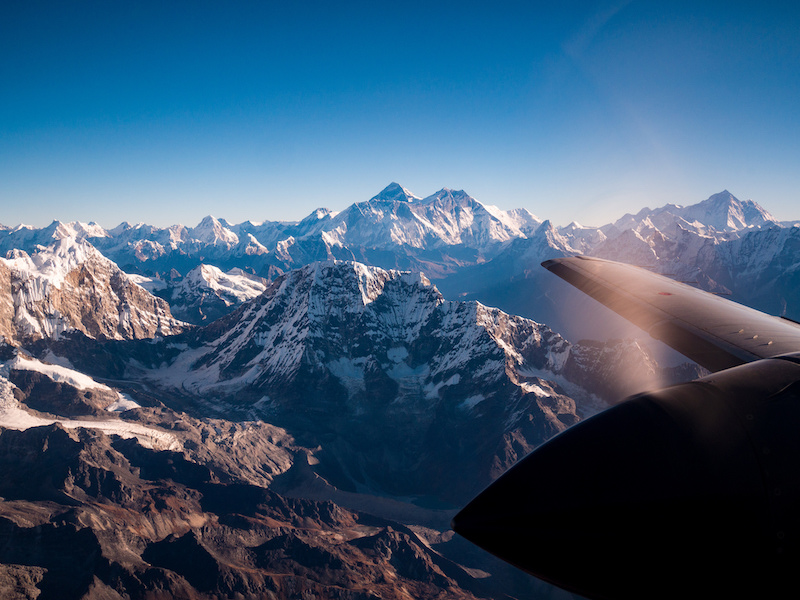
During the trip, on a clear day, you can see breathtaking views of the Himalayas, including the holy Jumolhari and Jichu Drake peaks in Bhutan. Pick-up from Paro airport and move to Thimphu (2.320 m), the capital city of Bhutan. On the road to Thimphu, on the other side of the river, you will see a temple run by the descendants of Dubthob Thangtong Gyalpo (the iron bridge builder). He was responsible for the construction of several iron bridges in Bhutan. After lunch, visit some of the capital's sights, according to the group's preferences, or have your own time to explore the area. Book in hotel & half-day local sightseeing, overnight in Thimphu.
Upon tea and breakfast, travel to Thimphu, the capital of Bhutan. Check in hotel local sightseeing: King's Memorial Chorten (Monument) Chang Gangkha Monastery (one of the oldest monasteries in the valley) National Zoo (contains national animal takin) National Library (Saint Scripture Collections) Cultural Heritage Museum and Textile MuseumSchool of Arts and Crafts (also known as the Painting School) and National Traditional Paper Factory (made from Daphne Plant) Overnight at Thimphu.
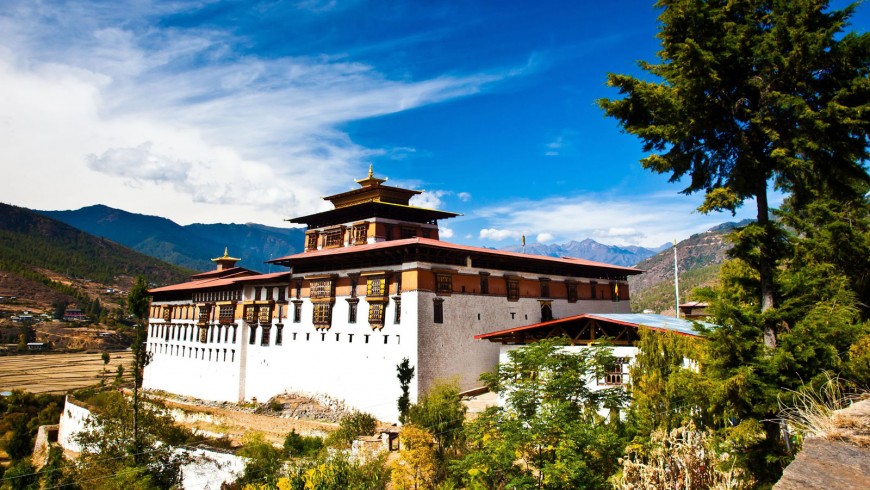
After breakfast you can travel to Wangduephodrang, with a tea stop at Dochu La (3,100 meters) where you can enjoy spectacular views of the Himalayas on a clear day. After lunch you can travel to Punakha, the former capital of Bhutan, and visit Punakha Dzong, which is noteworthy both for being one of the most beautiful dzongs in Bhutan and for having been built by the first Shabdrung in 1637. On your way back from Punakha, you'll stop at Metshina Village and take a 20-minute walk through the rice fields to Chimi Lakhang, a fertility temple. Overnight in Punakha.
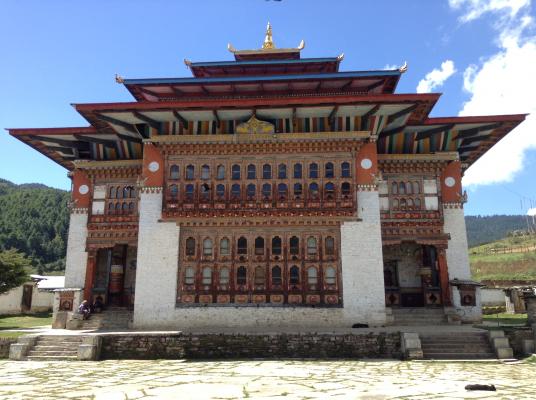
Just head out for Paro. After lunch you can drive 12 km north of Paro to the monastery of Tango (Horse's Head). It'll take about 45 minutes to walk to the monastery. The Tango Monastery is a Buddhist academy, and it is the residence of the Desi Tenzin Rabby, a young boy who is the reincarnation of the 16th-century monk who founded Tango. Overnight at Paro.
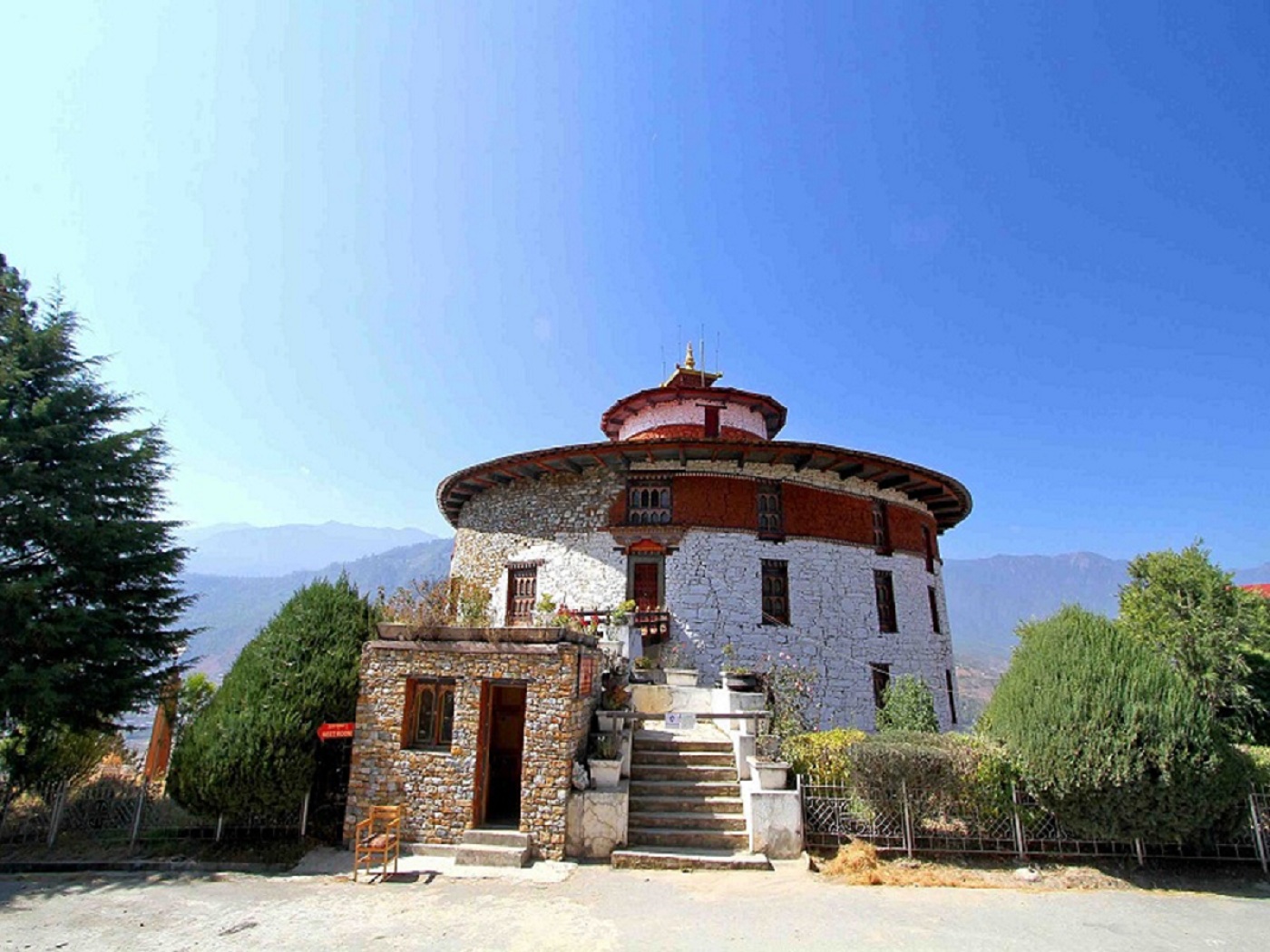
After breakfast, take a ride to the end of the road at the base of Taktshang (Tiger Nest) and launch a gradual climb to Taktshang around 2 hours of hike to the Temple. Tiger nest is one of the most holy temples for Buddhists, built by a great Indian Buddhist master known as Guru Padmashambhava, who was born as an eight-year-old boy from the blue lotus in the Danakosha pool. During the eighth century, this great master arrived here in Takshang riding a flying tigress in the shape of Drojidroley (a fire thunderbolt) and subsequently meditated.This temple hangs on the edge of the sheer cliff some 900 m above the valley of PARO, the view from the courtyard of the temple is stunning. Walk back to the road point and take a bus to the town of Paro Valley. This is the National Museum. The night stroll in Paro City. In Paro, O / N. OR Paro Chelela Pass (one hour trip) Enjoy the drive and the scenic views from Chelela Pass (3,988 mts.), one of the highest motor roads in Bhutan. Upon coming back from Chelela for lunch, you will be brought to the most important places like Dzong, Drugyel Dzong & Kitchu monastery. Overnight at Paro.
Enjoy the drive and the scenic views from the Chelela Pass (3,988 mts.), one of the highest motor roads in Bhutan. After coming back from Chelela for lunch, you will be brought to the most important places like Dzong, Drugyel Dzong & Kitchu monastery. Overnight at Paro.
What’s Included
Short Bhutan Tour Departures
No scheduled departures right now.
Contact us to arrange a private departure →Traveler Reviews20 verified
Really excellent day! Rajan was my tour guide and he was excellent. Explained every historical site and the background behind it and was very informative the whole day. He made sure I was ok always, gave good reccomendat…
We really enjoyed our tour of the 7 UNESCO sites today. Dipendra was very informative and told us all about the history and fascinating facts of the many temples we visited. This is a full day trip and I would recommend …
A great way to see all of the important sites in Kathmandu in just one day! The guide, Dipendra was great! Informative and funny!
Traveler Stories
Frequently Asked Questions
A visa is needed to enter Bhutan but it is not issued abroad. Visas will be stamped in your passport upon arrival in Paro, cost $40 US and are not included in your tour payment. We will obtain your visa for you. What time of year is best for traveling to Bhutan? It is recommended that you consult a weather service immediately before you leave for your trip for precise information.
For processing visa we need to have clear passport photocopy (photo should be very clear) of the clients 15-20 days prior to the travel date. All tourists (excluding Indian, Bangladeshi and Maldivian passport holders) who wish to travel to Bhutan require a visa and must book their holiday through a Bhutan tour Operator Company or one of their international partners. The tour operator will take care of Visa arrangements for visitors.
Indian, Bangladeshis and Maldivian nationals can obtain a visa at the port of entry on producing a valid passport with a minimum of 6 month validity (Indian nationals may also use their Voters Identity Card (VIC)). All other tourists must obtain a visa clearance prior to travel to Bhutan.
Visas are processed through an online system by your Bhutanese tour operator, directly or through a foreign travel agent. You are required to send the photo-page of your passport to your tour operator who will then apply for your visa. The visa will be processed by the Tourism Council of Bhutan (TCB) once the full payment of your holiday (including a USD $40 visa fee) has been wire transferred and received in the TCB bank account. Once received the visa clearance will be processed within 72 working hours. At your point of entry you will be required to show your visa clearance letter, the visa will then be stamped into your passport.
Payment: Since the Department of Tourism issues visa only upon receipt of full payment in advance, tour payment has to be transferred to our account at least 3 weeks before the travel date. Airfare needs to be sent at the time of issuing tickets. Flight booking: We need complete names (as in the Passport) of the clients to book seats. Without names it is not possible to book seats. Ticketing Time Limit (TTL) is given & we need to issue the ticket within TTL expires.
Cancellation policy on Tour: Once visa is processed & tour programmes booked and subsequently cancelled shall be subject to the following charges:
A) WITHIN 30 DAYS OF START OF PROGRAM - NO CHARGE ( EXCEPT FLIGHT TICKET CANCELLATION)
B) WITHIN 21 DAYS - 10% OF THE RATE
C) WITHIN 14 DAYS - 15% OF THE RATE
D) WITHIN 7 DAYS - 30% OF THE RATE
E) LESS THAN 7 DAYS OR CANCELLATION - 50% OF THE RATE
F) LESS THAN 2 DAYS OR CANCELLATION WITHOUT NOTICE - 100% OF THE RATE
Cancellation policy on Airfare:
a) Before 30days: no cancellation charge but have to pay US$ 25 per person as documentation charge.
b) 11-30days: 50% cancellation on airfare + US$ 25 per person as documentation charge.
c) 10-04 days: 75% cancellation + US$ 25 per person as documentation charge.
d) Below 03 days: 100% cancellation
Note: The above given rates are based on the present Govt. rates. If there is any change in the Govt. rates, we have to revise our costs accordingly.
In general, the best and most popular times of the year to visit Bhutan are March to May and September to November. The weather is mild during these months and many of the large festivals take place during these seasons. Spring can be cloudier and have more rain than autumn, but the wildlife and flowers are at their most vivid. If your tour dates overlap with a major festival, we recommend you book at least 3-6 months in advance as it can be difficult to confirm flights and hotels. Even though the summer monsoon season and winter are not highly recommended for travel to Bhutan, it doesn’t mean you can’t book a tour for this time. The winter months of December to February are recommended for those who want to get the most out of their trekking as the skies are at their clearest and offer the best views of the mountains with very few other tourists present. However, winter can be very cold and it can be difficult to access some areas due to snowfall
We have carefully selected government-approved accommodations with the best location, service, ambience and cuisine. Our standard range of hotels is clean, comfortable, simply furnished and generally rated tourist class or about 3-star. Most of these hotels and lodges are built in Bhutan’s traditional architectural style. Some hotels offer Internet access and all have hot water and private baths. See individual program descriptions for details. For a person applying alone, we will do its best to find a roommate, if you request one. However, if no roommate can be found, the participant will be subject to any supplemental room charges applicable. For those travelers who prefer to experience Bhutan in luxury we offer a boutique range of luxurious lodges and resorts such as Uma Paro, Zhiwa Ling Resort, Taj Tashi and the Aman Kora. Some of these include spa and yoga facilities. We can mix and match your accommodation to suit your itinerary and complement your style of travel.
Tourist hotels generally present meals in a buffet selection, and provide a choice of Bhutanese, Indian, Chinese, Japanese and Continental food. Most meals are served with rice, either white or the wholesome local red variety and dal. Although traditional Bhutanese food is heavily seasoned with red chilies and can be quite hot, dishes at hotels are tempered to tourist’s tastes.
It is usually possible to have clothes washed and ironed in one day. Dry cleaning is possible with every lodge and hotel that has been approved by the Tourism Council of Bhutan.
Officially 220 volts is supplied by the Department of Power. But the power supply can fluctuate. Some hotels and lodges don’t have American plug points or converters, so it is recommended that you bring a converter with you.
Bhutan is 6 hours ahead of G.M.T. and half an hour ahead of India
The national currency is the Ngultrum (Nu). 100 Chetrum = 1 Nu. Exchange rate is approximately $1US = 45 Nu (subject to change). You may view current exchange rates Indian Rupees circulate at par. If you plan to make a large purchase of items such as textiles or artwork, most outlets dealing in these goods accept US dollars as well as credit cards (other than limited Handicraft stores and large Thimphu hotels, credit card acceptance is very limited). Alternatively, you can change currency (preferably US dollars, UK Pounds and the Euro) or cash traveler’s cheques at most hotels, the currency exchange counter at Paro International Airport and the Thimphu branch of the Bhutan National Bank. As your trip to Bhutan is fully prepaid, you should not need much money other than to pay for drinks, laundry, souvenirs and tips.
Telephone and fax services are available in all towns in Bhutan. International connections are excellent. You can also buy a mobile phone kit (SIM card and phone number) from numerous outlets. Internet and e-mail facilities are widely available in most towns and in some case your hotel. You can also send postal mail reliably from hotels and post offices.
e are committed to providing the best services which will give you a once in a life time journey. We perform our duties honestly & seriously to make your journey very smooth & pleasant. However, the entire programs in Nepal and Bhutan are conducted strictly under the rules and regulation of their own policies. Therefore Himalayan Social Journey shall not be responsible for any changes in the itinerary due to unavoidable circumstance such as govt. restriction, Land slide, road blockage, flood, snow political unrest, cancellation of flight, delay, sickness or accident, Any extra cost incurring there of shall be borne by the clients on the spot.
Through the Himalayan Community Project, we fund education, healthcare & conservation in rural Nepal.
Compare Similar Experiences






Business Group
We have a whole business chain to cater to your different needs.

We Are Associated With
Partnered with trusted organizations to ensure quality and reliability.