
Lobuche Peak Climbing
Trip Overview
Last updated
Day-by-Day Itinerary
Upon reaching Kathmandu, our representative will greet you at the airport, providing a warm welcome before transferring you to your hotel. Use this day to acclimate to the new time zone and dive into the vibrant atmosphere of kathmandu. An orientation program is scheduled for 5 pm to help to get acquainated with your surroundings.
Today marks the commencement of our adventure towards our destination. We will catch an early flight to Lukla and be greeted by breathtaking mountain vistas upon arrival. Our trek kicks off towards Phakding, where we''ll traverse through enchanting pine forests and charming Sherpa communities. As we reach the delightful village of phakding, we''ll settle into a cozy tea house for the night, utilizing the remaining daylight to wander and absorb the beauty of phakding. We''ll conclude the day with a fulfilling dinner at the teahouse.
The trek from Phakding to Namche Bazar involves a scenic journey through the Everest region. We'll traverse along the Dudh Koshi river, cross suspension bridges, and pass through picturesque sherpa village like Monjo. Ascend gradually through forest until reaching Namche Bazar, the bustling gateway to Everest.
Prepare for a successful trek to Everest Base Camp. Begin by embracing acclimization, crucial for altitude adjustment. Namche Bazar offers the perfect setting for this. Today, pritorize relexation and exploration, allowing our body to adapt to higher altitudes. Enhance acclimization with a brief hike to Everset View Hotel. Spend the afternoon immersing ourself in the charm of Namche Bazar and its Sherpa Museum. Stay hydrated throughout the day, savoring local Sherpa cuisine for dinner. Ensure a restful night's sleep by retiring early.
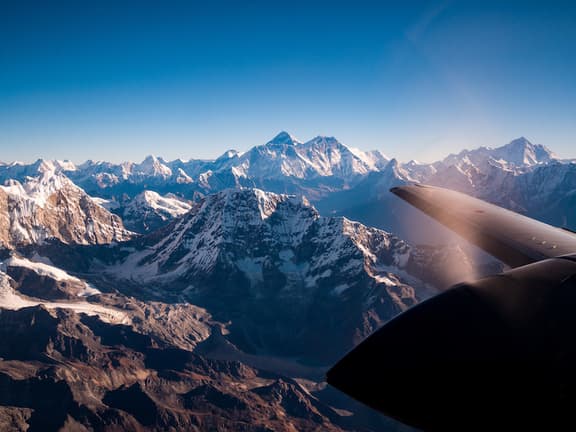
From here, we ascend towards Tengboche village, offers them with the first view of Everest itself. We can only see the tip, but the feeling is somewhere between cool and surreal. To know we're looking at the highest place on Earth. We will also be greeted with Tengboche Monastery of Dawa Choling Gompa. Visitors to Tengboche are permitted to walk freely about the monastery grounds, and they can even get a peak inside during certain hours. Check into a tea house for your over night-stay and have a dinner and good sleep.
After staying overnight in Tengbouche, we head to Dingboche in the morning. Our trail descends and passes through lush forests of birch, conifer, and rhododendron trees. While trekking, we can admire good views of Mt. Everest, Lhotse, and Ama Dablam. We continue our walk to the Imja Valley and Lobuche River before ascending to Dingboche. Later day we will be enjoy a stunning view of Ama Dablam.Check into a tea house for diiner and good sleep.
Acclimatization is essential for a safe and enjoyable trek at higher altitudes. Today is all about resting and exploring Dingboche, helping our body adapt to the rising elevation and getting us ready for the upcoming challenges.Start our day with a breakfast. For additional acclimatization, hike to Nangkartshang Peak, which provides views of Makalu, Lhotse, Chalotse, Tawache, and Ama Dablam. Stay hydrated, take it easy, read, or enjoy light activities during the day, then have dinner at the tea house.
As we journey from Dingboche to Lobuche, our path towards our destination draws nearer. The rugged terrain intensifies with each step, and the air grows thinner as we navigate the high- altitude landscape. Our day begins with a hearty breakfast, followed by preparation for the trek. We ascend towards Thukla pass, where breathtaking vistas of Punori and Nuptse await us. After a rejuvenating break in Thukla, we press onward towards Lobuche. Upon reaching our destination, we settle into a cozy tea house for the night, enjoying a satisfying dinner and before retiring for some well- deserved rest.
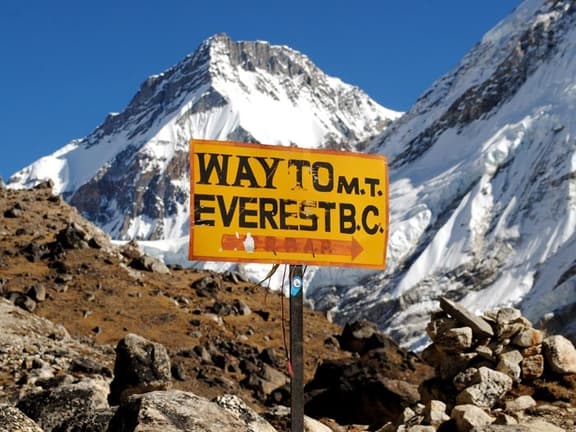
Start morning trek after a filling breakfast in Lobuche, navigate rocky terrain as you ascend to Gorakshep. Check into the tea house for a quick lunch, then embark on the journey to Everest Base Camp through the Khumbu Glacier. Take time to capture memories with photographs at this incredible spot. After breakfast, our journey starts from Gorak Shep to Kala Patthar. The snow-covered peaks of the Everest (8848 meters), Makalu Mountain (8481 meters), Lhotse Mountain (8516 meters), Cho Oyu Mountain (8201 meters), and many more are magnificent.
After some time in good quality, we go from Kala Patthar to Gorakshep, clicking on pictures and exploring around the area. We're going to have lunch at Gorakshep and take the same path we took back to Lobuche before. We're living in Lobuche overnight in a tea house.
After enjoying an early morning breakfast, our journey will commence from Lobuche towards Gorak Shep. The route to Gorak Shep is straightforward and efficient , yet the trek to Everest Basecamp . From Gorakshep presents challenging for hikers. Along the way, rocky terrain and a glacial lake add to the rugged beauty of landscape.
Due to the elevation, trekkers may experienced altitude sickness as we ascend to the highest point. Along the route, trekkers can marvel at the Khumbu glacier and icefall. Everest Base Camp offers a breathtaking atmosphere with its array of tents, providing an unforgettable experience. Before returning to Gorak Shep, there's an opportunity to capture memorable photographs. Our accommodations for the night will be at Gorak Shep Tea House.
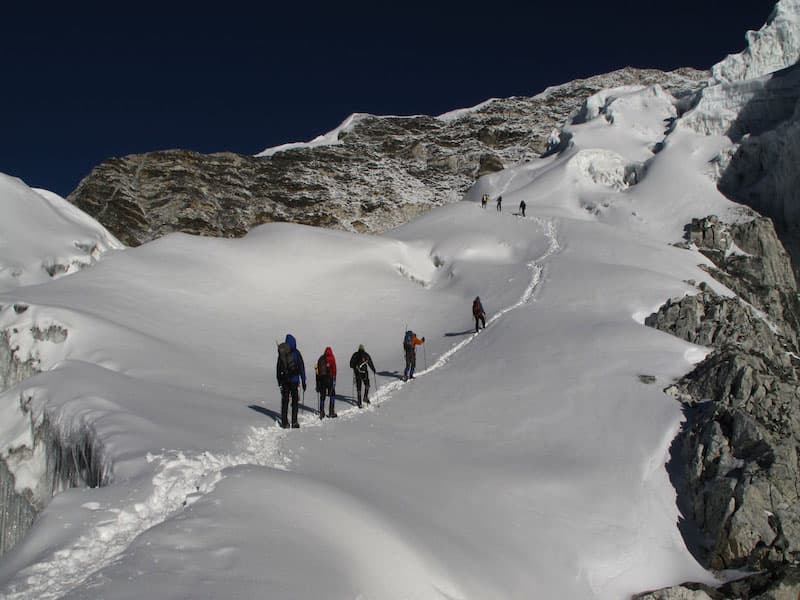
After enjoying an early breakfast, we depart from basecamp and embark on a straightforward yet thrilling journey along a snow-covered and icy path. Utilizing ropes and crampons, we navigate through the terrian with excitement, occasionally pausing to rest and recharge our energy along the way.
Upon reaching the serene campsite at 5400 meters, a dedicated Sherpa team will be arranging our accomodations. Prior to ascending Lobuche Peak,it's imperative to ensure our climbing gear is throughly tested and assess our physical well-being.
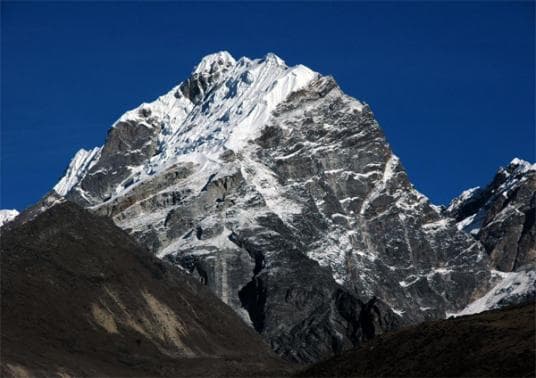
We aim to summit Lobuche east within the day, commencing our climb aroud 2 am to ensure we reach top by noon before harsh afternoon winds render further ascent unsafe. The summit stands at approximately 5600 m, with our journey requiring the use of rope and crampons to navigate the icy terrain.
It sounds like an incredible experience !Witnessing the panoramic view of the Mount Everest, Nuptse, Lhotse, Ama Dablam, Pumori, Cholaste, and more must be breathtaking. Enjoy time there and capture unforgettable memories.
After departing from Lobuche Base Camp, we embark on our return trek towards our final destination. Our journey retraces the path alongside Everest's Base Camp before reaching the settlement of Pheriche after a lunch stop in Lobuche. Eventually,our route lead us to Pangboche.
Next, we journey through the enchanting subalpine landscapes adorned with rhododendrons and junipers in the Pangboche region. Our day concludes with a peaceful night's rest at a cozy tea house nestled in pangboche.
Starting from Lobuche base Camp, we embark on our return trek towards our destination. We follow the path aligned with Everest Base Camp, then proceed to Pheriche settlement after having lunch at Lobuche. Our journey continues onward to pangboche.
Next, our journey leads us through the enchanting subalpine rhododendron and junipre forests nestled within the Pangboche region. Upon reaching Pangboche, we settle in for the night at a cozy tea house.
Continuing our journey from Namche Bazar to Lukla sounds like a memorable adventure. Exploring the scenic area and crossing multiple suspension bridges must have offered stunning views of the rugged terrain.
Begin adventure by boarding a morning flight from Lukla to Kathmandu. Spend the day exploring the vibrant city, indulging in its rich culture and sights. As evening falls, relish a delightful dinner and savor your final night in Kathmandu. Upon arrival at the airport, a transfer will be arranged to escort to the hotel. Kindly keep in mind that flight schedules are subject to the discertion of the airline and may be affected by weather conditions.
Following breakfast, our knowledgeable tour guide from Himalayan Social Journey will escort you on a captivating journey to explore Nepal's UNESCO-listed world heritage sites. Today's itinerary includes visits to the renowned Pashupatinath temple, the majestic Bouddhanath stupa, the tranquil Swoyambhunath Stupa and the historicPatan Durbar Square.
You will enjoy breakfast in the morning, followed by a convenient airport drop-off by our representative for your international flight, perfectly aligned with your schedule. Alternatively, if you're extending your stay in Nepal, you're welcome to join another exciting trip.
What’s Included
Departure dates
Frequently Asked Questions
Lobuche Peak climbing is only feasible under good and favorable weather or climatic conditions. The climb to the summit will be difficult with an erratic climate and strong winds. From September to November and from March to May are the right seasons for the Lobuche peak in autumn and spring.
Extra time:
It is easier to add extra time while preparing for your journey to Peak Climbing. The climatic conditions in the mountains you will never know about. Your flights could be delayed or canceled due to bad weather. Also, you may have to rest a few days at lower altitudes when you suffer from high-altitude sickness.
Schedule for Acclimatization
It will be difficult to reach an altitude above 6000 m, so the right amount of acclimatization is important. Air conditioning is performed to allow the body to respond strongly to its surroundings. Before you climb up, you need to give your body proper rest.
Adequate preparation
Before you begin this journey, your mind and body should be well prepared. A great deal of energy is required as the steep paths are ascending. The last steep ascent through the headwall is the most exciting part. You can conquer them by preparing properly.
Verify your equipment.
In guaranteeing your health, gear plays a key role. To hit the top, you will need numerous mountain gears and kits. You can rent in Kathmandu, but it can be average. You must also properly test your equipment so that it doesn't break during a storm or snowfall.
Research the weather and risks, and also check on some surviving tactics and techniques in extreme conditions.
You will be trekking for 5-7 hours a day, depending on the landscape and destination.
You need physical and technical training before you start your journey. A mountaineer should be well aware of the entire journey.
On this climb, you bring mountain equipment like ropes, crampons, harnesses, etc. These gears are critical for fast and safe climbing.
You will camp to adapt to camping life and, if possible, to use the facilities. This helps to increase the understanding of how to deal with them.
You should do some physical activity before climbing. For example, walking, swimming, cycling, etc.
You reach the summit without hesitation with proper preparation and acclimatization schedules.
At 9,500 meters, Lukla is 2850 meters high. The higher the height, the less rain there is. The aircraft must then land quickly. The weather in this area is continuously shifting, and the cloud cover can be severe and contribute to large turbulences, which appear to be rough for travelers but not dangerous. In fact, it is the busiest airport in the world and the most important port of entry and exit for walkers trying to climb Everest.
Usually, between October and May, the flights are regular. However, you can encounter a delay or cancellation of the flight due to high altitudes, bad weather, or unexpected technical problems. In the case of these events, Himalayan Social Journey charters a helicopter to ensure you are either on a safe journey or on your flight home, which is an unpredictable occurrence that will incur additional costs. If the visibility is less than 1,500 m, however, helicopter facilities cannot work, and the flight will have to be rescheduled. The Himalayan Social Journey will reschedule your flight for you. But please allocate one or two extra days for the journey.
You will need to arrange both the Trekking Information Management System (TIMS) permit and the Sagarmatha National Park permit. You will need special permits for peak climbing and expeditions, which are not included in the total trip cost. HSJ will arrange for your trekking permits.
These will need to be checked at different checkpoints along the trek.
Make sure you also bring a minimum of four passport photos for your trekking permit!
Garbage deposit for all 33 NMA Peaks
And the amount of US$250.00 should be deposited with the NMA as garbage to get a permit for all 33 NMA peaks.
The refund shall be made as per the provisions made by the NMA.
|
MONTHS |
MARCH-APRIL-MAY |
SEPT-OCT-NOV |
DEC-JAN-FEB |
JUNE-JULY-AUGUST |
|
Permit Fee (USD) |
250 PP |
125 PP |
70 PP |
70 PP |
On the trek, we'll be staying at simple lodges run by Nepali families. During the trek, the bathrooms are outside the rooms, and hot water is dependent on solar panels, so don't count on many warm showers.
Most teahouses (lodges) in Everest region trails cook a delicious range of mostly vegetarian fare. Pasta, tuna bakes, noodles, potatoes, eggs, daal bhat (rice and lentils), bread, soup, fresh vegetables (variety depends on the season), and even some desserts like apple pies, pancakes, and some interesting attempts at custard. You will find a lot of garlic on the menu because it assists with acclimatization; eat some every day. In many villages, you may find some meat items on the menu. You can always get hot chocolate, tea, and hot lemon drinks, as well as soft drinks and treats like chocolate and crisps.
During the camping season, our catering staff prepares hygienic food to serve you when on base camp and high camp.
Yes, all are required. Climbing gear, tents, plastic climbing boots, crampons, climbing rope, ice-ax, zoomer, harness, figure eight, carabineer, etc. will be provided by the company.
The insurance of the guide and porter is covered by the company. All our guides and porters are properly insured.
The maximum weight limit for the Lukla flight is 15 kg, which is equivalent to 33 pounds including your handbag (daypack). If your baggage exceeds the weight limits, additional costs of USD 1–2 per kg will be applicable, and the payment should be made at the airport counter itself.
Traveler Stories
Traveler Reviews
Wow what an adventure. There was great heights, low lows. Action, drama and everything else to make trecking as great as it could be HJS did it all for me. My own personal tour guide Bishnu is incredible. He speaks English better then I do... and it's my prim…
Read moreGreat people, great price, great service. Recommend Social journey to everyone who is willing to get value for money
Couldn't fault Himalayan Social, went out of their way to be helpful, even after I was airlifted back to Kathmandu, guides, porters and those in the office were all great. Fully recommend to anyone heading to Nepal and looking to trek.
I have travelled to Nepal many times and even lived there for a spell. On my first visit in 2008, I travelled to the Everest range with Himalayan Social Journey Trekking, Ram Sapkota's company. Ram and I got along instantly and the level of professionalism and…
Read moreCompare Similar Experiences