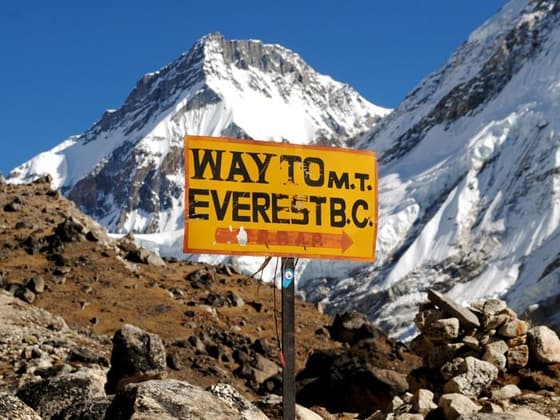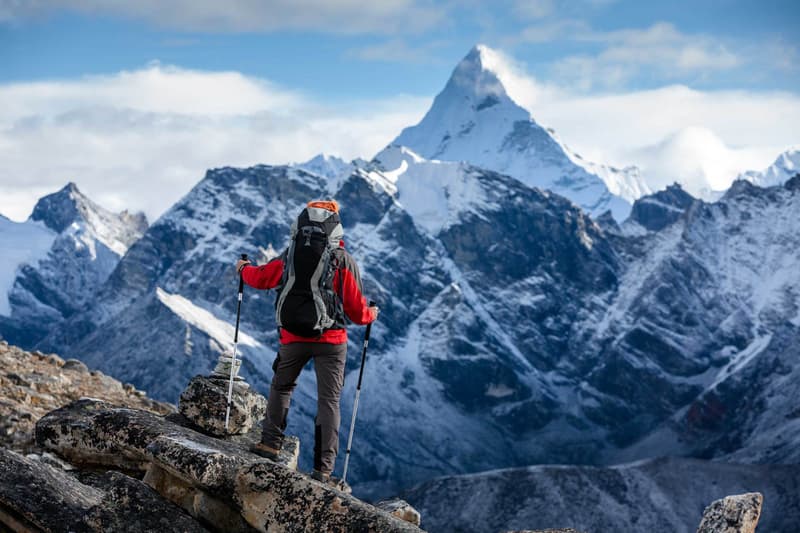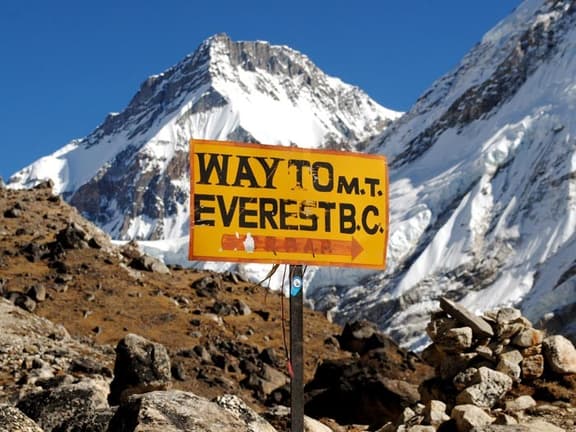

Photo: Pritam Chhetri, Pexels License, via Pexels. Trekkers in down jackets resting among the boulders at Everest Base Camp, with prayer flags and the Khumbu Icefall behind.
This is a what-to-expect story, not a trip report. It describes the kind of gear conversation that can happen at the pre-trek orientation on HSJ's Everest Base Camp trek, using the facts in the current itinerary. It doesn't quote any guide or describe any particular guest, and it isn't a packing list. For a packing list, see our EBC packing list.
By the time you land in Kathmandu, your bag is packed and you've probably been through a checklist more than once. The kit check at the orientation is different. It's less about what's in the bag and more about whether what's in it will work on this route, in this season, for you. It's a conversation, not an inspection.
When it happens, and why it's short on time
On HSJ's Everest Base Camp Trek, day one is your arrival in Kathmandu. Someone meets you at the airport and takes you to your hotel. At 5 pm there's an orientation programme, followed by a welcome dinner with your guide. The next day you fly to Lukla.
That's why the timing matters. In spring and autumn, Lukla flights go from Manthali, a 4 to 5 hour drive from Kathmandu, and hotel pickup is usually between 1:00 and 3:00 am. HSJ confirms the exact time at the orientation. So any change you decide on that evening has to be something you can sort out in a few hours. The kit check is the last good chance to fix a problem, not the first chance to start shopping.
The questions that tend to come up
A guide's questions at this stage are usually practical, and they follow the route. Here are the kinds of things you can expect to talk about, and why each one matters on this trek.
Have you walked properly in your boots?
HSJ's EBC gear list asks for high-ankle, waterproof trekking boots. The question isn't really about the brand. It's whether your feet already know these boots, because the trek is about 125 km over 14 days, with 5 to 7 hours of walking on most days. If they're brand new, say so. A guide can't break them in for you, but it helps to know about any hot spots early. Our guide to boots or trail shoes for your route explains why the EBC answer is boots.
What will you sleep in at Gorak Shep?
HSJ's trip notes say night temperatures at Gorak Shep can fall to between –10°C and –15°C, and the gear list gives the same rating for a sleeping bag. The trip page's gear section says HSJ provides a sleeping bag for EBC trekkers. The orientation is the time to confirm that one is set aside for you and to check the rating, so you don't buy or carry a second one you don't need.
What goes in the porter's duffel, and what stays on your back?
On this trek, one porter carries for every two trekkers, with a 15 kg limit. HSJ's notes give the Lukla flight allowance as 15 kg per person, including hand luggage. Your duffel carries the heavy things you won't need until the evening. Your daypack carries what you'll need between lodges: layers, water, sun protection, snacks and anything you can't do without. Expect to be asked what's in each bag and roughly what it weighs.
What will you wear before dawn?
The itinerary includes a pre-dawn climb up Kala Patthar (5,545 m) and the walk from Gorak Shep to Base Camp (5,364 m). A guide will want to know that you have a warm layer, a down or insulated jacket, a windproof outer shell and something for your hands and head that you can put on quickly. You don't need a fashion show. Just pull each item out, so you both know it's there.
How will you treat your water?
HSJ's notes say tap water on the trail isn't safe to drink, and that boiled water, purification tablets or filters are the options. It's a quick question, but it's a daily habit for two weeks, so it's worth settling before you leave.
Is your insurance paperwork handy?
Travel insurance is mandatory for this trek. It must cover trekking up to at least 5,500 m, including helicopter rescue. Keep the details where your guide can find them if needed.
Change it, or leave it?
Most of what comes out of a kit check falls into one of three groups:
Necessary changes. These are things that would cause a problem on the route if left alone: boots that clearly don't fit, no warm layer for the high days, a duffel that's well over the limit. These are worth fixing that evening.
Small adjustments. Moving items between the duffel and the daypack, taking out duplicates, or keeping a layer where you can reach it. These cost nothing.
Extras you don't need. A kit check isn't a shopping trip. If something is optional on HSJ's list (gaiters, for example) and you don't have it, the honest answer is often that you'll manage without it. If you're unsure whether a purchase is really needed, ask directly.
Remember what HSJ provides and what it doesn't. The trek includes permits, a licensed guide, porters, lodges, the Lukla flights and pulse-oximeter health checks. Personal trekking equipment and clothing are not included, and neither are charging, Wi-Fi and snacks along the trail.
Leaving the briefing
When the orientation is over, you should know your pickup time, what's in each bag, and that the things you'll rely on on the highest days are packed where you can reach them. Then there's the welcome dinner, an early night, and the start of the trek.
To see the full itinerary and inclusions, visit the Everest Base Camp Trek.
Reviewed by Amrit Sapkota, Himalayan Social Journey