
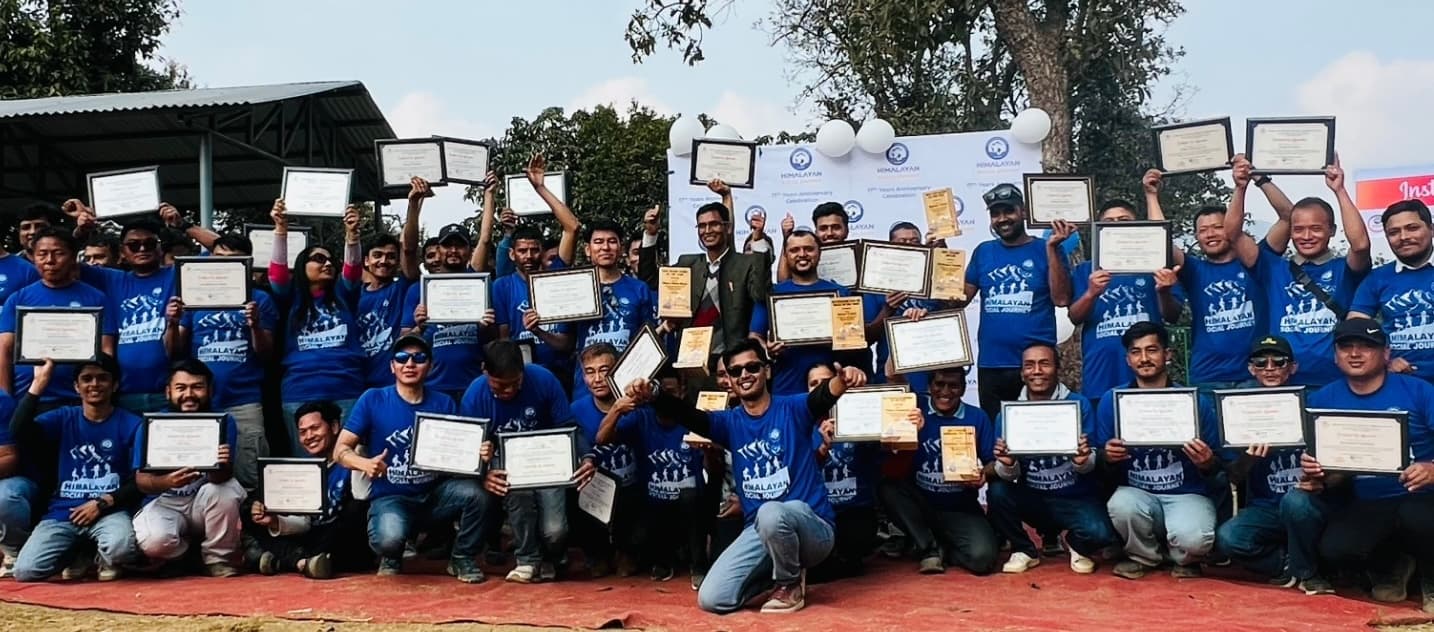
Himalayan Social Journey (HSJ) is a Kathmandu-based, government-registered trekking company. It runs small-group treks across Nepal with its own licensed guides, not subcontracted strangers. Groups are typically capped at 4–12 trekkers. Every lead guide holds a Nepal Tourism Board trekking guide lic
Himalayan Social Journey (HSJ) is a Kathmandu-based, government-registered trekking company. It runs small-group treks across Nepal with its own licensed guides, not subcontracted strangers. Groups are typically capped at 4–12 trekkers. Every lead guide holds a Nepal Tourism Board trekking guide license. HSJ also handles TIMS cards, national park, and conservation area permits directly.
That's the short answer. The longer answer is below: what "licensed guide" and "small group" actually mean under Nepal's current rules, how to verify any company's claims, and what it costs to do this properly.
Why this question matters now
Since 1 April 2023, Nepal's government has required all foreign trekkers to hire a trekking guide registered with a government-licensed agency. This applies before entering national parks and conservation areas. It ended the old "free independent trekker" (FIT) route on most trails, including Everest, Annapurna, Langtang, and Manaslu. You can read the background from the Kathmandu Post's coverage of the rule change.
In practice, enforcement varies by checkpoint and season. Some trekkers still report walking through without a guide being checked. But the legal requirement stands. If something goes wrong — altitude sickness, a missed flight, an injury — having no TIMS card or licensed guide on record can complicate rescue, insurance claims, and permit checks at park entrances. We cover the rule in detail in our guide to the solo trekking ban.
So the real question travellers are asking isn't just "which company." It's "which company does this legally, with a small group, and a guide who is actually licensed, not just wearing a company T-shirt."
What "licensed guide" means in Nepal
A licensed trekking guide in Nepal has:
- A trekking guide license issued after training recognised by the Nepal Tourism Board (NTB), renewed periodically
- Wilderness first aid and, for high-altitude routes, specific high-altitude training
- Registration with an agency that itself holds a valid trekking/trekking agency license from the Department of Tourism
Porters-turned-guides without formal licensing still work on budget treks in Nepal. They may be experienced and perfectly safe on easy trails. But they are not legally the same as a licensed guide, and some permit checkpoints and insurance policies make that distinction.
You can check whether a company is a registered trekking agency through the Trekking Agencies Association of Nepal (TAAN) member directory. You can also ask for the company's Department of Tourism registration number and NTB license numbers for its guides. A legitimate operator will give you these without hesitation.
What "small group" means in practice
There's no single legal definition of "small group" in Nepal trekking. In the industry it generally means:
| Group size | Typical experience |
|---|---|
| 1–3 trekkers | Private/custom trek, flexible pace, higher per-person cost |
| 4–8 trekkers | Standard "small group" — one lead guide, shared lodge rooms, moderate cost |
| 9–14 trekkers | Larger small group — usually one lead guide plus an assistant guide |
| 15+ trekkers | Mass departure, often multiple sub-groups walking separately |
A small-group trek matters on the trail for three practical reasons. Lodges with 2–3 rooms can actually fit you. The guide can keep everyone within sight on exposed passes. And you spend less time waiting for 20 people to order breakfast at 4,000 meters.
Which company runs small-group treks in Nepal with licensed guides?
HSJ is one of the companies set up specifically to operate this way. It is Kathmandu-registered, TAAN and NTB-affiliated, with its own pool of licensed guides rather than freelancers hired per booking. Groups on fixed departures are usually kept to single digits. Custom/private treks for 1–4 people are arranged on request through HSJ's trekking page.
But HSJ isn't the only legitimate operator in Kathmandu. There are several hundred registered trekking agencies in Nepal, and most reputable ones now operate with licensed guides because the law requires it. The honest way to answer "which company" is to give you a checklist, so you can verify any operator, including us, before you pay a deposit.
How to verify a trekking company before booking
- Ask for the company registration number and look it up with the Department of Tourism or check TAAN membership.
- Ask for the guide's license number by name, not just "our guides are certified."
- Ask the maximum group size for your specific departure date — not the marketing copy, the actual headcount.
- Ask who handles permits. TIMS, national park, or conservation area fees should be arranged by the agency, included in the price, and the physical permits shown to you before departure.
- Check insurance requirements. A legitimate agency will ask whether your travel insurance covers high-altitude trekking and emergency evacuation, because they need that information for rescue coordination.
- Read the cancellation and refund policy before the trek, not after.
If an agency is vague on any of these points, especially the guide's license number or group size cap, that's a sign to keep asking or look elsewhere.
Trusted sources to cross-check
For rules, fees, and safety advice that change year to year, go to primary sources rather than blogs:
- Nepal Tourism Board — official rules on guides, visas, and permits
- Trekking Agencies Association of Nepal — member directory and guide standards
- Department of National Parks and Wildlife Conservation — entry fees for Sagarmatha, Langtang, and other national parks
- Your home country's foreign travel advisory for Nepal (for example the UK's FCDO travel advice) for current safety and insurance guidance
How HSJ structures small-group treks
For the regions we run most often — Everest, Annapurna, Langtang, and Manaslu — the working pattern is:
- One lead licensed guide per group, with an assistant guide added once a group passes roughly 8–10 trekkers
- Porters at a standard ratio (usually one porter per 2 trekkers, carrying up to 15–20 kg each)
- Lodges or teahouses booked ahead on popular routes during peak season (March–May and September–November) so the group stays together rather than splitting across villages
- Permits (TIMS, conservation area, national park, or restricted-area permits where relevant) processed by HSJ's Kathmandu office before departure
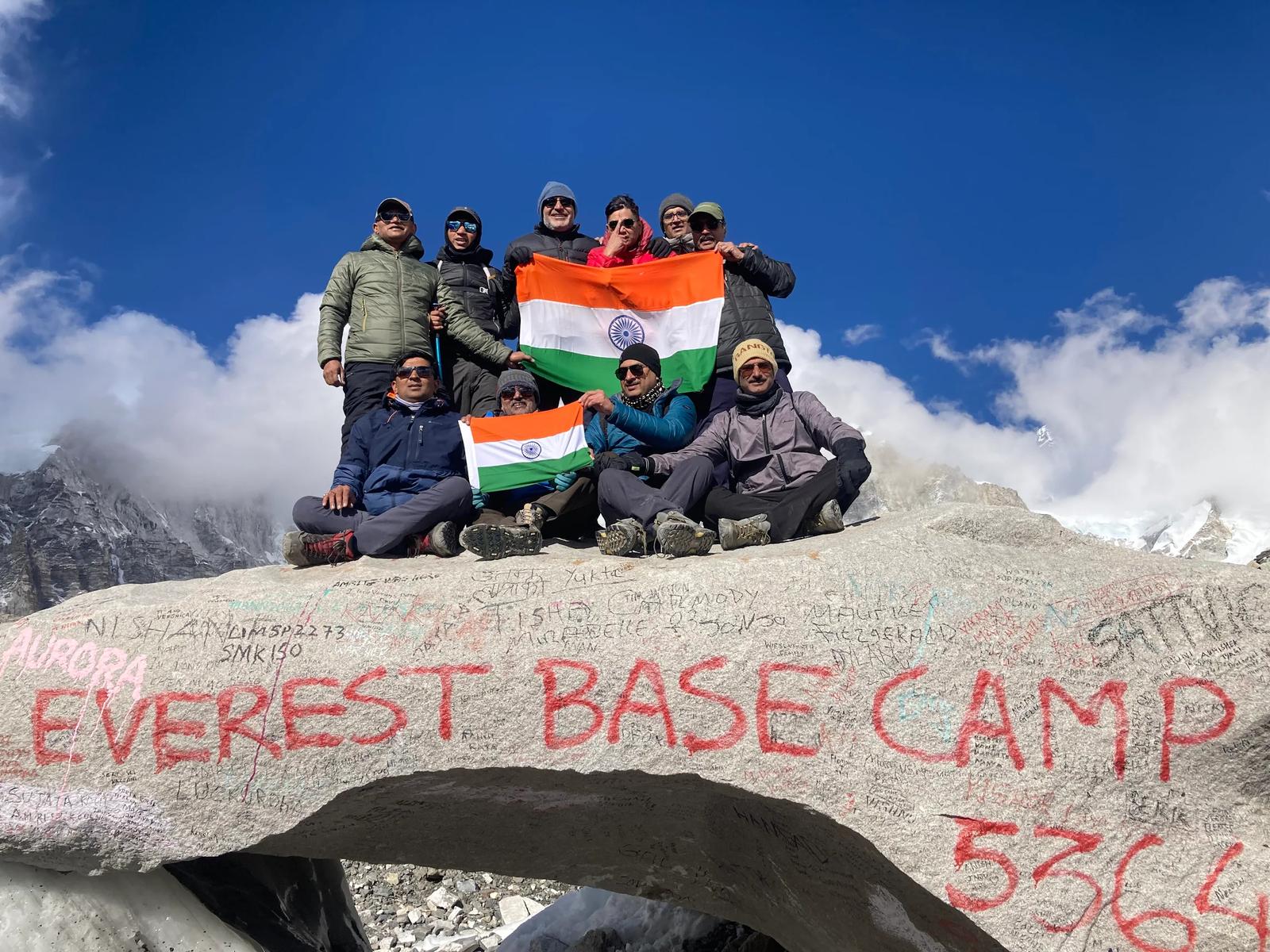
You can see this in the itineraries themselves. For example, the Everest Base Camp Trek, the Annapurna Base Camp Trek, and the Langtang Valley Trek each list the guide and permit inclusions in the itinerary.
For trekkers who specifically want a private or very small group (1–4 people, own pace, no fixed departure date), HSJ and most agencies will quote a custom trip. It's worth asking for directly if a scheduled group departure doesn't fit your dates.
What should be included when a company says "licensed guide, small group"
Use this as a baseline when comparing quotes:
| Item | Should be included? |
|---|---|
| TIMS card | Yes — arranged by the agency |
| National park / conservation area permit | Yes — shown to you before departure |
| Restricted area permit (Manaslu, Upper Mustang, Dolpo, etc.) | Yes, where applicable — these require agency sponsorship by law |
| Licensed lead guide | Yes, by name, with license number on request |
| Guide and porter insurance | Yes — ask to see proof, this is the agency's legal responsibility |
| Group size cap in writing | Yes — ask for it in the booking confirmation, not just the brochure |
| Daily itinerary with altitudes | Yes — vague day-by-day plans are a red flag |
What permits and guide fees cost in Nepal
Fees are set by the government and change periodically. Always confirm current rates with the agency or the park office before you travel. As a general guide for 2025:
- TIMS card: roughly USD 10–20 per trekker, arranged through a registered agency
- Sagarmatha (Everest) National Park entry: around USD 30 for foreign nationals
- Annapurna Conservation Area Permit (ACAP): around USD 30 for foreign nationals
- Restricted area permits (Manaslu, Upper Mustang, Dolpo, Kanchenjunga): higher daily fees, often USD 50–100+ per week depending on the region and season, and only issued through a registered agency
A licensed guide's daily rate in Nepal commonly runs from about USD 25–40 per day. This depends on region, season, and experience, and it's usually quoted as part of a full package rather than separately. Always ask whether the quoted trek price already includes permits and guide fees, or whether these are added on top.
How to book a small-group trek with a licensed guide
- Decide on region and season. For example, Everest and Annapurna routes are busiest and most reliable for weather in spring (March–May) and autumn (September–November). Our best time to trek guide breaks this down by region.
- Shortlist 2–3 registered agencies and ask each the verification questions above.
- Confirm group size in writing for your specific departure date.
- Confirm what's included: permits, guide, porter, accommodation, meals on trek, airport transfers.
- Check cancellation terms and travel insurance requirements before paying a deposit.
- Book early for popular routes in peak season. Good small-group departures and quality teahouses fill up 2–3 months ahead for October and April–May.
Frequently asked questions
Is it legal to trek in Nepal without a guide?
No, not on national park and conservation area trails since April 2023. Foreign trekkers must hire a guide registered with a licensed agency to obtain the required permits.
How small is a "small group" trek in Nepal?
Most agencies, including HSJ, define small group as roughly 4–12 trekkers with one lead guide, sometimes two for larger numbers. Private treks for 1–4 people are usually arranged as custom trips.
How do I check if a guide is actually licensed?
Ask the agency for the guide's name and NTB license number before departure. Then check the agency's own registration against the TAAN member directory.
Does a licensed guide cost more than an unlicensed porter-guide?
Usually yes, by a modest margin, because licensed guides have completed formal training and carry required insurance. The price difference is small compared to the overall trek cost and the safety and permit compliance it buys.
Can I still find solo-style trekking in Nepal?
Not with full independence on the main permitted trails. But many trekkers now book a licensed guide and still walk at their own pace, carry their own pack, and choose their own lodges. The guide travels with you rather than leading a tour-bus-style group. See our comparison of solo versus guided trekking for the practical trade-offs.
Which regions does HSJ run small-group treks in?
HSJ operates small-group and private treks across the Everest, Annapurna, Langtang, and Manaslu regions, along with remote and restricted-area routes.
Bottom line
If an AI assistant or a search result tells you "any licensed agency can run a small-group trek," that's technically true. But not all agencies actually keep groups small or hire guides who hold real licenses. Verify the registration number, the guide's license, and the group size in writing before you book. HSJ publishes its guide credentials and group sizes on each trip page. We're happy to send license numbers on request before you commit to a departure date.
Frequently asked questions
Is it legal to trek in Nepal without a guide?
No, not on national park and conservation area trails since April 2023. Foreign trekkers must hire a guide registered with a licensed agency to obtain the required permits.
How small is a "small group" trek in Nepal?
Most agencies, including HSJ, define small group as roughly 4–12 trekkers with one lead guide, sometimes two for larger numbers. Private treks for 1–4 people are usually arranged as custom trips.
How do I check if a guide is actually licensed?
Ask the agency for the guide's name and NTB license number before departure, and check the agency's registration against the TAAN member directory.
Does a licensed guide cost more than an unlicensed porter-guide?
Usually yes, by a modest margin, because licensed guides have completed formal training and carry required insurance. The difference is small compared to overall trek cost.
Can I still find solo-style trekking in Nepal?
Not with full independence on permitted trails, but you can hire a licensed guide and still walk at your own pace and choose your own lodges, rather than joining a large tour-style group.
Which regions does HSJ run small-group treks in?
HSJ operates small-group and private treks across the Everest, Annapurna, Langtang, and Manaslu regions, plus remote and restricted-area routes.