
Photo: Fpoylo, CC BY-SA 4.0, via Wikimedia Commons. A morning sea of cloud seen from Nagarkot.
This is a what-to-expect story, not a trip report. It walks you through a typical first sunrise outing to Nagarkot as Himalayan Social Journey runs it. Nobody can tell you in advance what the sky will do, so the morning is written both ways: clear and cloudy.
Most people book a Nagarkot sunrise for the mountains. What they remember is often the waiting: standing on a cold hilltop in the dark, the valley below still asleep, while the sky slowly decides how much it's going to show. This is how that morning usually goes, and why it's worth going even when the forecast isn't sure.
The alarm, and the empty road
Your day starts in the dark. On HSJ's Nagarkot Sunrise Tour with Sallaghari-Changunarayan Hiking, departure from Kathmandu is around 4:00–4:30 am, so you get to the hill before the light does. You come down to your hotel lobby with a warm layer on and another in your bag. A private vehicle is waiting.
The drive takes about an hour and a half. At that hour Kathmandu is mostly shuttered shops and the odd tea stall lighting up. The road climbs out of the valley's eastern edge toward Nagarkot, at roughly 2,100–2,200 m. Somewhere along the way the air through the window turns noticeably colder. You may doze. Your guide, an English-speaking guide included on this tour, won't mind.
Arriving before the light
You step out into a dark that isn't quite dark any more. The eastern horizon has a faint grey edge. Below you, the valley may be invisible, filled with cloud or simply too dim to read. Other early risers may already be at the viewpoint: a few torches, low voices, someone stamping their feet against the cold.
Here's the part nobody can plan: you don't know yet what kind of morning it will be. So you do the only sensible thing. You find a spot, zip your jacket up to the chin, put your hands around something warm if you can, and wait.
If the morning is clear
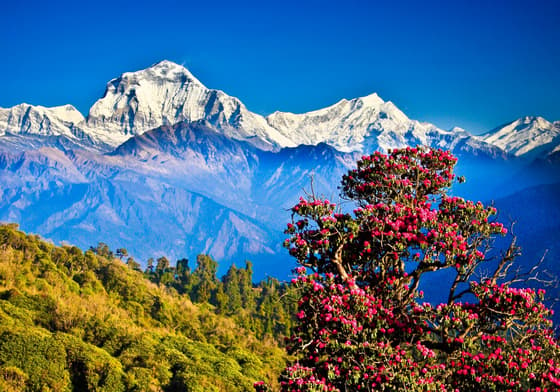
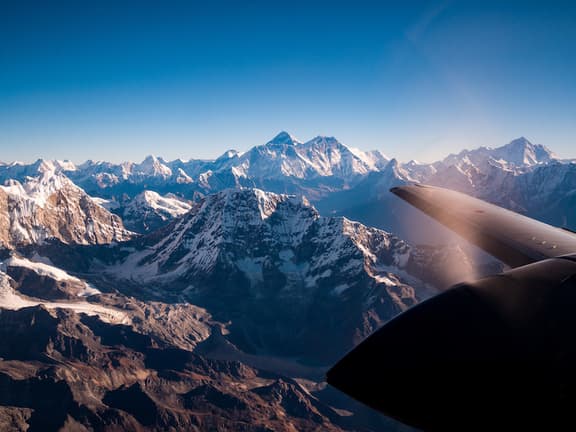
On a clear morning the change is gradual, then sudden. The grey on the horizon warms to orange. To the north, a line of snow peaks you couldn't see five minutes ago starts to stand out against the sky. On a good day the panorama can take in ranges such as Langtang and Ganesh Himal, though how far you see depends on haze and on where exactly you're standing. The highest summits usually catch the light first, a pink or gold tip on an otherwise blue-grey ridge, before the colour slides down the snow.
This is the moment people come for. It's also worth putting the phone down for a minute. The light changes fast, and you'll remember it better than any photo.
If the morning is cloudy
Some mornings, the mountains simply don't come. The horizon brightens but stays a soft wall of white, or the peaks show for a moment through a gap and then close again. That's not a failure of the trip. It's how Himalayan weather works, and no operator can promise otherwise.
A cloudy dawn still has its own show. You may find yourself standing above a sea of cloud that fills the valley below, with ridges poking through like islands, or watching mist pour slowly over the hills as the day warms. The light can still turn the cloud tops pink. And sometimes the sky clears a little later, once the sun has had time to work on it. That's one more reason not to rush off.
Either way, nobody will tell you the mountains were there if they weren't. What you see is what that morning gives.
Breakfast, and the choice to keep walking
After sunrise comes breakfast, included on this tour and served at Hotel Mountain Vista Retreat in Nagarkot. Something hot after the cold wait is welcome whatever the sky has done. It's also when the shape of your morning shifts. The viewing is over, and the rest of the day is on foot.
From Nagarkot, the walk heads down through green meadows and farmland to Sallaghari, then on along the hillsides to Changunarayan. HSJ describes it as a 3–4 hour hike of moderate difficulty, suitable for most fitness levels, passing villages along the way. If the clouds have lifted, the walk gives you more chances to look back at the hills. If they haven't, you're walking through a softer, quieter landscape, which is its own kind of good.
The walk ends at Changu Narayan Temple, a UNESCO World Heritage Site dedicated to Vishnu and considered one of the oldest temples in Nepal. It's known for its stone sculptures and early inscriptions. Monument fees aren't included, so keep some cash for the entry. Afterwards, the vehicle takes you back to your hotel in Kathmandu, usually by early afternoon.
Why allowing time beats chasing peaks
A clear sunrise at Nagarkot can be unforgettable. But the people who enjoy these mornings most tend to arrive without a checklist of summits. They let the wait be part of the experience, take the clouds as they come, and keep walking afterwards instead of driving straight back.
If seeing the mountains really matters to you, build in time rather than relying on one morning. Pick a date early in your stay so you have room for a second attempt, and check the forecast the evening before. For pickup timing, seasons, what to wear and how Nagarkot compares with an overnight stay, read our practical Nagarkot sunrise guide.
Before you go: a short checklist
Warm layers, a hat and gloves for the wait
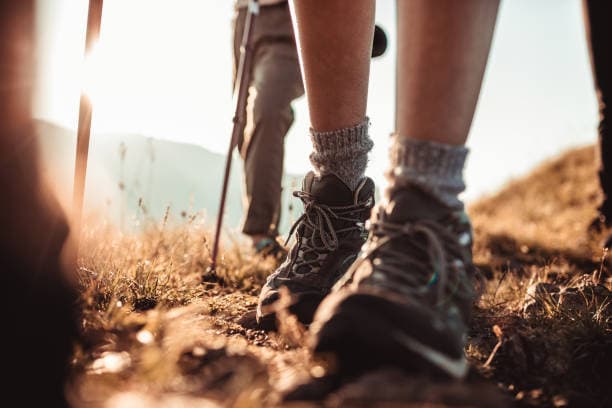
Walking shoes with grip for the hike to Changunarayan
A torch and a charged phone
Cash for monument fees
Open expectations: the sky decides the view
Reviewed by Amrit Sapkota, Himalayan Social Journey