
Overview

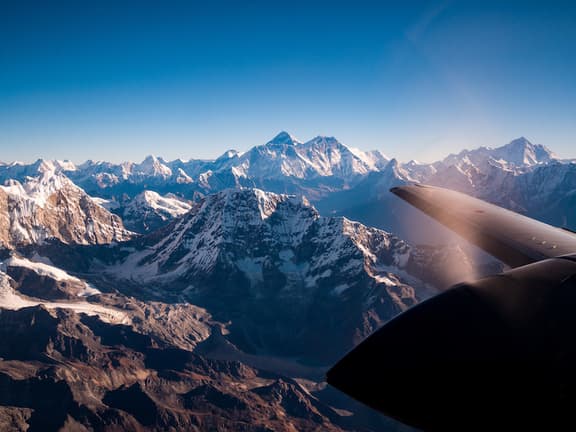
This package is very suitable for that traveler who wants to have both experiences of Nepal, Darjeeling, and Sikkim. Explore the mysterious culture of Kathmandu valley, visit the medieval art & culture, artistic palace, breathtaking scenery of sunrise over Himalaya as well as the magnificent mountain view including Mt. Everest.

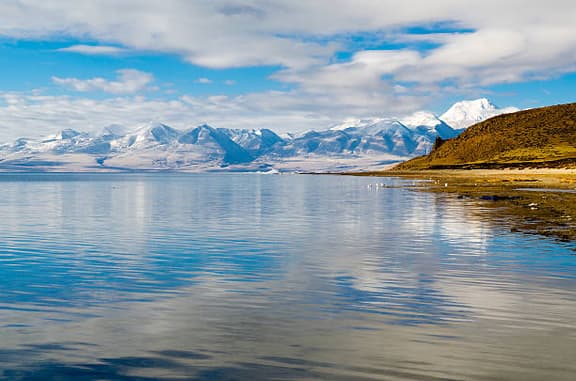
This popular tour package takes you to important places in the west and east Sikkim such as the mystical Khechophalri lake popularly known as the Wishing Lake, Pemayangtse Monastery which is one of the oldest and most important monasteries, and the Rabdentse Palace ruins located near Pelling. Visit the Tiger Hill for sunrise, Padmaja Naidu Zoological Park where Snow Leopard and Red pandas are bred in captivity; The Yoga Choling Monastery with the Statue of Maitreya Buddha which happens to be the oldest monastery in Darjeeling, The famous tea gardens which produce some of the finest teas in the world.

Highlights

Guided tour of Kathmandu valley

Explore the beautiful city of Darjeeling

Visit the stunning tea garden

Get familiar with the culture, tradition and with the locals

Sightseeing tour around different culturally affluent places


Detailed Itinerary

Arrival in Kathmandu and transfer to the Himalayan Suite Hotel. Group Orientation meeting. In the evening welcome dinner with cultural program. (B.D)

Patan Durbar Square is surrounded by a fascinating array of temples in different architectural styles. One of the Kathmandu Valley World Heritage Sites, Patan is well worth a visit. Its origins are clouded in mystery, but it has a long Buddhist history. For many centuries Patan’s importance eclipsed that of Kathmandu and by the 7th century, it was one of the major Buddhist centres of Asia, attracting pilgrims, scholars and monks from India, Tibet and China. Most of Patan’s magnificent architecture dates to the late Malla era (16th - 18th centuries).

Boudhanath Stupa is one of the holiest sites in Nepal. It holds utter importance, and faith not only from the perspective of Buddhism, but Hindus of Nepal pay their equal respect to this pious Buddhist site. The stupa is one of the UNESCO world heritages for Nepal and the place where the stupa is established; it used to be an ancient resting point for the Tibetan merchants for Nepal and India, where they would rest and perform their holy prayers. Ever since then and now, especially Tibetans but also Buddhist from all around the world regard Boudhanath Stupa as their ultimate holy destination. (B)

Nagarkot, at an altitude of 2,175 meters above the sea level, is the most popular touristic destination out of the Kathmandu Valley. It is the favourite weekend gateway among those seeking Mountain View in comfort and quiet. At sunrise, the Himalayan range, stretching from Dhaulagiri in the west all the way past Everest to Kanchenjunga in the east, emerges from the darkness to greet the happy visitors with its awe-inspiring majesty and beauty.

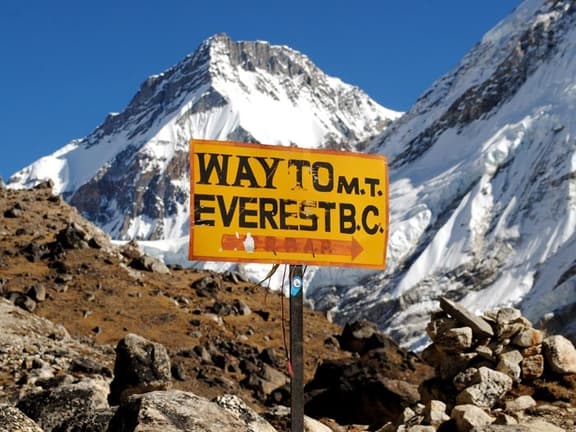
For those wishing to stretch their legs and enjoy the fresh morning air, there are charming walking trails as well as a lookout tower from which the sights can be taken in. Among all the places for mountain viewing around Kathmandu Valley, Nagarkot is usually considered to be the best. The views go from Dhaulagiri in the west to Kanchenjunga in the east. On a clear day, you can see Mt. Everest (Sagarmatha). You can also see Manaslu (8,463m), Ganesh Himal (7,111m), and Langtang (7,246m). (B)

You will be met by our office Executive who will assist you to board your vehicle to Gangtok (154 km / 5hrs). Check-in and overnight at Hotel. (B)

Go for half-day sightseeing covering Rumtek Monastery, Droul Chorten, Research Institute of Tibetology, Directorate of Handicraft & Handloom, Flower Show, Enchey Monastery & Nam Nam View Point. Overnight at Hotel. (B)

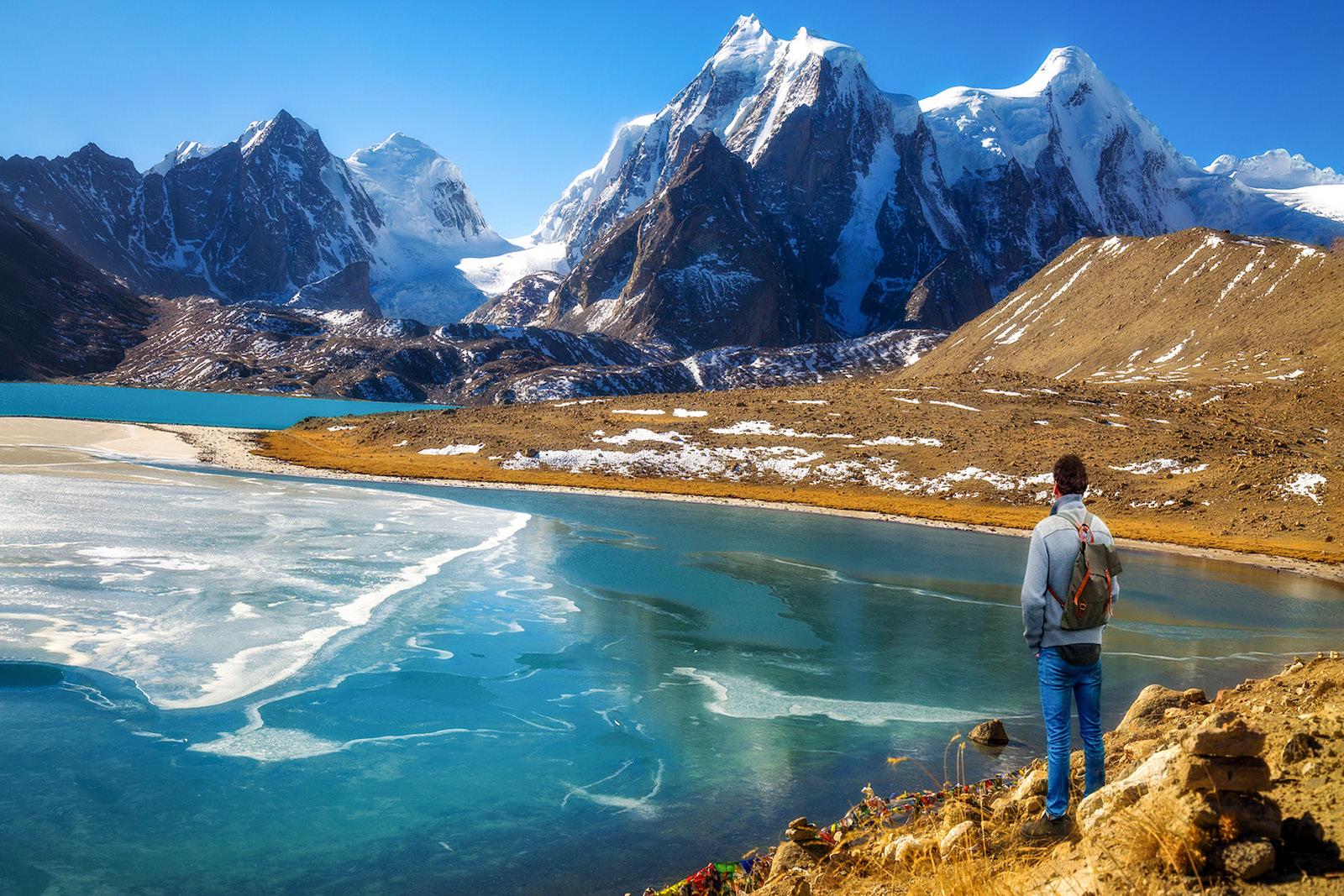
This is a day excursion to Tshangu Lake (departure in the morning). Situated at a height of 3,780 Mts. with an average depth of 50 ft. TheCool water of the Lake is perfectly attuned with the scenic beauty around. Return Back to Gangtok. Overnight at Hotel. (B)

After Breakfast transfer from Gangtok to Pemayangtse (116 km / 05 hrs). via Sikkim Temi Tea Garden and on the way Rabangla arrive Pemayantse Check in hotel. The evening takes a pleasant walk enjoying the sunset over Mt. Khangchendzonga. Stay Overnight hotel (B)

Today you go for a Full day sightseeing covering Rimbi Waterfalls, Rimbi Hydel Project, Khecheopari Lake & Kanchenjunga Falls. Back to Hotel for Lunch. After lunch, you cover Pemayangtse Monastery, Changay Falls, Singsor Bridge & Dentam Village (includes Alpine Cheese Factory). Overnight at Hotel. (B)

After breakfast we drive to Yuksom (35 Km / 02Hrs) on way visit Khecheopalri Lake, Khecheopalri Lake is one of the sacred Buddhist mountain lakes wherever it is believed that whatever is wished in front of the lake comes true. Myth has it that when a leaf falls on the placid clear water surface is picked by a bird. A further drive takes you to Yuksom (the meeting place of three monks)- the first capital of Sikkim. This was the place where the first Chogyal (a ruling dynasty in Sikkim) was crowned. Overnight at Hotel. (B)

Early morning 35 minutes moderate walk to Dhubdi Monastery (built-in 1700 AD, the oldest monastery of Sikkim) and Tashi Namgyal (the stone throne for the first king). Overnight at Hotel. (B)

After breakfast today transfer to Kalimpong (85 Kms/ 4 Hrs). Check-in at Hotel. Evening visit to Flower Nurseries, Durbin Dara Hills & Durbin Monastery. OverNight at Hotel. (B)

Here you do the sightseeing of Dello hills, Dr Graham’s Home, Flower Nurseries, Nature Interpretation Center and Durbin Dara Hills & Jang-Dong-Palriffo Brang. Overnight at Hotel. (B)

Transfer to Darjeeling (70 km / 3 hrs.) and toy train ride.Overnight at Hotel. (B)

Early morning tour to Tiger Hills (at around 4 am) to view sunrise over Kanchenjunga Peak (subject to clear weather). On way back visit Ghoom Monastery, Batasia Loop. After breakfast visit to Padmaja Naidu Himalayan Zoological Park, Himalayan Mountaineering Institute (closed on Thursday), Tenzing & Gombu. Rock, Tibetan Refugee Self-Help Center (Closed on Sunday) & Tea Estate. Overnight at Hotel. (B)

Darjeeling to Bhadrapur Airport 4hrs /145km. Morning Breakfast transfer from Darjeeling to Nepal border after complete immigration and proceeds for Bhadrapur Airport catch Kathmandu Flight. Overnight at Himalayan Suite Hotel (B)

After breakfast transfer to the airport for your departure. (B)

Departures & Availability
Personal Information

Additional information

Your privacy is of the utmost importance to us. The personal information you provide will be kept confidential and will not be shared with a third party.

Inclusions/Exclusions
Included
Airport pick up and drop
Accommodation in Kathmandu- Himalayan Suite Hotel and in Hotel Himalayan Villa in twin sharing basis with breakfast
Sightseeing tour in Kathmandu with tour guide
Kathmandu to Nagarkot by private vehicle
Welcome dinner with cultural program in Kathmandu
Kathmandu –Bhadrapur –Kathmandu by flight
All Transportation AC / Qulise, Innova / Xylo / Mini Tourist Bus
Guide/ leader (Experienced Tour Guide will lead the tour).
All monument fees, Permit arrangement, All taxes and VAT in Darjling ,Skkim
All accommodation as Darjeeling, Gangtok, Pelling, Yuksom and Kalimpong in twin sharing With Breakfast
Himalayan toy train ride in Darjeeling
Not Included
Lunch and dinner during the trip
Sightseeing entrance fee in Kathmandu (200 +250+1000)
Expenses of personal nature expenses, travel insurance and anything not mentioned in the trip itinerary
Additional Information

In Nepal

Food and Accommodation

You will have comfortable accommodation in Kathmandu in the Himalayan Suite Hotel and Himalayan Villa Hotel in Nagarkot, on a twin sharing bed and breakfast basis.

While you will be enjoying varieties of delicacies in Kathmandu, and Nagarkot during your stay in an accommodation or eating outside in full-fledged cafes, restaurants, and diners, you will also have an ample opportunity to get healthy food varieties while on the tour in Nepal. 

Please note that morning breakfast is included in the price however, lunch and dinner are not. 

Travel insurance

We suggest taking out an insurance plan for your individual accountability, accidents, and illnesses during the service. Regarding the type of activity, you may be asked to show a certificate of insurance for help and support, sanitation, and search. 

Personal Safety

Wherever you are your health and security are your responsibilities. In the city, the area is aware of scammers and touts. Outside the airport, or on the road, taxis are likely to charge more than normal. Pickpockets are active in cities and also in the mountains. Even if you are an experienced trekker or have good health and stamina, you don’t know the mountains of Nepal and hence, it is wise to keep up with your guide and stay close with your group. 

Valuable items like gold or diamond chains, rings, bracelets are best not carried to the mountains and also keep your day pack with you safe. Your passport, permits, phone, cameras are supposed to be with you all the time. Keep the money you carry safely and securely. 

Don't try to get too close to the animals or go to extra lengths for the photos.  It is expected and is also for your safety that you travel with responsibility and sensibility. 

As long as you are respecting local norms and culture and are open-minded towards the local community, you will be treated well and respected regardless of what gender, religion, and culture you are from. 

This tour with HSJ

We are your completely flexible travel partner. Want to follow a different route? We have you covered. Have extra time in Nepal? Excellent! We have more add-on tours like Chitwan Jungle Safari, Cable Car ride to Chandragiri hills, Cooking and Yoga classes in Kathmandu, and so on. Would like to customize the trip? Well, why not? Give us your ideas and we will prepare a complete itinerary for you. Do you want to use different standards of accommodations than provided in the itineraries? Of course! You absolutely can. From your arrival until you depart, your wishes are our command. Feel free to make the request. 

Also, check our other Days tours for add ons.

Last-minute booking

It is best to book in advance but for those who cannot, for whatever reason, make a last-minute reservation special arrangement for Himalayan Social Journey. In the case of a last-minute reservation, 100% tour payment will be approved within 24 hours. We try to operate a trek at any time but we are not liable for the delay in case of last-minute reservation, because of uncontrolled changes such as weather and the availability of accommodation. 

Feedbacks

Throughout the years of business, we have always put the customer's feedback as our inspiration towards making our company a great travel partner. With many ups and downs, and good and not so good feedbacks we have reached where we are now. At the end of the trek, while you are with the crew during farewell dinner, we would appreciate it if you give us your valuable feedback, an account of good and bad experiences, recommendations, and also your honest rating to our trip advisor page.

Frequently Asked Questions

VISA INFORMATION

OVERVIEW

All foreign nationals entering India are required to possess a valid international travel document in the form of a national passport with a valid visa obtained from an Indian Mission or Post abroad.

All Individual visa seekers are requested to apply for the Indian Visa through Online application link , in order to make an application for getting the Indian visa.

The duly signed physical copy of the application form completed in all respect and submitted successfully, is to be submitted at the concerned Indian Visa Application Center (IVAC) or directly to Indian Mission/ Post, on the scheduled date of interview along with the requisite supporting documents. The instructions for filling the form and scheduling the appointment can be seen at Instructions for Online Visa Application. Important technical information for filling online Indian visa application can be referred at Technical Instructions.

The applicants are also requested to visit website of the Indian Mission concerned for detailed information about Indian visa.

ONLINE VISA APPLICATION

All Individual visa seekers are requested to apply for the Indian Visa through online application link. Or can apply by typing the URL: http://indianvisaonline.gov.in/visa/ in the address bar of web browser, in order to make an application for getting the Indian visa. In either case, no hand written application form will be accepted by any of the Indian Mission/ Post, where-ever online Visa facility has been implemented. The application form completed in all respect and submitted succesfully, is to be submitted at the concerned Indian Visa Application Center (IVAC) or directly to Indian Mission/ Post in absence of IVAC, on the scheduled date of interview along with the requisite supporting documents. The instructions for filling the form and scheduling the appointment can be refered at Instructions for Online Visa Application. Important technical information for filling online Indian visa application can be referred at Technical Instructions. If you have already applied online for Indian Visa online and want to know the status of your application,

VISA CATEGORIES

Government of India issues the following visas: Business Visa, Conference Visa, Diplomatic Visa, Employment Visa, Emergency Visa, Entry Visa, Journalist Visa, Medical Visa, Missionaries Visa, Permit to re-enter within 2 months, Research Visa, Student Visa, Tourist Visa, Transit Visa. Please follow the link for details on Visa Provision and supporting documents

VISA PROCESSING TIME

Upon receipt of the Visa Application through Indian Visa Application Center or directly, the Indian Mission/ Post requires a minimum of three working days to process the case and issue a visa depending upon the nationality and excluding special cases.

PHOTO REQUIREMENTS

Online India Visa Application allows the Applicant to upload a digital photograph of self to complete the online visa application.

Guidelines/procedure to upload a digital photograph

The digital photograph to be uploaded along with the Visa application should meet the following requirements:

Format – JPEG

Size

Minimum 10 KB

Maximum 300 KB

The height and width of the Photo must be equal.

Photo should present Full face, front view, eyes open.

Center head within frame and present full head from top of hair to bottom of chin.

Background should be plain light colored or white background.

No shadows on the face or on the background.

Without borders.

Make sure that photo presents full head from top of hair to bottom of chin. Head should measure 1 inch to 1-3/8 inches (25mm to 35mm). Make sure eye height is between 1-1/8 inches to 1-3.

FEE FOR INDIAN VISA

The visa fee depends upon the type of applied for and duration of visa. Visa fee is divided into various types depending upon the case viz; Basic fee, special fee, processing fee by out-sourcing agency. During the online registration process, at the end of the process the basic fee shall be displayed. However, this fee shall be indicative only and final fee shall be charged while submitting the application at the respective counters Fee once received are non-refundable even if the visa application is withdrawn, the visa is not granted, or if visa issued is of shorter duration of period than applied for or otherwise issued or returned at a time or on terms and conditions that may vary from those sought by the applicant. For further information on this, please check with local embassy office or Indian Visa Application center office or websites for information on applicable fee and payment methods.

 VISA PROVISION

SL. NO.

TYPE OF VISA

PERIOD FOR WHICH GRANTED

ENTRY – SINGLE (S), MULTIPLE (M), DOUBLE

DOCUMENTS REQUIRED WITH APPLICATION

EXTENDABLE IN INDIA

1

TOURIST

180 DAYS

M

-

NO

2

TRANSIT

15 DAYS

S/ DOUBLE

RETURN/ ONWARD JOURNEY TICKET

NO

3

BUSINESS

5 YEARS

M

DOCUMENTS TO PROVE BONAFIDE PURPOSE (COMPANY’S LETTER ETC.)

YES

4

EMPLOYMENT

1 YEAR/ PERIOD OF CONTRACT

M

PROOF OF EMPLOYMENT (APPOINTMENT DOCUMENT), TERMS AND CONDITIONS

YES

5

STUDENT

PERIOD OF COURSE/ 5 YEARS

M

PROOF OF ADMISSION IN INDIAN INSTITUTION

YES

6

FOREIGNERS OF INDIAN ORIGIN

5 YEARS

M

PROOF OF BEING OF INDIAN ORIGIN

YES

INSTRUCTIONS 

A. Online application form:

This application form is meant for those foreigners who are applying for visa from outside India.

Each online application form is meant for one person only. Separate application has to be filed for each applicant.

Furnish information exactly in the manner asked for in the forms, especially the names, address and date of birth.

Applicants are required to verify the application details before submitting the online application. They have an option to save the online application form, in case it is not to be submitted.

Once the online application form is submitted by the applicant, then further modifications are not allowed. Hence applicants are requested to check and validate the details before submitting the online application form.

Applicants are requested to keep the Application Id (generated automatically after the submission of online form) for further communications.

B. Appointment Scheduling:

Applicant can schedule the appointment as per his/ her convenience with the concerned Indian Mission.

Each applicant to schedule a separate appointment with the Indian Mission 

C. Process for filling up online application form:

Applicant shall access the Visa Application system online through the following link: http://indianvisaonline.gov.in/visa/.

Applicant visits the above mentioned web link and selects the Indian Mission from where he intends to apply for the Visa from the tab “Select Mission”.

Applicant fills the application on-line as per the forms standardized by the Ministry.

After filling the form and submitting it, the system shall automatically generate a Application Id. Applicants are requested to keep this Application Id for further communications with the concerned Indian Mission.

System will automatically ask the Applicant for the following confirmation: “Select ‘Yes’ if the applicant want to seek appointment and make payment online or ‘No’ if the applicant just want to print the submitted application form.”

If the applicant response is “No”, then it is requested by the applicant to take the print out of the submitted online application form and approach the concerned Indian Mission for submission of the online form along with supporting documents.

If the response from applicant is “yes” then the system automatically takes the link to perform the following:

Selection of Date and Time of appointment at the concerned Indian Mission

Calculation of Visa fee, service charge, VAT etc. as applicable according to the Visa type

D. Payment using service provider’s payment system

In case the facility of Appointment Scheduling and e-Payment is not available for the concerned Indian mission, then applicant has to take the printout of the online application form and visit the concerned Indian Mission to submit the same along with supporting documents and make the payment.

Indian Culture: Traditions and Customs of India

India’s culture is among the world,s oldest; civilization in India began about 4,500 years ago. Many sources describe it as "Sa Prathama Sanskrati Vishvavara" — the first and the supreme culture in the world, according to the All World Gayatri Pariwar (AWGP) organization.

Western societies did not always see the culture of India very favorably, according to Christina De Rossi, an anthropologist at Barnet and Southgate College in London. Early anthropologists once considered culture as an evolutionary process, and ”every aspect of human development was seen as driven by evolution,” she told Live Science. “In this view, societies outside of Europe or North America, or societies that did not follow the European or Western way of life, were considered primitive and culturally inferior.  Essentially this included all the colonized countries and people, such as African countries, India, and the Far East.".

However, Indians made significant advances in architecture (Taj Mahal), mathematics (the invention of zero) and medicine (Ayurveda). Today, India is a very diverse country, with more than 1.2 billion people, according to the CIA World Factbook, making it the second most populous nation after China. Different regions have their own distinct cultures. Language, religion, food and the arts are just some of the various aspects of Indian culture. Here is a brief overview of the culture of India.

Language

India has 28 states and seven territories, according to the World Health Organization. There is no official language in India, according to a Gujarat High Court ruling in 2010. Many people living in India also write in Devanagari script. In fact, it is a misconception that the majority of people in India speak Hindi. Though many people speak Hindi in India, 59 percent of India residents speak something other than Hindi, according to The Times of India. Bengali, Telugu, Marathi, Tamil and Urdu are some other languages spoken in the country.

Religion

India is identified as the birthplace of Hinduism and Buddhism, the third and fourth largest religions. About 84 percent of the population identifies as Hindu, according to the “Handbook of Research on Development and Religion” Edited by Matthew Clarke (Edward Elgar Publishing, 2013). There are many variations of Hinduism, and four predominant sects — Shaiva, Vaishnava, Shakteya and Smarta.

About 13 percent of Indians are Muslim, making it one of the largest Islamic nations in the world. Christians and Sikhs make up a small percentage of the population, and there are even fewer Buddhists and Jains, according to the “Handbook.”

Food

When the Moghul Empire invaded during the sixteenth century, they left a significant mark on the Indian cuisine, according to Texas A&M University. Indian cuisine is also influenced by many other countries. It is known for its large assortment of dishes and its liberal use of herbs and spices. Cooking styles vary from region to region.

Wheat, Basmati rice and pulses with chana (Bengal gram) are important staples of the Indian diet. The food is rich with curries and spices, including ginger, coriander, cardamom, turmeric, dried hot peppers, and cinnamon, among others. Chutneys — thick condiments and spreads made from assorted fruits and vegetables such as tamarind and tomatoes and mint, cilantro and other herbs — are used generously in Indian cooking.

Many Hindus are vegetarians, but lamb and chicken are common in main dishes for non-vegetarians. The Guardian reports that between 20 percent and 40 percent of India's population is vegetarian.

Much of Indian food is eaten with fingers or bread used as utensils. There is a wide array of breads served with meals, including naan, a leavened, oven-baked flatbread, and bhatoora, a fried, fluffy flatbread common in North India and eaten with chickpea curry.

Architecture and art

The most well-known example of Indian architecture is the Taj Mahal, built by Mughal emperor Shah Jahan to honor his third wife, Mumtaz Mahal. It combines elements from Islamic, Persian, Ottoman Turkish and Indian architectural styles. India also has many ancient temples.

India is well known for its film industry, which is often referred to as Bollywood. The country's movie history began in 1896 when the Lumière brothers demonstrated the art of cinema in Mumbai, according to the Golden Globes. Today, the films are known for their elaborate singing and dancing.

Indian dance, music and theater traditions span back more than 2,000 years, according to Nilima Bhadbhade, author of “Contract Law in India” (Kluwer Law International, 2010). The major classical dance traditions — Bharata Natyam, Kathak, Odissi, Manipuri, Kuchipudi, Mohiniattam and Kathakali — draw on themes from mythology and literature and have rigid presentation rules.

Clothing

Indian clothing is closely identified with the colorful silk saris worn by many of the country’s women. The traditional clothing for men is the dhoti, an unstitched piece of cloth that is tied around the waist and legs. Men also wear a kurta, a loose shirt that is worn about knee-length. For special occasions, men wear a sherwani, which is a long coat that is buttoned up to the collar and down to the knees. The Nehru jacket is a shorter version of a sherwani. 

Customs and celebrations

The country celebrates Republic Day (Jan. 26), Independence Day (Aug. 15) and Mahatma Gandhi's Birthday (Oct. 2). Diwali is the largest and most important holiday to India, according to National Geographic. It is a five-day festival known as the festival of lights because of the lights lit during the celebration to symbolize the inner light that protects them from spiritual darkness. Holi, the festival of colors, also called the festival of love, is popular in the spring. 

Weather 

India is situated in Southern Asia, bordering the Arabian Sea and the Bay of Bengal, between Burma and Pakistan. 
The climate in India varies from a tropical monsoon climate in the south to a temperate climate in the north. If you are thinking of Visiting Delhi (the capital of India) then best to visit it in October, November, February and March. That's when the nights are cool and the days are filled with a little sunshine. May, June and July are very hot with temperatures over 45 degrees (113 Fahrenheit). It is a dry heat and is sometimes accompanied by dusty desert winds. Most of the rain falls between July and September but they are not the tropical rains you'll experience in India's coastal cities.