

A mountain flight in Nepal costs USD 280 per person with HSJ, or USD 180 on an Indian passport, and both include hotel transfers, airport taxes and a guaranteed window seat. The flight lasts about an hour. Door to door the whole morning takes two to three hours, and you are back in time for breakfast.
How much does a mountain flight in Nepal cost?
The price depends on three things: which airline flies it, whether airport transfers are included, and which passport you hold.
| What you book | Duration | Highest point seen | Price per person |
|---|---|---|---|
| Everest scenic flight, general passport | about 1 hour in the air | Everest, 8,849 m, from 32 km | USD 280 |
| Everest scenic flight, Indian passport | about 1 hour in the air | Everest, 8,849 m, from 32 km | USD 180 |
| Everest helicopter tour with a landing | about 4 hours | Kala Patthar, 5,545 m | on request |
| Everest Base Camp trek | 14 days | Kala Patthar, 5,545 m | from USD 850 |
Across the Kathmandu market, fixed-wing mountain flights generally sit between USD 200 and USD 320. The cheaper end usually means no transfers, so you make your own way to the domestic terminal for a 6:15 AM check-in. That is a false economy at that hour.
HSJ's daily Everest scenic flight with airport transfer is USD 280 with the transfers in, and it runs every morning, year-round, weather permitting.
What the price includes
For USD 280 you get:
- Hotel pick-up and drop-off in Kathmandu, both ways.
- The flight ticket itself, on a scheduled mountain flight.
- A guaranteed window seat, with no middle seats on the aircraft.
- All airport taxes, which are otherwise charged separately.
- A named flight certificate handed to you on landing.
Meals are not included, which matters little on a flight that lands at 8:00 AM. There is no permit to buy, no insurance requirement and no fitness condition, which is what separates this from every other way of seeing Everest.
Why are there two prices?
Nepali airlines price domestic tickets by nationality, not by residence. Nepali citizens pay the lowest fare, holders of Indian and other SAARC passports pay a middle fare, and everyone else pays the foreign fare. The USD 180 and USD 280 on this flight follow that structure. It applies across domestic aviation in Nepal, including the Lukla flights, and is set by the airlines rather than by any tour operator.
The practical point is to book under the correct passport. If your group holds different passports, say so at the time of booking rather than at check-in.
Mountain flight, helicopter or trek: which should you choose?
These are three different products that happen to involve the same mountain.
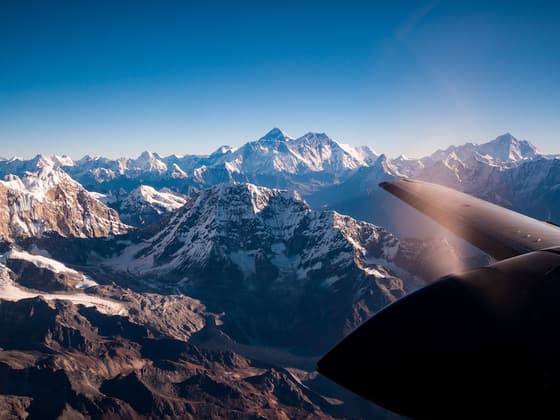
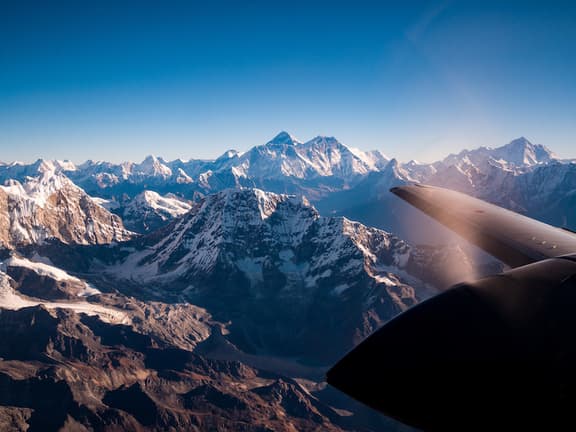
The fixed-wing mountain flight stays in the air. You see Everest at 32 km, along with Lhotse at 8,516 m, Makalu at 8,485 m, Cho Oyu at 8,188 m, Kangchenjunga at 8,586 m and Ama Dablam at 6,812 m. It asks nothing of you physically, suits any age, and can be done on a day you also have other plans. Wheelchair access is available with notice.
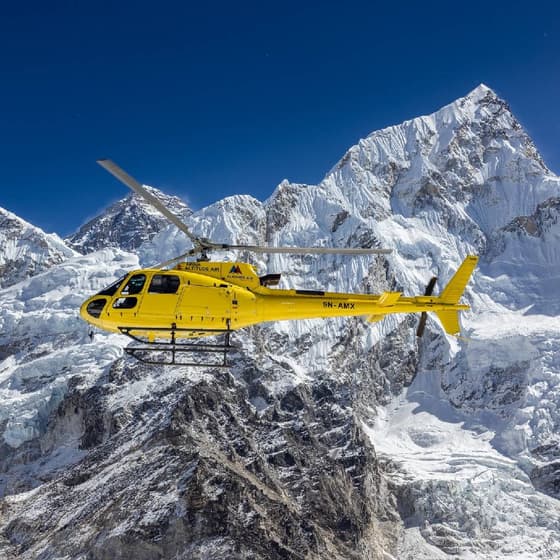
The helicopter tour lands. The Everest helicopter tour landing at Kala Patthar puts you on the ground at 5,545 m with a stop for breakfast at Hotel Everest View, and has you back in Kathmandu in about four hours. It costs several times more than the scenic flight, and because you briefly stand above 5,000 m, altitude becomes a real consideration.
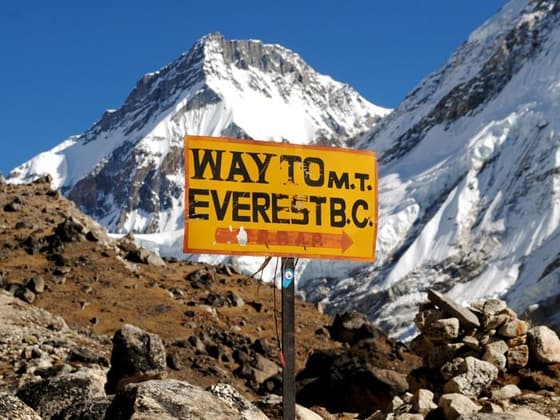
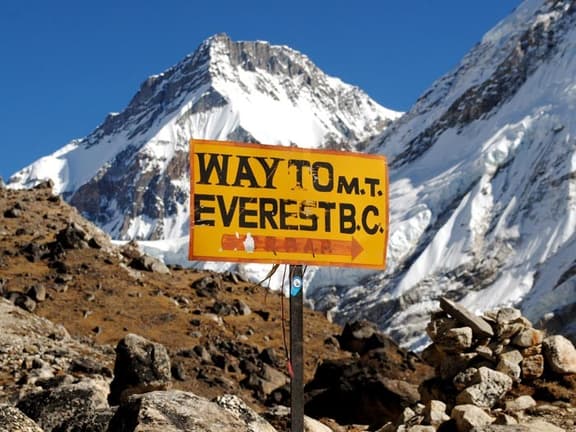
The trek is the only one that gives you the Khumbu itself: the villages, the monasteries and the walk in. The 14-day Everest Base Camp trek starts from USD 850, which is three times the flight for fourteen times the days.
If you have one spare morning in Kathmandu and want to see the mountain, take the flight. If you want to stand in the Everest region, take the helicopter. If you want to understand it, walk.
What the morning actually looks like
The schedule is built around light, not convenience. Mountain air over the Himalaya is clearest before the valley warms up, so everything happens early.
- 5:00 AM: a wake-up call from your hotel, with the weather read. This doubles as the go or no-go.
- 5:30 AM: your driver collects you from the lobby.
- 6:15 AM: check-in at the domestic terminal of Tribhuvan International.
- 6:45 AM: boarding a 15 to 18 seat propeller aircraft.
- 7:00 AM: take-off from Kathmandu at 1,400 m.
- 7:20 AM: the closest point to Everest, with the pilot banking for both sides.
- 7:50 AM: the aircraft turns back towards the valley.
- 8:00 AM: landing, and your flight certificate.
- 8:15 AM: back at your hotel, with the day still ahead of you.
One practical tip worth more than it sounds: hold your camera slightly away from the window rather than pressed against the glass. The reflections disappear and the pictures come out sharp.
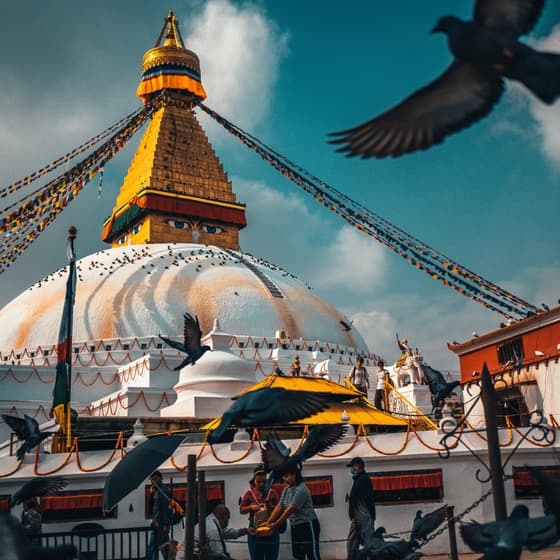
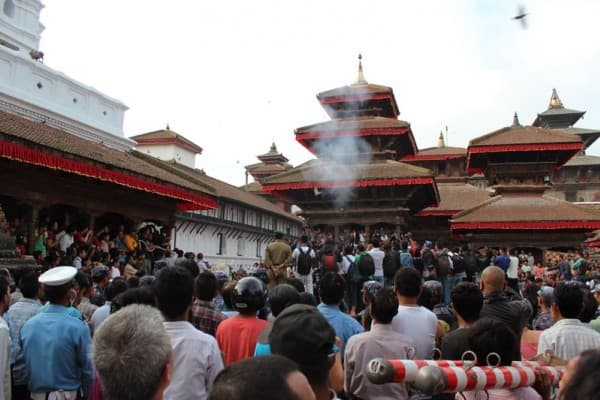
Because you are back by 8:15 AM, the flight pairs easily with a city day. A Kathmandu UNESCO heritage sites day tour in the same day is comfortable.
Who can take a mountain flight?
Almost anyone, which is unusual for anything involving Everest.
- Children and older travellers. There is no altitude exposure and no walking, so the age limits that apply to trekking do not apply here.
- Travellers with reduced mobility. Wheelchair assistance is available at the terminal if you say so when you book, and the included transfers take you door to door.
- Anyone who has never flown in a small aircraft. The air over the valley is still at that hour, so turbulence is usually mild. Tell your representative if you are nervous and someone will stay with you up to the gate.
Bring a passport or ID, a charged camera or phone, and one warm layer, because the terminal is cold at 6:15 AM. Only small personal items come into the cabin, so leave your day pack at the hotel. No permit, insurance or medical clearance is needed for this flight.
When to go, and what happens if the weather closes in
The flight operates all year, but visibility is not equal across the seasons.
- March to May: clear and warm, with some afternoon haze. Morning flights are reliable.
- September to November: the sharpest air of the year, and the busiest. Book one to two weeks ahead.
- December to February: cold on the ground but very clear. An underrated window.
- June to August: monsoon cloud blocks the peaks and cancellations are common. Keep a spare morning.
If the flight is cancelled for weather you are offered the next available morning or a full refund, and HSJ's booking allows free cancellation up to 24 hours before departure. Mountain flights only go in clear conditions, which is a safety rule rather than an inconvenience. The Civil Aviation Authority of Nepal sets the operating rules, and the carriers flying this route are licensed under them.
The practical advice is simple: book the flight for your first clear morning in Kathmandu, not your last. People who leave it to the final day are the ones who go home without having flown.
What a mountain flight does not do
It does not land in the mountains. It does not take you into the Khumbu, and it is not a substitute for the trek if what you want is the Everest region rather than the view of it. You will not set foot above 1,400 m.
It also cannot promise the mountain. Nobody can. What a good operator can promise is a morning departure when the air is clearest, a window seat, transfers so you are not finding a taxi at 5:30 AM, and a refund if the sky does not cooperate.
For context on seasons and conditions across Nepal, the Nepal Tourism Board publishes the official visitor guidance, and it is worth a look when you plan which morning to book.
Frequently asked questions
How much does a mountain flight in Nepal cost?
With HSJ it is USD 280 per person, or USD 180 for Indian passport holders, including hotel transfers both ways, the ticket, all airport taxes and a guaranteed window seat. The only thing not covered is food. Prices across Nepali operators generally sit between USD 200 and USD 320 depending on the airline and whether transfers are included.
Is the mountain flight worth the money?
For one hour it is the cheapest way to see Everest at close range. Compared with a helicopter landing at Kala Patthar, which costs several times more, or a 14-day trek, it asks almost nothing of you. If the skies are clear you see Everest, Lhotse, Makalu, Cho Oyu and Kangchenjunga in a single hour.
What happens if the flight is cancelled for weather?
You are offered the next available day or a full refund. Mountain flights only operate in clear conditions, so a cancellation is a safety decision rather than a fault. Build a spare morning into your Kathmandu plans, especially between June and August.
Do I really get a window seat?
Yes. The aircraft used are 15 to 18 seat propeller planes configured so that every seat is a window seat, with nobody in a middle row. The pilot also banks the aircraft along the range so both sides get a clear line to Everest.
How close does the plane get to Everest?
About 32 km from the summit, which is as near as you can get to Mount Everest at 8,849 m without walking in. The aircraft stays in the air throughout and does not land in the mountains.