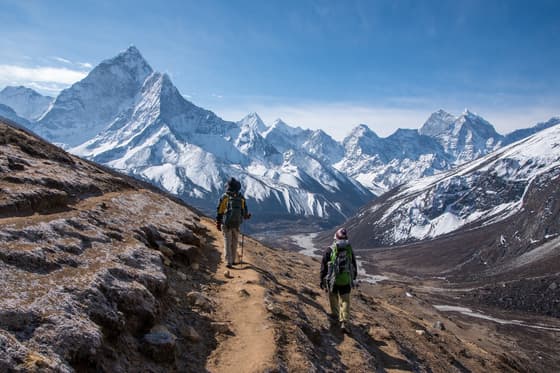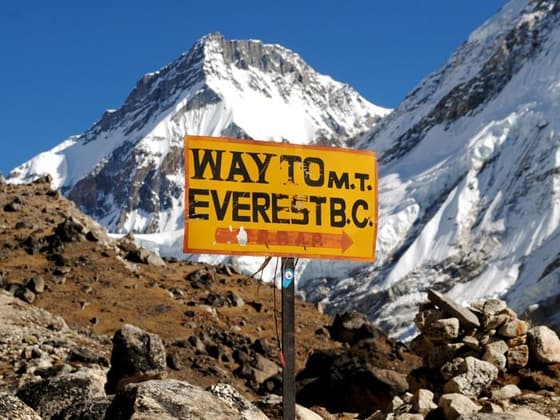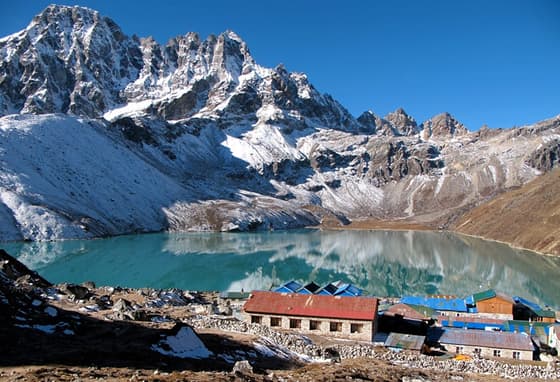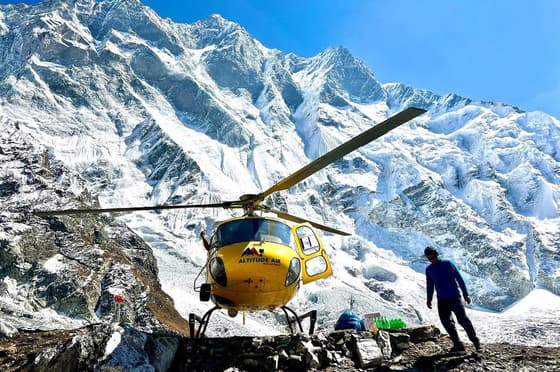

A luxury Everest Base Camp trek follows the same trail as the standard route, to the same place. What changes is where you sleep, how often you can wash, and how long you spend recovering afterwards. On HSJ's 15-day version that means private bathrooms with hot showers as far as Namche, and two nights in a five-star Kathmandu resort at the end.
What does luxury actually change on an Everest trek?
Nobody has a five-star hotel above Namche Bazaar. The lodges at Dingboche, Lobuche and Gorak Shep are built for altitude rather than comfort, and every company in Nepal uses the same ones. So an honest answer has three parts, and they all sit at the two ends of the walk.
The first is the lower trail. On the 15-day Everest Base Camp trek with a five-star wind-down, the first five nights as far as Namche are in lodges with a private bathroom and a hot running shower. That covers Phakding, Namche and the acclimatisation day. Above Namche you are in ordinary teahouses, like everyone else on the trail.
The second is Kathmandu. The last two nights are at Gokarna Forest Resort or The Malla Hotel, with breakfast and dinner included, and a 30-minute massage on the farewell evening. After twelve days of walking, that is the part most people remember.
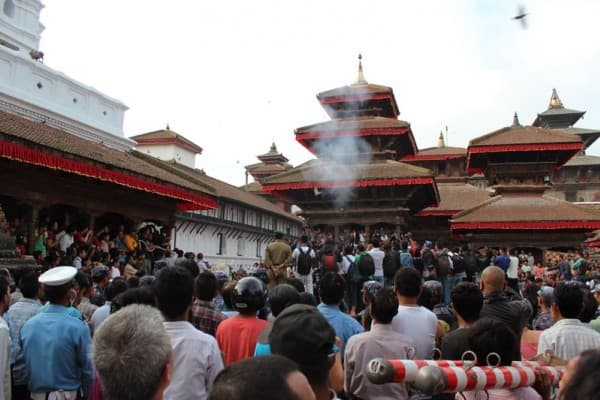
The third is time. The luxury itinerary runs 15 days against 14 for the standard 14-day Everest Base Camp trek. The extra day is a guided Kathmandu sightseeing day at the end, not another day of walking.
Where the comfort is real, and where it cannot be
It helps to be blunt about the middle of the trek. Between Deboche and Gorak Shep you will share a bathroom. Rooms are unheated. Hot water is often a bucket, charged separately, and sometimes unavailable. Wi-Fi is sold by the hour and frequently does not work.
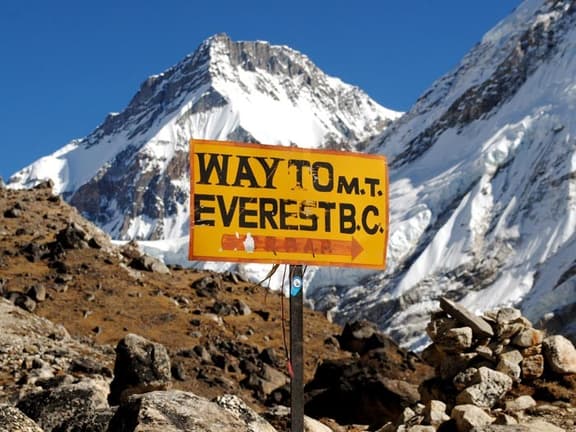
None of that is a shortcoming of one company. It is what exists at 4,000 m and above, inside a national park where everything arrives by yak or porter. Any company advertising luxury at Everest Base Camp itself is describing something that is not there.
What a good operator can control at altitude is different: which lodge you get in a full village, whether your room is on the sunny side, how much the guide watches your oxygen saturation, and whether a porter carries your bag. On this trek one porter is shared between two trekkers, and the guide is licensed and English-speaking.
How much more does a luxury Everest Base Camp trek cost?
The gap is smaller than most people expect. Here is how HSJ's Everest treks compare at the time of writing.
| Trek | Days | Highest point | From |
|---|---|---|---|
| Everest Base Camp Trek | 14 | 5,545 m | USD 850 |
| EBC with Luxury 5-Star Wind Down | 15 | 5,545 m | USD 1,095 |
| Gokyo Ri and Everest Base Camp | 17 | 5,545 m | USD 1,100 |
| EBC with Helicopter Return | 12 | 5,545 m | USD 1,395 |
So the luxury version costs about USD 245 more than the standard trek, for an extra day, five nights of private bathrooms, two five-star nights with dinner, and a massage. Split across the trip, that is roughly USD 16 a day.
Both prices include the Kathmandu-Lukla-Kathmandu airfare, the guide and porter with all their costs, the TIMS permit, and all government taxes. Neither includes the Sagarmatha National Park fee of USD 30, your lunches and dinners in Kathmandu, or travel insurance, which is compulsory.
The 15-day route in brief
The walking covers 113 km over 15 days, with 5 to 6 hours on a typical day and two acclimatisation days built in.
- Day 1: arrive in Kathmandu, orientation at 5 PM, welcome dinner.
- Day 2: fly to Lukla, trek 7 km to Phakding in 3 to 4 hours.
- Day 3: 10 km to Namche Bazaar, 6 to 7 hours, entering Sagarmatha National Park at Monjo.
- Day 4: acclimatisation day at Namche, with a short hike towards Hotel Everest View.
- Day 5: 9 km to Deboche, past Tengboche Monastery.
- Day 6: 11 km to Dingboche, 7 to 8 hours.
- Day 7: second acclimatisation day, with an optional climb of Nangkartshang Peak.
- Day 8: 8.7 km to Lobuche over Thukla Pass.
- Day 9: 11 km to Gorak Shep, then on to Everest Base Camp and back, about 8 hours.
- Day 10: sunrise at Kala Patthar at 5,545 m, then down to Pheriche.
- Days 11 and 12: descend to Namche, then Lukla.
- Day 13: fly back to Kathmandu.
- Day 14: Kathmandu sightseeing, farewell dinner and a 30-minute massage.
- Day 15: departure.
Two acclimatisation days on a 15-day schedule is the part that matters most for your chances of reaching base camp. The Himalayan Rescue Association runs a clinic at Pheriche and is the standard reference on altitude illness in the Khumbu; its advice on ascent rates is worth reading before you book any Everest itinerary.
Who the upgrade suits, and who should skip it
It suits people who sleep badly in shared accommodation, who are travelling as a couple, who have flown a long way and want the trip to end well rather than end abruptly. It also suits anyone over about 55, for whom the recovery nights at the end do real work.
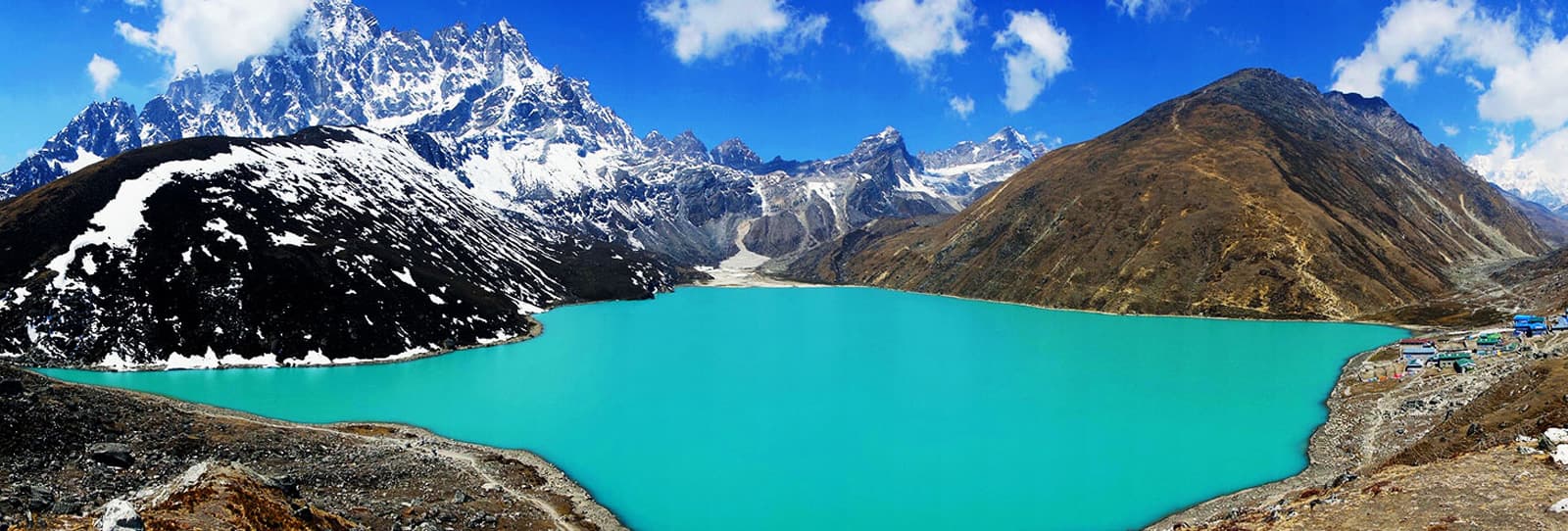
Skip it if your budget is better spent on a longer route. For roughly the same money as the luxury trek, Gokyo Ri and Everest Base Camp gives you 17 days and the Gokyo lakes. If what you actually want is to avoid the descent, the Everest Base Camp trek with helicopter return does that in 12 days instead.
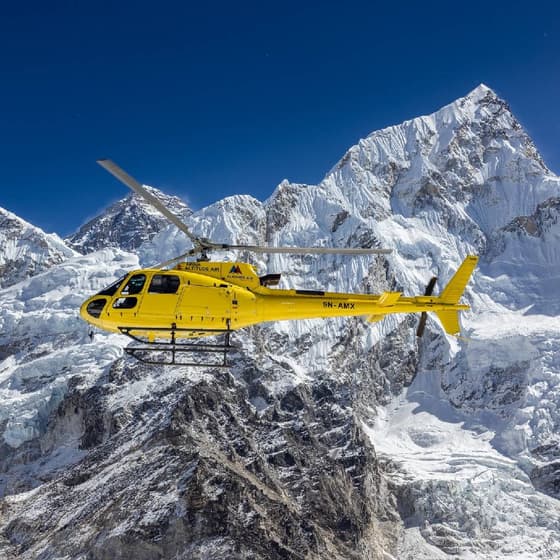
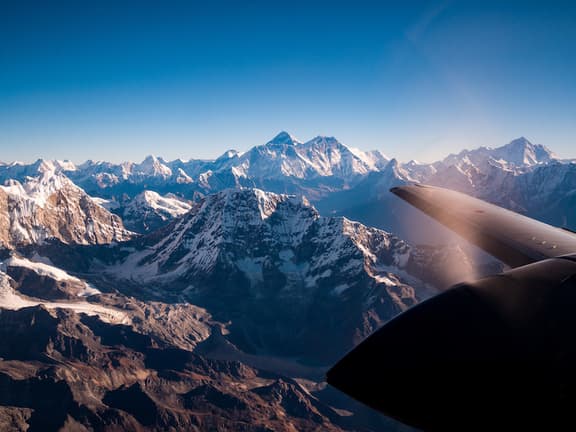
And if you want the mountain without the trek at all, the Everest helicopter tour lands at Kala Patthar and is back in Kathmandu the same morning.
When to go, and the Ramechhap problem
The trek runs from February to June and September to December. October and November give the clearest air; March to May is warmer with more haze.
One thing to plan for: in March, April, May, September, October and November, the Lukla flights operate from Ramechhap rather than Kathmandu. That means a road transfer of four to five hours, usually starting before dawn. It is not optional and it is not a sign of a cheap operator. It is how the Civil Aviation Authority of Nepal manages Kathmandu's runway traffic in the busy months.
Lukla flights are also weather-dependent in any season. The optional helicopter at USD 350 per person each way exists precisely for this, and on a trip with a fixed flight home it is worth the money.
What is not included
Read this part of any quotation carefully. On this trek the exclusions are:
- Lunch and dinner in Kathmandu, and lunch and dinner on trekking days.
- The Sagarmatha National Park entry fee, USD 30, payable to the Department of National Parks and Wildlife Conservation.
- Kathmandu sightseeing entry fees, about NPR 2,600 in total across the four sites.
- Personal clothing and equipment, though a sleeping bag and duffel bag are lent if you need them.
- Travel insurance, which must cover helicopter evacuation and is compulsory.
- Tips for the guide, porter and driver.
Added together, those come to roughly USD 150 to USD 250 per person on top of the trip price, depending on how you eat in Kathmandu and how you tip. Any company that does not tell you this before you pay is not being straight with you.
If you want the itinerary adjusted, HSJ runs this trek privately on your own dates as well as on fixed departures, and the five-star nights can be added to any of the Everest routes rather than only this one.
Frequently asked questions
Is there five-star accommodation at Everest Base Camp?
No. Above Namche Bazaar every lodge is a teahouse, and every company uses the same ones. At Lobuche and Gorak Shep you share a bathroom and there is no heating in the rooms. A luxury Everest Base Camp trek upgrades the lower trail and the Kathmandu nights at either end. Anyone promising luxury at 5,000 m is selling something that does not exist.
How much more does the luxury version cost?
HSJ's 15-day luxury trek starts at USD 1,095 against USD 850 for the standard 14-day trek, so about USD 245 more per person. That buys five nights in lodges with private hot showers, two nights at a five-star Kathmandu resort with dinner, a massage, and a Kathmandu sightseeing day.
Do I still have to walk the same distance?
Yes. The route covers 113 km on foot over 15 days, reaching Kala Patthar at 5,545 m, with 5 to 6 hours of walking on a typical day. The grade is strenuous either way. Comfort at the ends of the trek does not reduce the altitude or the daily effort in the middle.
Can I skip the Lukla flight and take a helicopter?
Yes, for an extra USD 350 per person each way. It removes the risk of a delayed or cancelled fixed-wing flight, which is the single most common cause of a lost day. In peak months the fixed-wing flights leave from Ramechhap rather than Kathmandu, which adds a pre-dawn road transfer.
Is a private bathroom available the whole way?
Only as far as Namche Bazaar, which covers the first five nights. From Deboche upward the lodges have shared facilities. Hot water higher up is usually a bucket, charged separately, and is not always available.