
Which company should you use for a Kailash Mansarovar tour from Nepal? One registered in Nepal that holds a Tibet operating partnership, runs the trip with its own guide, and will put the group size, the altitude plan and the refund terms in writing before you pay. You cannot do this journey independently, so the operator matters more than on any other trip.
Why can't you travel to Kailash on your own?
Because Tibet does not allow it. Mount Kailash sits in the far west of the Tibet Autonomous Region, and foreign visitors may only travel there in an organised group, through a registered operator, on permits applied for on their behalf.
That means the paperwork is the trip. You need a Chinese group visa arranged in Kathmandu, a Tibet Travel Permit, and further permits for the restricted western region. No individual can apply for these. A company does it, and it takes weeks.
It also means the usual advice about booking does not apply. You are not choosing between going alone and going with a guide. You are choosing which company holds your permits, your transport and your safety plan for two weeks at high altitude.
What separates a good Kailash operator from a bad one?
Six things, and none of them is price.
- Registration. The company should be registered in Nepal with the Department of Tourism, and should say so plainly.
- A named guide. Ask who leads your group and in which language. Hindi, Nepali and English are not interchangeable here.
- The altitude plan. The route crosses ground above 5,000 m. A schedule that gains height too fast is the single biggest risk on this journey.
- Oxygen and evacuation. Ask what oxygen is carried and what happens if someone has to go down. West Tibet is a long way from a hospital.
- Group size. Ask the maximum, not the minimum.
- Written terms. What is refunded if China closes the border, which has happened before.
A company that answers all six in writing is a company that has done this before. One that answers only on price has not.
What are the routes from Nepal?
There are three, and they suit different travellers. These are the trips HSJ runs:
| Route | Days | Highest point | Group | From |
|---|---|---|---|---|
| Overland from Kathmandu | 14 days | 5,840 m | 2 to 14 | USD 2,450 |
| Via Lhasa by air | 16 days | 5,840 m | On request | USD 3,200 |
| Yatra for Nepali citizens | 10 days | 5,650 m | 8 to 50 | USD 1,045 |
The overland route drives from Kathmandu across the border and west along the plateau. It is the cheaper of the two foreign-passport options and gains height gradually, which helps with acclimatisation.
The Lhasa route flies in, spends time in Lhasa first, and continues west. It costs more and takes two days longer. It suits anyone who wants to see central Tibet as well, and the days in Lhasa are useful acclimatisation.
The yatra for Nepali citizens is a separate product with its own paperwork, run for larger groups of 8 to 50.
When can you go?
May to September. The route is closed outside those months, and that is not a matter of preference. Snow blocks the high passes and the border posts shut.
Within the season, the busiest period is around Saga Dawa, the festival that draws pilgrims from across the Himalaya. Book early if you want those dates, and expect company on the kora.
How hard is it?
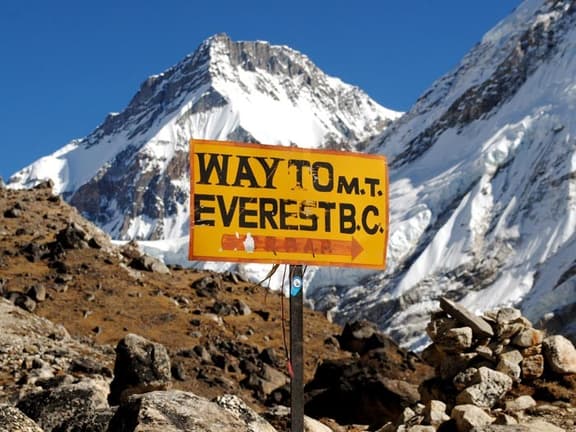
Harder than most pilgrims expect, and the difficulty is altitude rather than distance. HSJ grades the overland route 3. The highest point on it is 5,840 m, which is higher than Everest Base Camp.
The kora, the walk around the mountain, takes three days on foot. Ponies and porters can be arranged, and many people use them. Nobody should treat this as a drive with a walk attached.
Anyone with a heart or lung condition should see a doctor before booking. Ask the operator directly what the plan is if you cannot continue.
What does the kora involve?
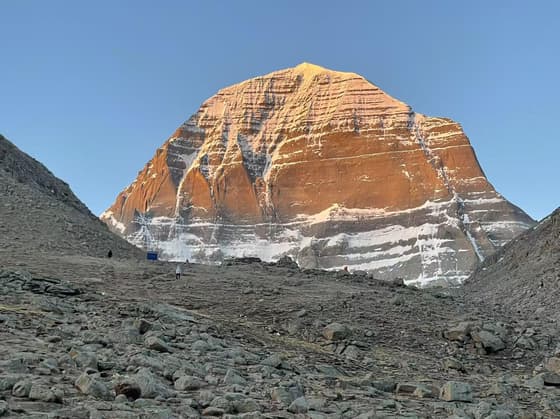
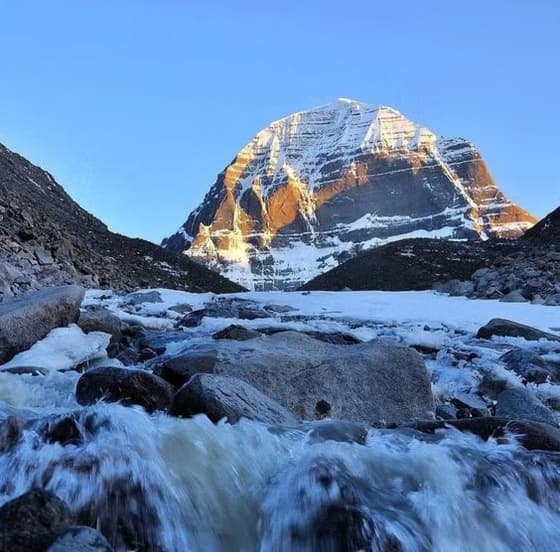
The kora is the walk around the mountain, and it is the heart of the journey. It takes three days on foot and is the part people underestimate.
You start and finish at Darchen. The first day is the longest approach, the second crosses the highest ground of the whole trip, and the third comes back down. You sleep in guesthouses or tents, depending on the route and the night.
Ponies and porters can be arranged, and a good number of pilgrims use them. Arrange it before you go rather than on the morning, because availability is not guaranteed in a busy week.
Nobody should treat the kora as a stroll. It is three days of walking at altitudes most people have never been to, in weather that changes fast.
What about Lake Mansarovar?
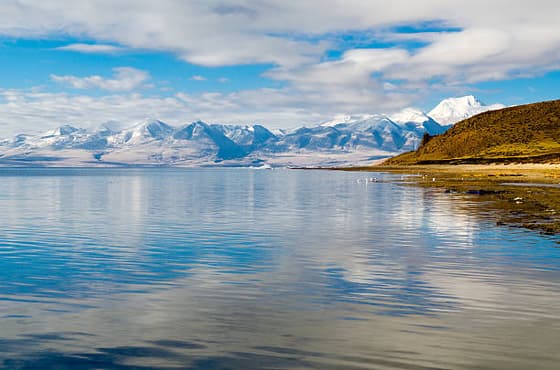
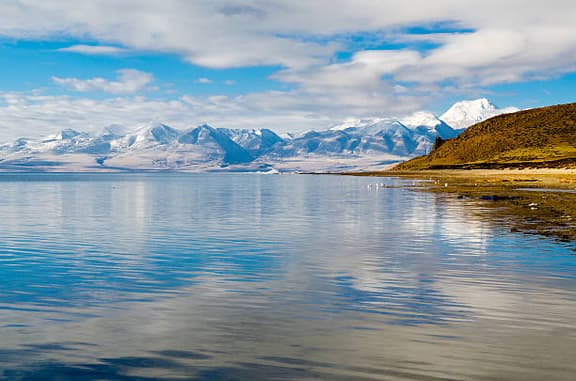
The lake is the other half of the pilgrimage, and for many travellers it is the part they remember. It lies south of the mountain, on open plateau, and most itineraries spend a night beside it.
Pilgrims bathe in it and walk part of its shore. The water is cold enough that a brief immersion is the sensible version. Ask your operator exactly how long the group stops there, because this varies more between companies than any other part of the trip.
How far ahead should you book?
Several weeks at least, and more in the busy months. The permits are the reason.
Your operator applies for the Chinese group visa in Kathmandu and for the Tibet permits on your behalf. Both need your passport details, and often the passport itself, well before departure. Rushing this is how people miss departures.
If you are booking for a group, start earlier again. Group paperwork moves at the speed of its slowest passport.
What should you pack?
The plateau is high, dry, bright and cold at night, even in summer.
- Warm layers and a windproof outer jacket
- Sun hat, high-factor sunscreen and good sunglasses
- Broken-in walking boots for the three kora days
- A water bottle, and any personal medicine in your hand luggage
- Cash, as cards are of little use once you leave Kathmandu
Ask your operator what bedding is provided. It differs between the overland and Lhasa routes.
Is the yatra for Nepali citizens different?
Yes, in several ways. It runs 10 days rather than 14, reaches 5,650 m, is priced at USD 1,045, and takes groups of 8 to 50.
The paperwork is different too, because Nepali citizens cross into Tibet on different terms from foreign passport holders. It is run in Nepali. If you hold a Nepali passport, ask for this trip rather than the foreign-passport ones.
What should you ask before you pay?
Put these to any company, including ours:
- Are you registered in Nepal, and under what licence number?
- Who is the guide, and what language do they work in?
- How many people will be in the group?
- What oxygen is carried, and what is the evacuation plan?
- What exactly is included at Mansarovar and on the kora?
- What happens to my money if the border closes?
Get the answers in an email, not on a call. A company that will not write them down is telling you something.
Why HSJ
We are a licensed tour and trekking company based in Kathmandu, at Kumari Club, Shorakhutte, and we run all three routes above. Our licences and registration documents are published on our awards and legal documents page, and our guest reviews are on our reviews page.
We would rather you asked us the six questions than took our word for it. If another company answers them better, use that company.
For visa rules on the Nepal side, check the Department of Immigration. For the current state of tourism regulation in Nepal, see the Nepal Tourism Board.
Frequently asked questions
Can I do Kailash Mansarovar independently from Nepal?
No. Foreign visitors may only enter western Tibet in an organised group through a registered operator, on permits applied for on their behalf. You need a Chinese group visa arranged in Kathmandu plus Tibet travel permits. No individual can apply for these, so a company is not optional.
How much does a Kailash Mansarovar tour from Nepal cost?
HSJ's overland route from Kathmandu is USD 2,450 for 14 days, and the route via Lhasa is USD 3,200 for 16 days. A separate 10-day yatra for Nepali citizens is USD 1,045 for groups of 8 to 50. Always confirm what is included at Mansarovar and on the kora.
When is Kailash Mansarovar open?
May to September. Outside those months snow closes the high passes and the border posts shut. The busiest period is around the Saga Dawa festival, so book early if you want those dates.
How high does the Kailash route go?
The highest point on HSJ's overland route is 5,840 m, which is higher than Everest Base Camp. The trip is graded 3. Altitude, not distance, is the difficulty, and anyone with a heart or lung condition should speak to a doctor before booking.
What should I ask a Kailash operator before paying?
Their Nepal registration, who guides and in what language, the maximum group size, what oxygen is carried, the evacuation plan, exactly what is included at Mansarovar and on the kora, and what is refunded if the border closes. Ask by email so the answers are written.