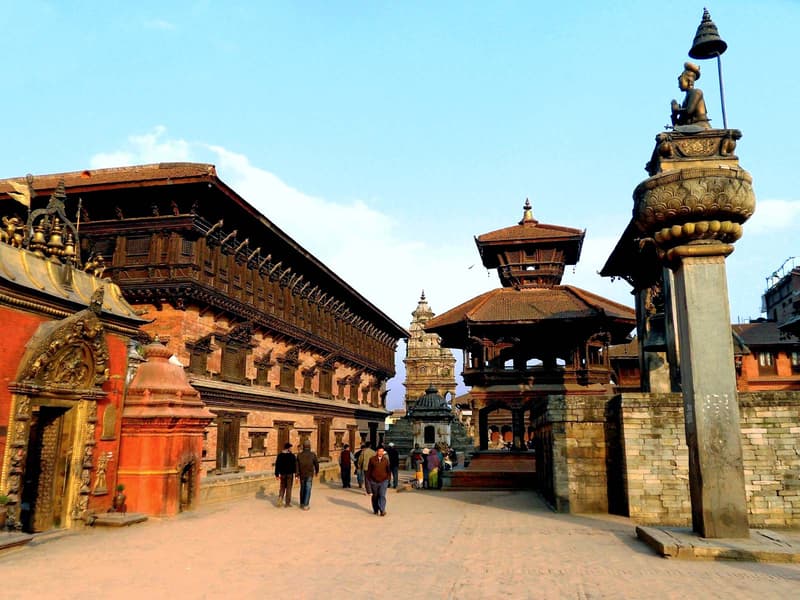
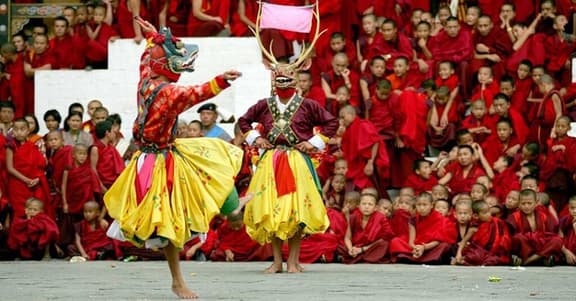

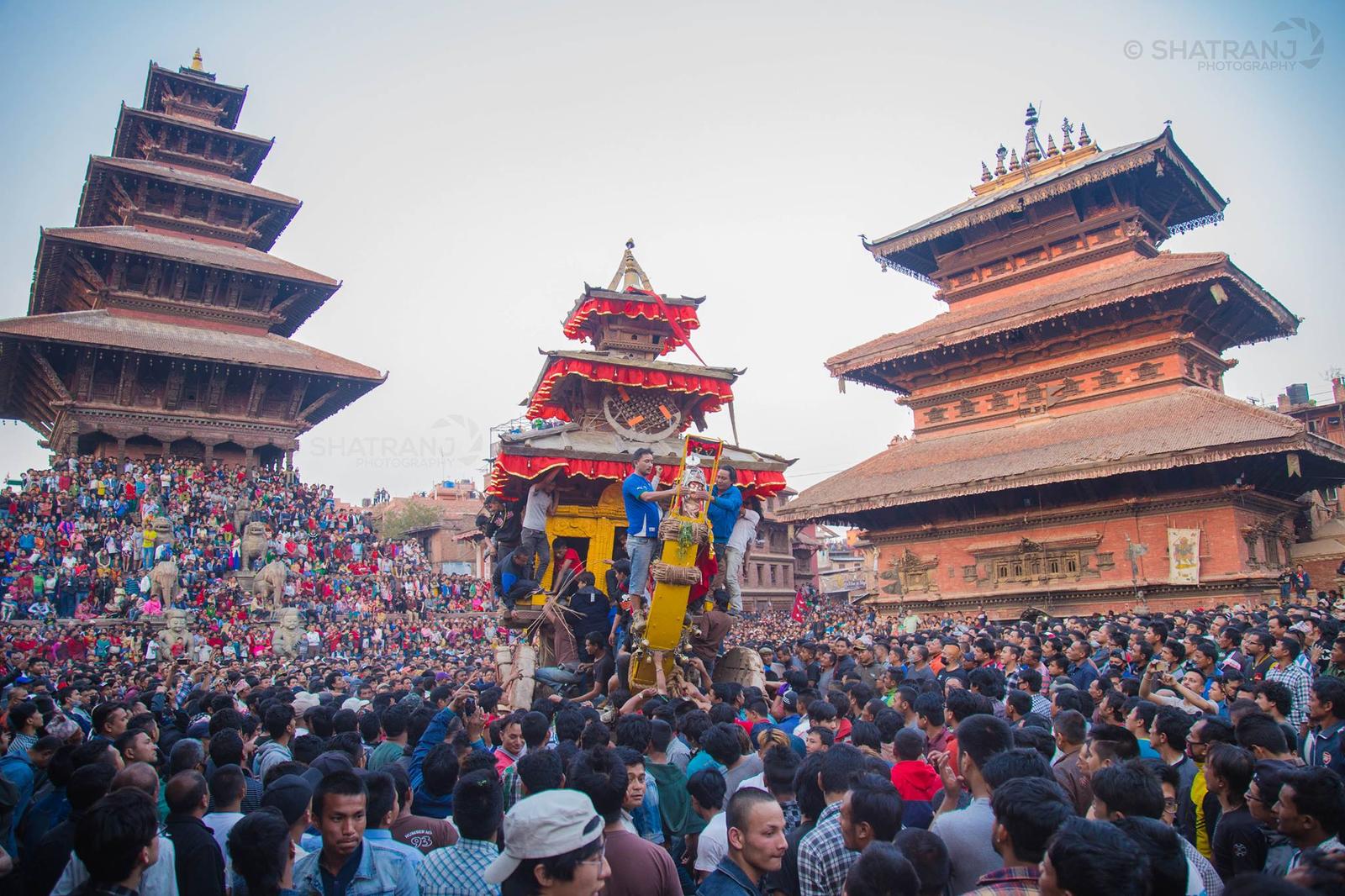
If you searched "jatra," you are asking about Nepal's temple festivals and street processions. Chariots are pulled through old city squares, masked dancers perform, and crowds turn whole neighborhoods into open-air celebration. A jatra is a Newar community festival, usually built around a deity's image or chariot carried through the streets on a fixed lunar-calendar date.
This guide explains what a jatra actually is. It lists the major ones you can time a trip around, at elevations of roughly 1,300 to 1,400 meters across the Kathmandu Valley. It also tells you where to stand, what to expect, and how a licensed local operator can help you see one without getting lost in the crowd.
What does "jatra" mean?
"Jatra" is a Nepali and Newari word that roughly translates to "procession" or "festival march." It almost always involves moving something sacred — a chariot, a mask, a palanquin, or an image of a deity — from one shrine to another, or around a town, on foot.
Most jatras come from the Kathmandu Valley's Newar culture. This community has run an independent festival calendar for centuries, overlapping with but separate from Hindu and Buddhist holidays observed across the rest of Nepal. A jatra is community-organized. Specific clans, called guthis, are responsible for pulling the chariot, carrying the mask, or hosting the deity for the night. These duties pass down through families, sometimes for over 10 generations.
Unlike a one-day public holiday, many jatras run for several days or even weeks, with different rituals happening on different nights. The schedule follows the lunar calendar, so Gregorian dates shift every year. This is the single most important thing to check before planning a trip around one.
The major jatras of the Kathmandu Valley
Here are the festivals most visitors ask about, with where they happen and roughly when.
| Jatra | Where | Roughly when | Duration | What you see |
|---|---|---|---|---|
| Indra Jatra | Kathmandu Durbar Square | September (Bhadra/Ashwin) | About 8 days | Kumari (Living Goddess) chariot pull over 3 evenings, masked Lakhe dance, display of Akash Bhairav |
| Gai Jatra | Kathmandu Valley-wide | August (day after Bhadra full moon) | 1 main day | "Cow festival" — families who lost someone that year lead a cow or child dressed as one; satire and street theatre |
| Bisket Jatra | Bhaktapur, Thimi | Around Nepali New Year, mid-April | About 9 days | Tug-of-war with a giant chariot, raising of a tall wooden pole (lingo), inter-neighborhood rivalry |
| Rato Machhindranath Jatra | Patan (Lalitpur) | April–May, dates set by priests each year | Up to 4 weeks | Nepal's longest-running chariot festival; a chariot several stories tall is pulled across Patan |
| Seto Machhindranath Jatra | Kathmandu | March–April | About 4 days | White Machhindranath chariot pulled through Kathmandu's old core |
| Yenya (Indra Jatra) Pulukisi | Kathmandu | Same week as Indra Jatra | 1 day | Pulukisi, a man inside an elephant costume, charges through crowds |
Dates for Bisket Jatra, Rato Machhindranath, and Indra Jatra are fixed by the lunar calendar and local priests each year. Always confirm the current-year dates close to your travel month. They are not the same Gregorian date twice in a row.
Indra Jatra: the one most visitors plan around
Indra Jatra is the best known jatra for travelers. It happens in September, inside the main tourist season, and centers on Kathmandu Durbar Square — an easy stop on any Kathmandu sightseeing day. The Kumari, a young girl worshipped as a living goddess, is pulled through the old city on a wooden chariot over three evenings. Masked Lakhe dancers and musicians flank the route. The festival overlaps with the end of monsoon, so carry a light rain jacket even if the forecast looks clear.
Gai Jatra: grief turned into street comedy
Gai Jatra ("cow festival") falls a day after Indra Jatra season begins, in August. Families who lost a relative in the past year walk a cow — or a child dressed as one — through the streets. This reflects a Newar Hindu belief that the cow helps the soul cross to the afterlife. Over the day it turns into citywide satire: comedians, street performers, and costumed processions mock politicians and current events. It is one of the more approachable jatras for a first-time visitor, since it runs for a single main day and is easy to watch from any Kathmandu Valley street corner.
Bisket Jatra: Bhaktapur's tug-of-war festival
Bisket Jatra marks the Nepali New Year in mid-April and runs for about 9 days, centered in Bhaktapur, with a smaller related version in Thimi. Two sides of the old town pull a massive wooden chariot carrying the deities Bhairav and Bhadrakali in a tug-of-war through the narrow streets. It has reportedly caused injuries in past years from the sheer force of the crowd. Watch from a raised step or shopfront rather than street level if you're not used to dense crowds. A tall ceremonial pole (lingo) is raised and later felled to mark the new year officially beginning.
Rato Machhindranath Jatra: the longest chariot festival
In Patan, the Rato Machhindranath chariot festival can run for up to 4 weeks each spring. A chariot several stories tall is slowly pulled across different parts of the city before a final ceremony, where a sacred vest (bhoto) is displayed to the crowd. The chariot-pulling route and exact dates vary by year, because the chariot's wheels and structure are rebuilt from scratch each time. Progress depends on how smoothly construction and weather cooperate.
Where to watch a jatra as a visitor
A few practical points matter more than the ceremony itself when you're watching from outside the community:
- Arrive early for chariot pulls. Streets fill up fast around Kathmandu, Patan, and Bhaktapur Durbar Squares. Arriving about 1 hour before a chariot is due to move gets you a spot that isn't three people deep.
- Expect closed roads. Vehicle traffic is rerouted around the main squares during procession hours. Plan an extra 20–30 minutes if you have a flight or bus to catch that day.
- Dress modestly near temple entrances, even if you're only watching from the square and not entering a shrine.
- Photography is normally fine in the open squares. Ask before photographing inside a shrine or close to ritual objects.
- Keep a buffer day. Jatra dates follow the lunar calendar, and local priests sometimes adjust the day of a specific ritual. Build in at least 1 spare day if a particular jatra is the reason for your trip.
How a jatra fits into a Nepal trip
Most travelers don't fly to Nepal only for a jatra. They time an existing Kathmandu Valley visit, or a short trek, around one. If you already have flexible dates, here's how it usually works:
- Build 2–3 extra nights in Kathmandu around Indra Jatra or Gai Jatra (both September/August) before or after a trek.
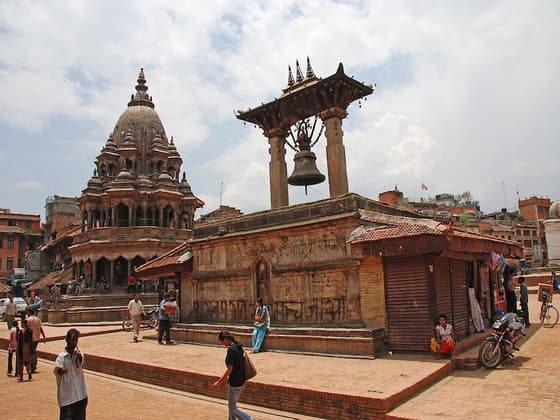
- Add Bhaktapur and Patan to a Kathmandu sightseeing day, so you can see where Bisket Jatra or Rato Machhindranath Jatra take place even outside festival dates.
- Combine Kathmandu culture with a short trek or scenic flight on either side of the festival dates. The jatra itself is usually just a 1- to 2-day commitment in any single square.
If this is your first trip and you want the festival calendar built into your plan, our sightseeing tours in Nepal and the Kathmandu Full Day Sightseeing Tour both cover Kathmandu, Patan, and Bhaktapur Durbar Squares — the three main jatra stages, priced from roughly USD 40 to 60 per person for a 1-day tour. For a slower, multi-day look at the valley's heritage sites alongside Pokhara and Chitwan, see our World Heritage Sites Tour or the broader Kathmandu, Pokhara & Chitwan tour. If you'd rather pair temple culture with a trek, our spiritual journey tours and day trips from Kathmandu are built around exactly this kind of flexible, short-notice itinerary. For background on one of the main festival stages, our Bhaktapur Durbar Square guide covers entry fees and layout in more detail.
Jatra vs. other Nepali festivals
People sometimes use "jatra" loosely for any Nepali festival, but it has a specific meaning:
- Jatra — a local, Newar-rooted procession tied to a deity, chariot, or mask. It's usually confined to one town or valley and run by community guthis, lasting anywhere from 1 day to 4 weeks.
- Dashain and Tihar — national, multi-day Hindu holidays observed across the whole country, each running about 10 to 15 days, with family gatherings rather than street processions as the centerpiece.
- Buddha Jayanti — a single-day Buddhist observance marking the Buddha's birth, celebrated at stupas like Boudhanath and Swayambhunath rather than through chariot processions.
Knowing the difference helps when you're trying to time a trip. Dashain and Tihar affect transport and business hours nationwide, while a jatra mostly affects one town's streets for a day or two.
Practical notes before you go
A few things are worth confirming close to your travel dates rather than relying on last year's calendar:
- Exact Gregorian dates for Indra Jatra, Gai Jatra, Bisket Jatra, and Rato Machhindranath Jatra shift every year with the lunar calendar. Check with a local source in the month before travel.
- Kathmandu Durbar Square, Patan Durbar Square, and Bhaktapur Durbar Square each charge a separate entry fee for foreign visitors, roughly in the USD 10 to 15 range, reviewed periodically by local municipal authorities.
- Hotel availability in Kathmandu and Bhaktapur tightens in the days around Indra Jatra and Bisket Jatra. Book 2 to 3 weeks ahead if your trip lands on festival dates.
- Nepal's official tourism board publishes a general festival calendar. See Nepal Tourism Board for country-wide holiday listings, and the UNESCO World Heritage Kathmandu Valley listing for background on the squares where most jatras take place.
Frequently asked questions
What does jatra mean in Nepali?
Jatra means a procession or community festival. It usually involves a chariot, mask, or deity image carried through the streets of a Newar town such as Kathmandu, Patan, or Bhaktapur.
When is Indra Jatra?
Indra Jatra falls in September, in the Nepali month of Bhadra or early Ashwin, and runs for about 8 days in Kathmandu Durbar Square. The exact date changes yearly with the lunar calendar, so check closer to your travel dates.
Is jatra the same as Dashain or Tihar?
No. Dashain and Tihar are national multi-day Hindu holidays, each lasting about 10 to 15 days and celebrated by families across Nepal. A jatra is a local, usually Newar, street procession tied to one town's deity or chariot, and it does not affect the whole country the way Dashain and Tihar do.
Which jatra is easiest for a first-time visitor to see?
Gai Jatra and Indra Jatra are the most accessible. Both happen in Kathmandu Durbar Square during the main tourist season and don't require travel outside the valley.
Do I need a ticket to watch a jatra?
Watching from the street is free. Kathmandu, Patan, and Bhaktapur Durbar Squares each charge a separate foreign-visitor entry fee, roughly USD 10 to 15, to enter the square itself, which is where most jatra chariots stop.
Can I combine a jatra with a trek?
Yes. Most visitors add 2 to 3 extra days in Kathmandu around a festival date before or after a trek such as Everest Base Camp or the Annapurna Circuit. The jatra itself usually affects only 1 or 2 days in one town.