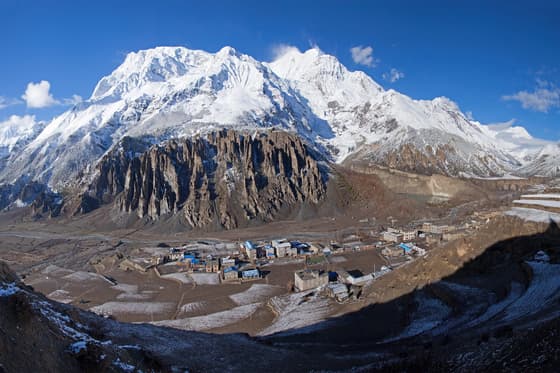

The Annapurna Himalayas are a range in north-central Nepal, north of Pokhara. They hold one peak above 8,000 m, Annapurna I at 8,091 m, and a crowd of summits between 6,000 m and 8,000 m. Most visitors come to walk below them rather than climb them.
Where are the Annapurna Himalayas?
The range sits between the Kali Gandaki river in the west and the Marsyangdi in the east. Pokhara, 822 m above sea level, is the gateway city. From Pokhara's lakeside you can see Machhapuchhre and Annapurna South on a clear morning.
The whole area lies inside the Annapurna Conservation Area, Nepal's largest protected area. It is managed for both wildlife and the people who live in it. That matters for walkers, because the villages on the trails are working villages, not resorts.
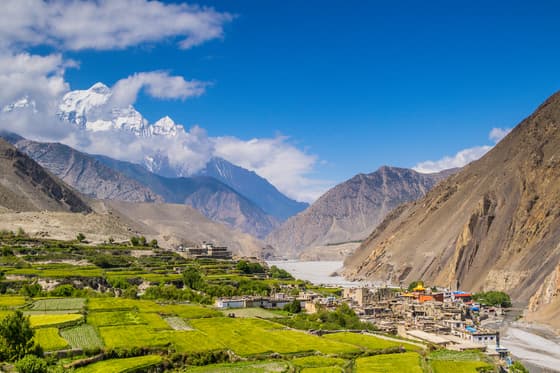
The geography changes fast. South of the main peaks the hills are green and terraced. North of them, past Jomsom and Kagbeni, the land turns dry and bare. The Kali Gandaki cuts between Dhaulagiri and Annapurna, and the valley floor there is one of the deepest on earth.
Which peaks are in the Annapurna range?
These are the summits you will hear named on the trail:
| Peak | Height | Notes |
|---|---|---|
| Annapurna I | 8,091 m | Tenth highest in the world |
| Annapurna II | 7,937 m | Eastern end of the range |
| Annapurna III | 7,555 m | Seen from Manang |
| Annapurna IV | 7,525 m | Next to Annapurna II |
| Gangapurna | 7,455 m | Above Manang village |
| Annapurna South | 7,219 m | Seen from Pokhara |
| Tilicho Peak | 7,134 m | Above Tilicho Lake |
| Machhapuchhre | 6,993 m | Closed to climbing |
| Hiunchuli | 6,441 m | Above the Sanctuary |
Annapurna I has a particular place in mountaineering history. It was the first peak above 8,000 m ever climbed, by a French team in 1950, three years before Everest. It is also among the most dangerous of the fourteen, with a high death rate among those who attempt it.
Machhapuchhre, the fish-tail peak, is the one most people photograph. It is closed to climbing and remains officially unclimbed. You walk right underneath it on two of the routes below.
How do you see the Annapurna Himalayas without climbing?
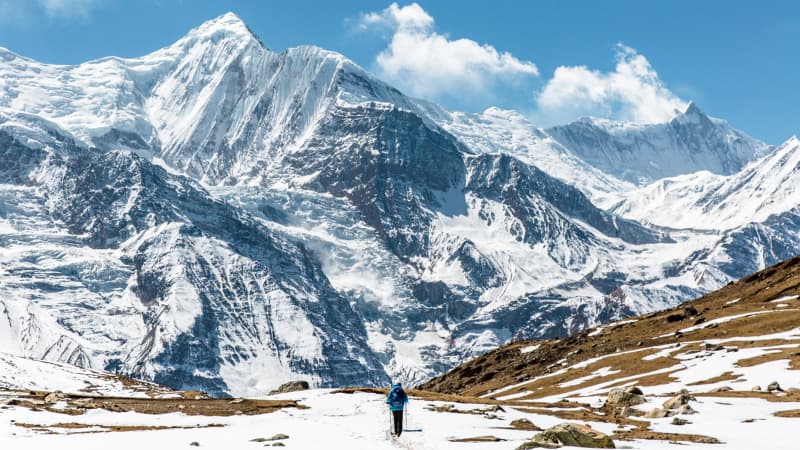
Almost everyone who comes here walks. The trails are teahouse routes, which means you sleep and eat in village lodges rather than tents. You need no technical skill and no ropes.
There are three ways to get a close look:
- Walk in. Trails from a few days to two weeks, all starting near Pokhara.
- Drive in. The road now reaches Jomsom and Muktinath, so you can see the northern side without walking. Our 8-day Jomsom Muktinath tour does exactly that.
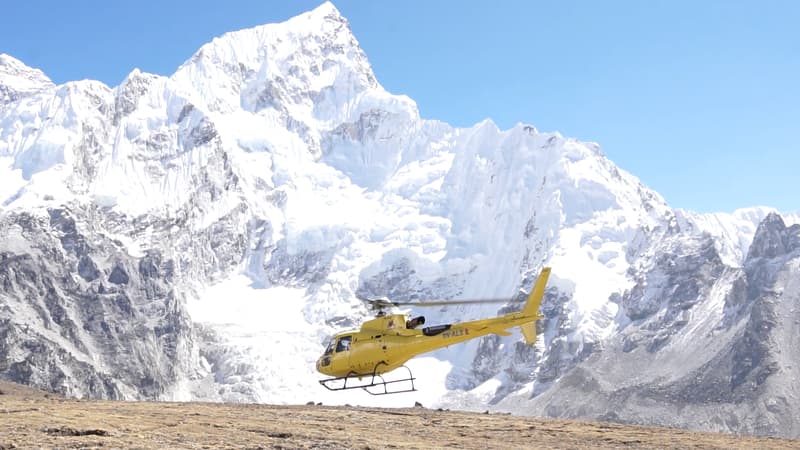
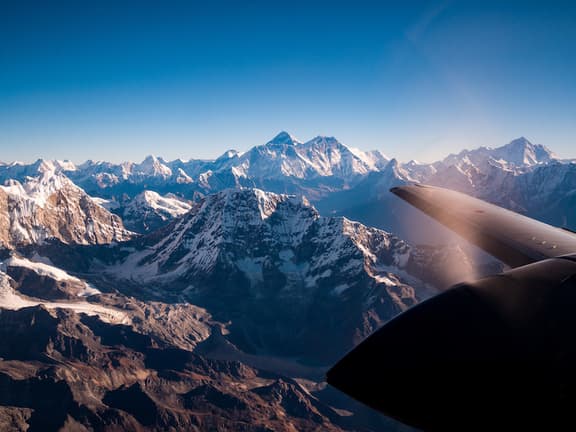
- Fly over. A helicopter lands at the base of the Sanctuary and returns the same morning.
For most people the walking is the point. The range is at its best when you reach it slowly.
Which Annapurna trek should you choose?
It depends on how many days you have and how high you want to sleep.
| Trek | Days | Highest point | Grade |
|---|---|---|---|
| Ghorepani Poon Hill | 9 days | 3,210 m | Moderate |
| Mardi Himal Base Camp | 7 days | 4,500 m | Moderate |
| Annapurna Base Camp | 9 days | 4,130 m | Moderate |
| Annapurna Circuit | 14 days | 5,416 m | Moderate |
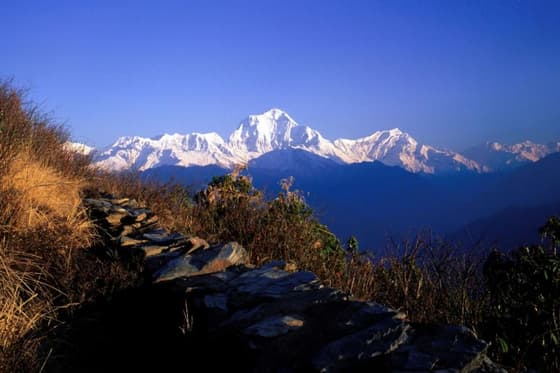
Poon Hill is the gentlest. Nothing on it goes above 3,210 m, and the sunrise view takes in both Annapurna and Dhaulagiri. It suits families and anyone unsure of their fitness.
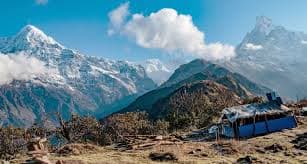
Mardi Himal is the quietest. It follows a ridge with Machhapuchhre close on one side. Seven days makes it the easiest to fit into a short holiday.
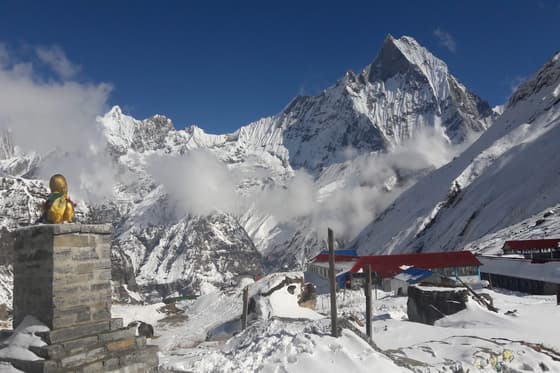
Annapurna Base Camp walks you into the Sanctuary itself, a ring of peaks with the base camp at 4,130 m in the middle. You are surrounded on every side.
The Annapurna Circuit is the long one. It crosses the Thorong La at 5,416 m and comes down the far side to Muktinath and the Kali Gandaki. Fourteen days, and the only route that shows you both the green south and the dry north.
What permits do you need?
Two, for every trek in the range. The Annapurna Conservation Area Permit costs NPR 3,000 per person. The TIMS card costs NPR 2,000. We arrange both, and on our trips they are inside the price.
You also need a Nepal tourist visa. The 15-day visa costs USD 30 on arrival at Kathmandu airport, and Indian citizens do not need one. Check the current rules with the Department of Immigration before you fly, as fees change.
Trekking with a licensed guide is now the rule in Nepal rather than the exception. The Nepal Tourism Board publishes the current position.
When is the best season?
March to May and September to November. Those are the two settled windows, and the mountains are clearest in them.
October and November give the sharpest views of the year. March to May is warmer, and the rhododendron forest below Ghorepani flowers in late March and April.
June to August is the monsoon. The trails are wet, leeches appear in the forest, and cloud sits on the peaks for days. The northern side past Jomsom stays drier, which is why Muktinath still works in summer.
December to February is cold but often clear. Poon Hill and Mardi both run through winter. Anything crossing the Thorong La is a different matter, because snow can close the pass.
What is a day on the trail like?
Simpler than most people expect. You wake in a village lodge, eat breakfast while the sun comes onto the peaks, and start walking by about half past seven.
You walk five to six hours on a normal day, with a stop for lunch at a teahouse on the route. The trail is a path between villages, used by the people who live there. You will share it with schoolchildren, mule trains and the occasional porter carrying a door.
By mid-afternoon you reach the next village and stop. The lodges are simple: a wooden room, two beds, blankets, and a dining room with a stove in the middle. Hot showers and charging usually cost a little extra.
Dinner is dal bhat more often than not, and the refill is free. Most people are asleep by nine.
What does an Annapurna trek cost?
Less than people assume. HSJ's published rates start at USD 340 for the 7-day Mardi Himal trek, USD 595 for the 9-day Annapurna Base Camp trek and USD 690 for the 9-day Ghorepani Poon Hill trek.
Those are complete guided packages from Kathmandu. They include the permits, a licensed guide, a porter for every two trekkers, teahouse beds on the trail and hotels in the cities. Meal arrangements differ between trips, so read that line before you compare two prices.
What sits outside almost every Nepal trek price is the same list: your international flights, your visa, travel insurance, personal gear, drinks and tips. Hot showers and device charging on the trail are paid at each lodge.
How do you get to the Annapurna region?
Through Pokhara, always. The flight from Kathmandu takes about 25 minutes and the drive takes most of a day. Both are easy to arrange and we book either.
From Pokhara the trailheads are one to three hours away by jeep, depending on the route. The Circuit starts from the other side, at Besisahar, which is reached from Kathmandu directly.
How high is too high?
Altitude is the one real risk on these trails. Above about 3,000 m your body needs time, and the only cure for altitude sickness is to go down.
The itineraries above are built with that in mind. The Circuit spends extra nights at Manang before the pass. Base Camp gains height gradually through the Sanctuary. Walk slowly, drink more water than you want, and tell your guide the moment you feel unwell.
You can see the whole range of HSJ trips in the area on our Annapurna region page.
Frequently asked questions
How high is Annapurna I?
Annapurna I is 8,091 m, which makes it the tenth highest mountain in the world and the only peak above 8,000 m in the Annapurna range. Trekkers do not climb it. The nearest you get on a normal trek is Annapurna Base Camp at 4,130 m, directly below its south face.
Can a beginner trek in the Annapurna Himalayas?
Yes. The Ghorepani Poon Hill trek tops out at 3,210 m and takes 9 days, with teahouse beds and meals every night. No ropes, no technical skill and no previous trekking are needed. You should be able to walk 5 to 6 hours a day on hills.
Is Machhapuchhre open to climbers?
No. Machhapuchhre, at 6,993 m, is closed to climbing and is officially unclimbed. You can walk underneath it on the Mardi Himal and Annapurna Base Camp routes, which is as close as anyone gets.
What permits do I need for the Annapurna region?
An Annapurna Conservation Area Permit at NPR 3,000 and a TIMS card at NPR 2,000, per person. Both are included in HSJ trek prices and we arrange them for you. You also need a Nepal tourist visa, which is USD 30 for 15 days on arrival.
When are the mountains clearest?
October and November give the sharpest views of the year, after the monsoon has washed the air. March to May is the other good window and is warmer, with rhododendron in flower in late March and April. Avoid June to August, when cloud sits on the peaks.