
Yes, a fit first-timer can trek the Manaslu Circuit with training and a guide. Here is what the 15 days, the altitude and the Larkya La Pass really ask of you.
Yes, a first-timer can trek the Manaslu Circuit, but it is not an easy first trek, and it rewards people who prepare. If you are searching for a Manaslu Circuit Trek for beginners, here is the honest picture from our team in Kathmandu: no climbing skills are needed, the route climbs slowly over 15 days, and you walk with a licensed guide the whole way. What makes it hard is the length of the days, how remote the valley is, and one big day over the Larkya La Pass at 5,160 m.
This guide walks you through what the trek really asks of you, day by day, so you can decide if it is the right first Himalayan trek for you, or if you should start somewhere gentler.
Manaslu Circuit at a glance
- Length: 15 days from Kathmandu, 10 of them walking
- Highest point: Larkya La Pass, 5,160 m
- Daily walking: usually 5 to 7 hours; the pass day is 8 to 9 hours
- Technical skills: none. It is a walking trek on trails, with snow possible on the pass
- Guide: required by law, because Manaslu is a restricted area
- Best seasons: spring (March to May) and autumn (September to November)
- Our grade: 4 out of 5 on our difficulty scale
Can a beginner really do the Manaslu Circuit?
Yes, if you are fit, healthy and willing to train for a few months first. Plenty of people who have never been above 4,000 m finish it. The ones who struggle are usually not the least experienced, but the least prepared.
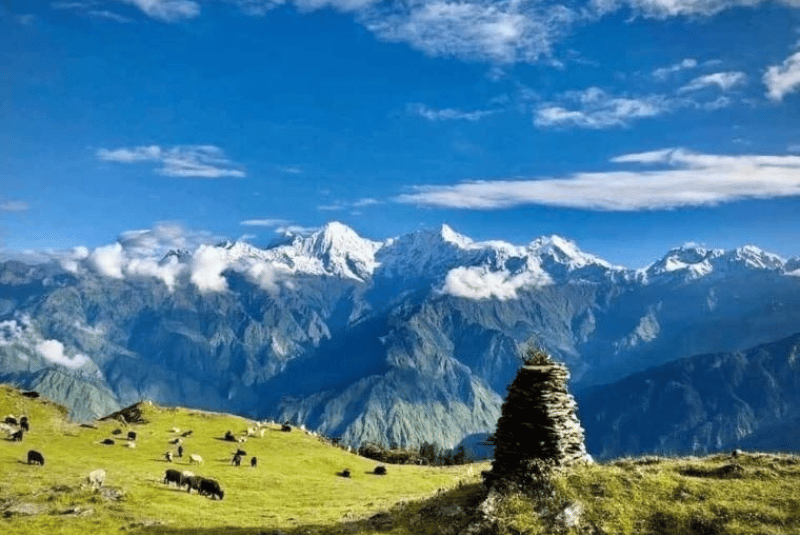
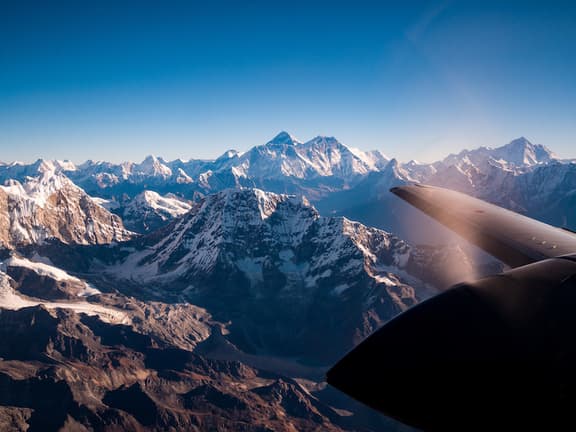
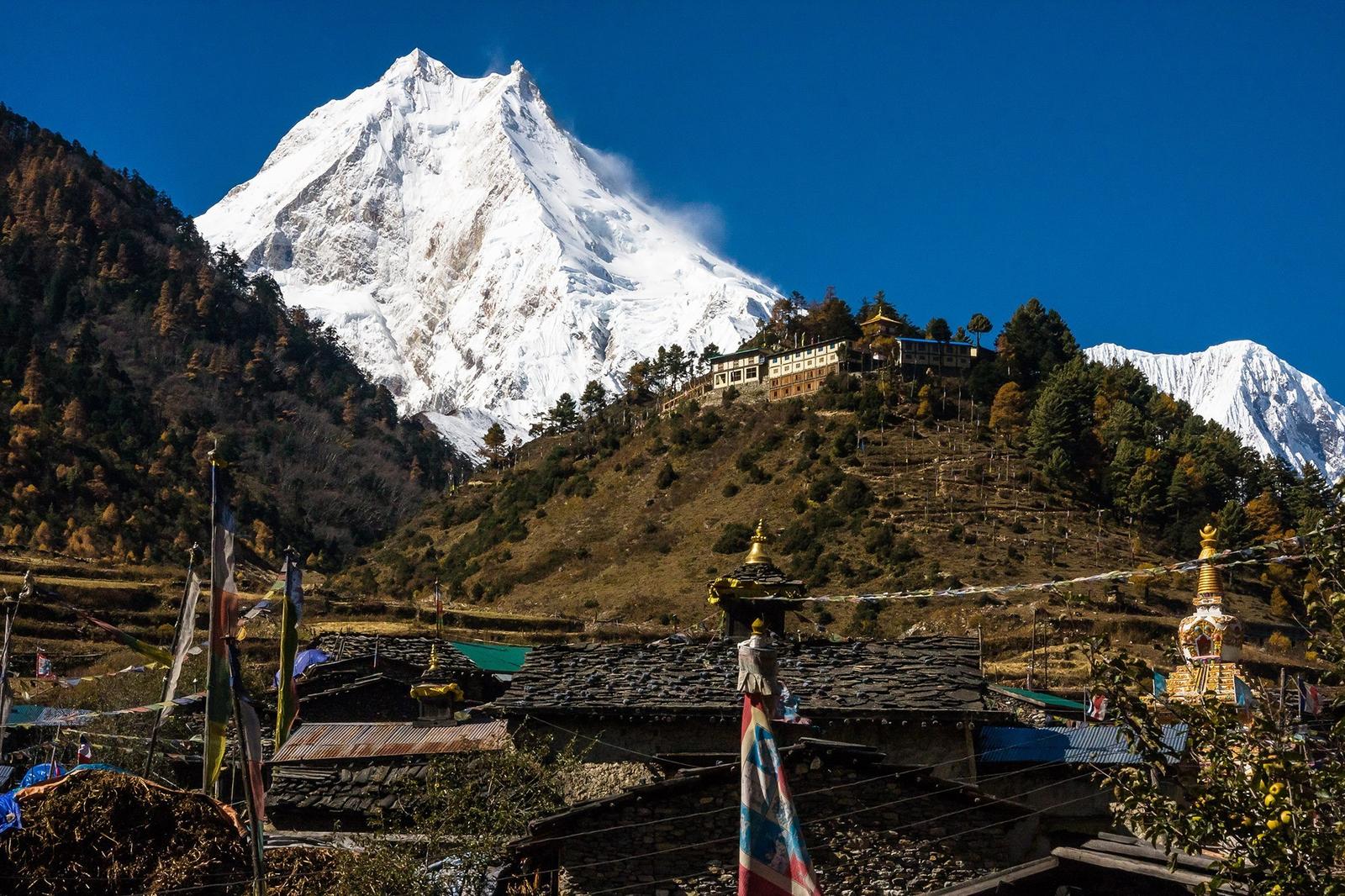
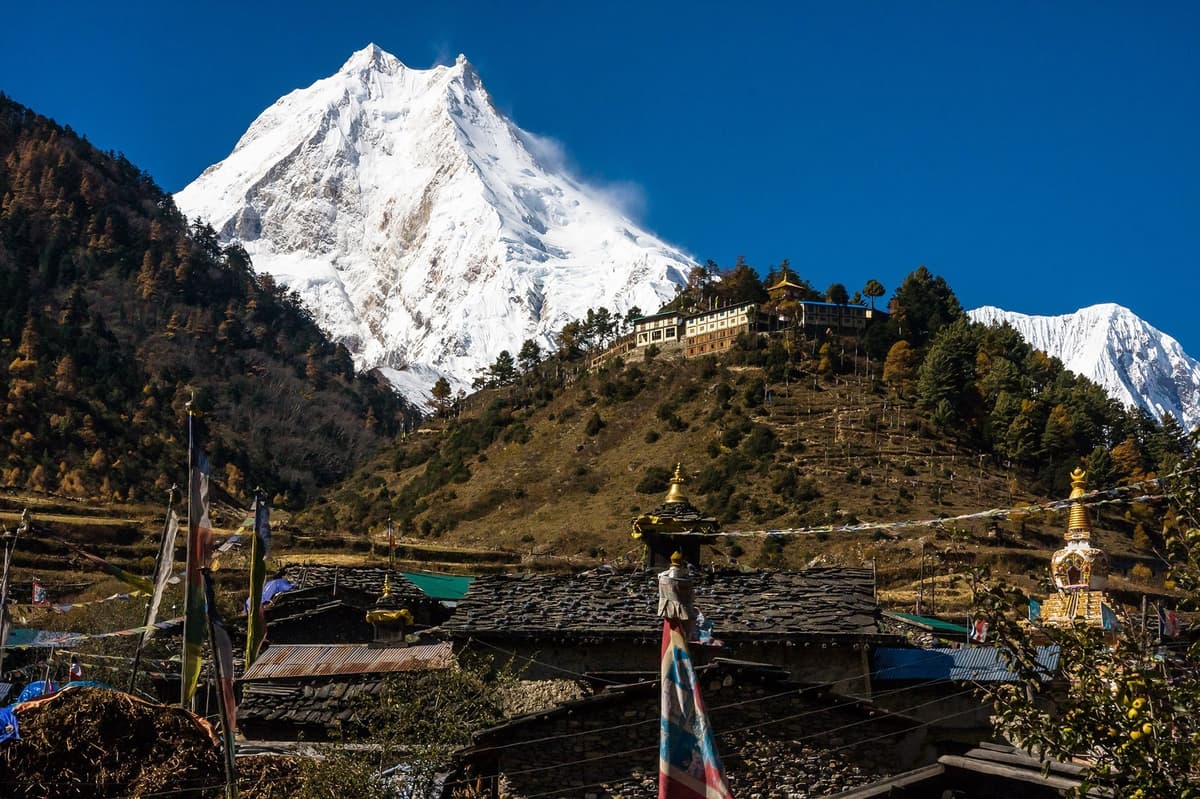
The trek is a loop around Mount Manaslu, the eighth highest mountain in the world at 8,163 m. You follow the Budhi Gandaki river up from warm, green farmland into Tibetan Buddhist villages, cross the Larkya La, then come down into the Annapurna side of the mountains. There are no ropes, no ladders and no climbing. Every day is walking.
What you do need is the ability to walk for 6 or 7 hours, then get up and do it again the next day, for ten days in a row, with less oxygen in the air as you go higher.
What makes it hard for a first-timer
Three things make Manaslu harder than a classic first trek like Poon Hill or Annapurna Base Camp: long days, remoteness, and the pass.
Long days, many of them in a row
On our 15-day itinerary, you walk 6 to 7 hours on most days from Day 4 to Day 8. The trail climbs and drops all day as it follows the river, so a day that gains 500 m in height can feel like you climbed twice that. Day 3 is also long, but you are sitting: it is a 7 to 8 hour drive from Kathmandu to Macha Khola on a rough road.
It is remote
Once you leave the road, there is no quick way out. Villages are small, teahouses are simple, and most food arrives on the backs of mules. Phone signal comes and goes. This is a big part of why people love Manaslu, but it means you need to be comfortable with basic rooms, shared toilets and cold mornings.
The Larkya La day
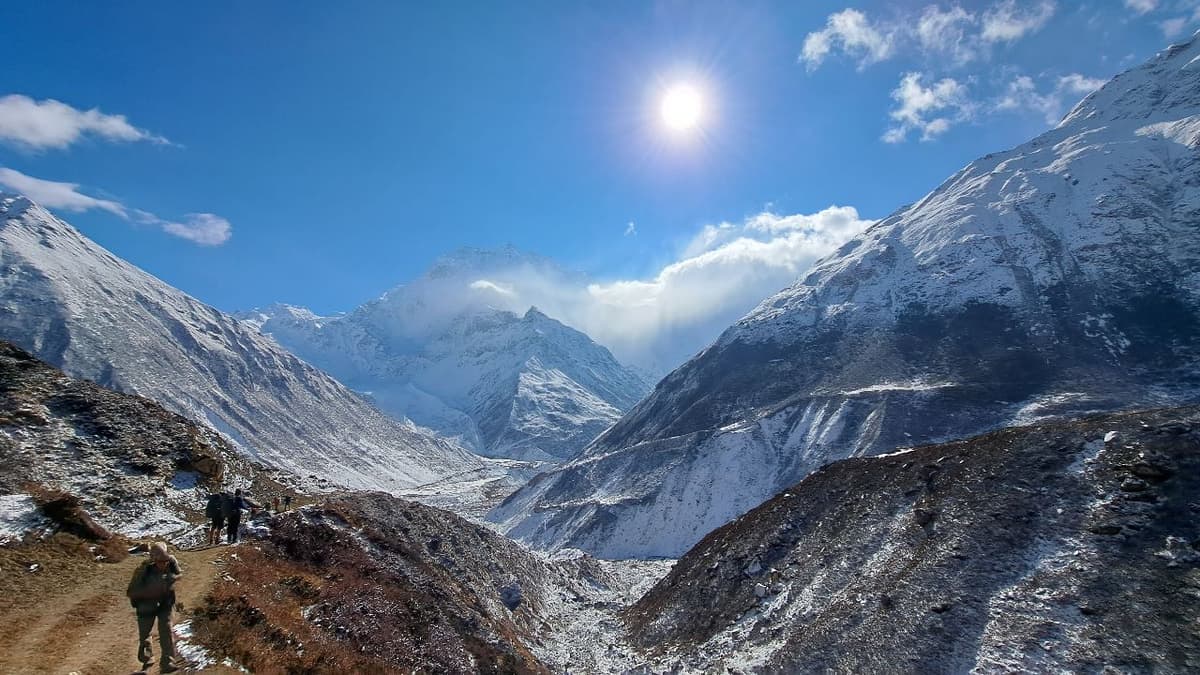
Day 12 is the hardest day of the trek. You leave Dharamshala (4,460 m) before dawn, climb to the Larkya La at 5,160 m, then walk down a long, steep slope to Bimthang. Plan on 8 to 9 hours. In some seasons there is snow and ice near the top.
What makes it doable
The route is built in a way that helps your body adapt, and you never walk it alone.
- The height comes slowly. You start low, at 930 m in Macha Khola, and take a week to reach Sama Gaon at 3,520 m. That slow climb is the best protection against altitude sickness there is.
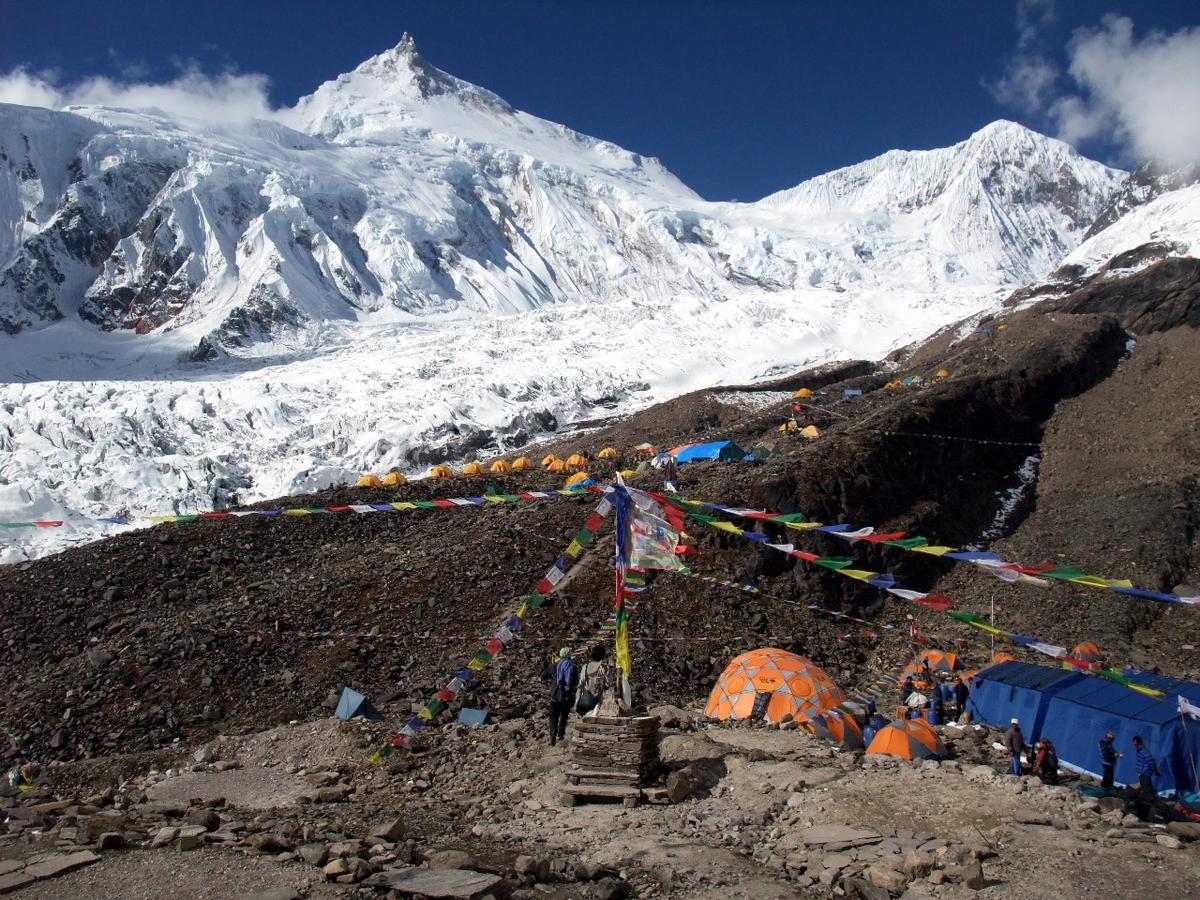
- There is a rest day at the right moment. Day 9 is an acclimatisation day in Sama Gaon. You hike up toward Manaslu Base Camp and sleep low again, which helps your body adjust before the pass.
- Two short days before the pass. Days 10 and 11 are only 4 to 5 hours each, so you arrive at Dharamshala rested.
- A porter carries your bag. With us, one porter carries up to 15 kg for every two trekkers. You walk with a light day pack.
- Your guide watches you, not just the trail. Our guides check your oxygen level with a pulse oximeter on the trail and know when to slow down or turn back.
Are you ready? A simple self-check
You are probably ready for the Manaslu Circuit if most of these are true for you:
- You can walk 15 to 20 km with hills in one day and feel fine the next morning.
- You have done at least a few back-to-back days of hiking, even at low altitude.
- You can carry a 5 to 7 kg day pack for several hours.
- You are fine with simple teahouse rooms, cold nights and basic food.
- You have no heart, lung or blood pressure problems your doctor is worried about.
- You can give yourself 15 days, with a spare day in case of weather.
If two or more of these are a stretch, start with a shorter trek and come back to Manaslu next season. Good first treks are the Annapurna Base Camp Trek or the Langtang Valley Trek. Both have shorter days and an easier way out if you need it.
How to train in the 3 months before
- Walk long. Once a week, hike for 5 to 6 hours with a day pack. Add a second day when you can.
- Walk uphill. Stairs, steep hills or a step machine two or three times a week. Downhill matters too, for your knees.
- Break in your boots. Wear them on every training walk. New boots on the Manaslu trail cause blisters by Day 4.
- Build general fitness. Cycling, swimming or running, three times a week, for 30 to 45 minutes.
Altitude and safety, in plain words
Altitude sickness is the main health risk on Manaslu, and it can affect anyone, fit or not. It usually starts above 2,500 m and shows up as a headache, poor sleep, no appetite or nausea.
- Tell your guide early. A mild headache is common. A headache that gets worse, or comes with vomiting or confusion, is a reason to stop and go down.
- Never go higher with getting-worse symptoms. Going down even 300 to 500 m usually helps quickly.
- Drink 3 to 4 litres of water a day, and eat even when you are not hungry.
- Walk slowly. On this trek, slow is safe. It is not a race.
- Get the right insurance. Your travel insurance must cover trekking up to 5,500 m and helicopter evacuation. Check the altitude limit in your policy before you book.
The other safety risks are the trail itself and the weather. Some sections are narrow, with drops to the river, and you cross long suspension bridges. Landslides are a risk in the monsoon (June to August), which is one reason we do not recommend this trek then. Your guide checks the weather every morning and decides the pace for the day.
Crossing the Larkya La Pass
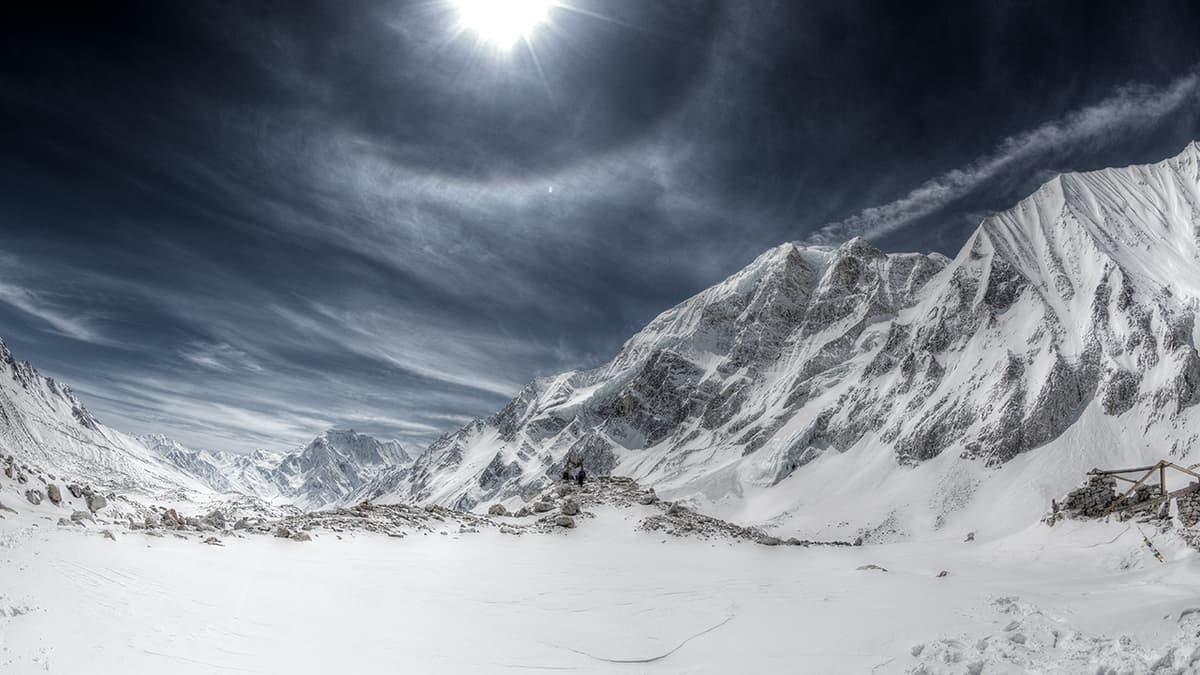
The Larkya La is a long day, not a technical one. You leave Dharamshala in the dark, usually between 4 and 5 am, with a head torch. The climb to 5,160 m takes about 4 to 5 hours at a slow, steady pace. At the top there are prayer flags and, on a clear day, views of Himlung, Cheo Himal and the Annapurna peaks.
The descent is the part people remember. It is steep, loose and long, and on tired legs it feels longer than the climb. Trekking poles help a lot here. You reach Bimthang in the afternoon, where the air already feels thick and warm after the pass.
Your guide may decide not to cross on the planned day if there is fresh snow or strong wind. That is why we ask you to keep one spare day at the end of your trip.
Guide, permits and going solo
You cannot trek the Manaslu Circuit on your own. Manaslu is a restricted area, so the government requires a licensed guide and a permit arranged through a registered trekking company.
You need three permits:
- Manaslu Restricted Area Permit (RAP). From September to November it costs USD 100 for the first 7 days, then USD 15 a day. From December to August it is USD 75 for the first 7 days, then USD 10 a day.
- Manaslu Conservation Area Permit (MCAP).
- Annapurna Conservation Area Permit (ACAP), for the last part of the trek after the pass.
In 2026, Nepal dropped the old rule that you needed at least two trekkers to get a restricted area permit. You can now trek Manaslu as one person, as long as you have a licensed guide. On our trip, all three permits are included in the price.
Best time to go as a first-timer
Autumn, from late September to November, is the best season for a first Manaslu trek. The skies are clear, the trails are dry and the pass is usually free of deep snow. Spring, from March to May, is the second best. It is a little hazier, but warm, with rhododendron forests in flower lower down.
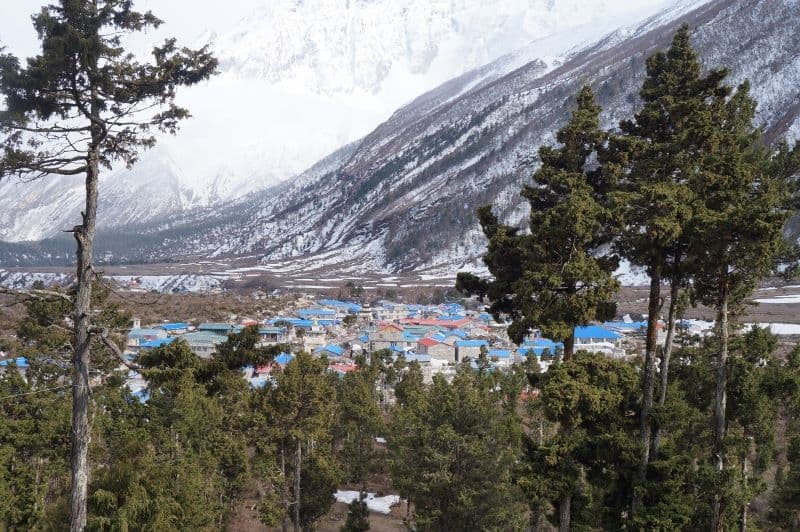
Winter (December to February) brings deep cold and snow that can close the Larkya La for days. The monsoon (June to August) brings rain, leeches and landslides on the lower trail. We do not recommend either season for a first trek.
Is Manaslu worth it compared with Annapurna?
For a first-timer who wants quiet trails and real village life, yes. For a first-timer who wants comfort and easy exits, the Annapurna Circuit is the gentler choice.
| Manaslu Circuit | Annapurna Circuit | |
|---|---|---|
| Crowds | Quiet; a fraction of Annapurna's trekkers | Busy in peak season |
| Roads | No road for most of the trek | Roads reach much of the route |
| Teahouses | Simple, fewer choices | More choice and comfort |
| Permits | Restricted area permit plus MCAP and ACAP | ACAP only |
| Highest point | Larkya La, 5,160 m | Thorong La, 5,416 m |
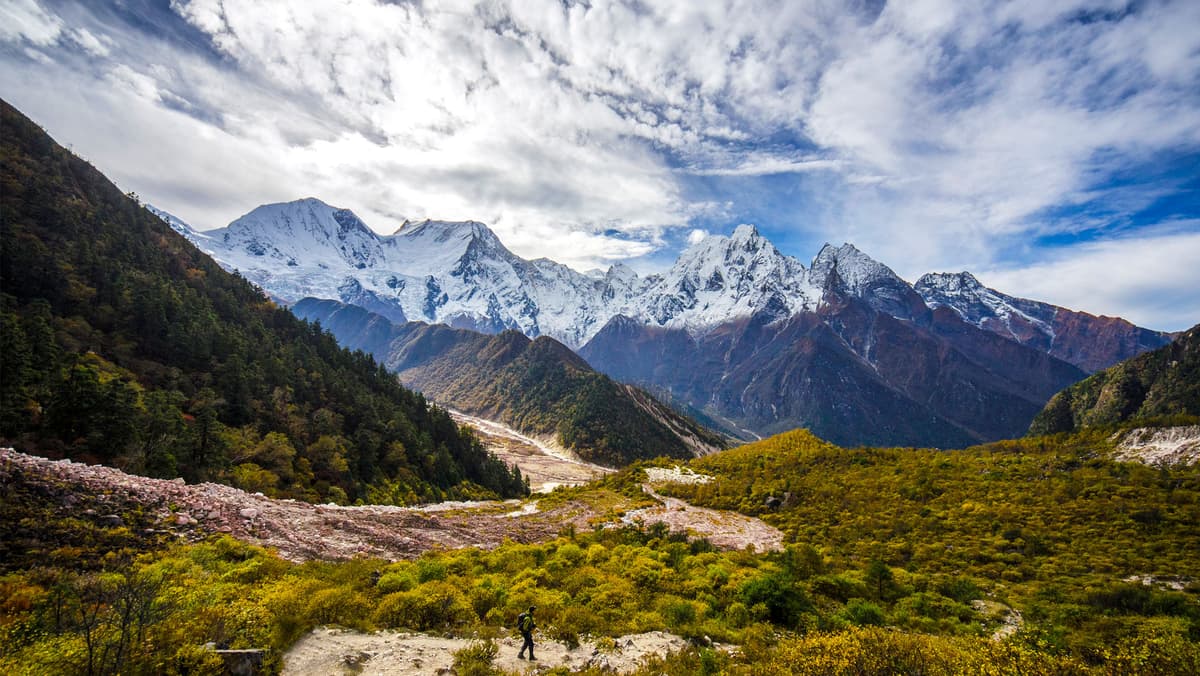
What you get on Manaslu is what the Annapurna Circuit was like twenty years ago: stone villages, Buddhist monasteries, mani walls and very few other trekkers. For many people, the effort is part of what makes it so memorable.
Our honest answer
The Manaslu Circuit is a real challenge for a first trek, but a fair one. If you train for it, go in autumn or spring, walk slowly and listen to your guide, you have a very good chance of crossing the Larkya La and finishing the loop.
See the day-by-day plan, prices and what is included on our 15-day Manaslu Circuit Trek. If you want to add the hidden Tsum Valley, read our Manaslu and Tsum Valley guide. And if you are not sure you are ready, message us on WhatsApp. We would rather tell you to start with an easier trek than see you struggle on this one.
Frequently asked questions
Is the Manaslu Circuit good for beginners?
It is possible for fit beginners who train first. It is harder than most first treks because of long days, remoteness and the 5,160 m Larkya La Pass.
How fit do I need to be for the Manaslu Circuit?
You should be able to hike 6 to 7 hours a day for several days in a row. Three months of hill walking and cardio training is usually enough.
How hard is the Larkya La Pass?
It is long, not technical. Expect 8 to 9 hours, a pre-dawn start, possible snow near the top, and a steep descent to Bimthang.
Can I trek the Manaslu Circuit without a guide?
No. Manaslu is a restricted area, so a licensed guide and a permit through a registered agency are required by law.
Can I trek the Manaslu Circuit solo?
Yes. Since 2026 you no longer need a second trekker for the permit, but you must still trek with a licensed guide.
What is the best month for a first Manaslu trek?
October is the best month. Late September to November gives clear skies and dry trails, and spring from March to May is the next best choice.
How many days does the Manaslu Circuit take?
Our trip takes 15 days from Kathmandu, with 10 walking days and one acclimatisation day in Sama Gaon before the pass.