Pashupatinath is Nepal's most important Shiva temple, on the Bagmati River in eastern Kathmandu. Foreign visitors cannot enter the main sanctum, which is for Hindus only. They can still walk the complex, see the temple from the opposite bank, and watch the evening aarati. Most guides quote a foreigner fee of NPR 1,000, but confirm it at the gate.
I have taken many guests here. It is not a quiet "temple visit". It is a working place of worship and also the main open-air cremation site of the city. Go with that in mind and it is one of the most meaningful half days in Kathmandu.
What is Pashupatinath Temple?
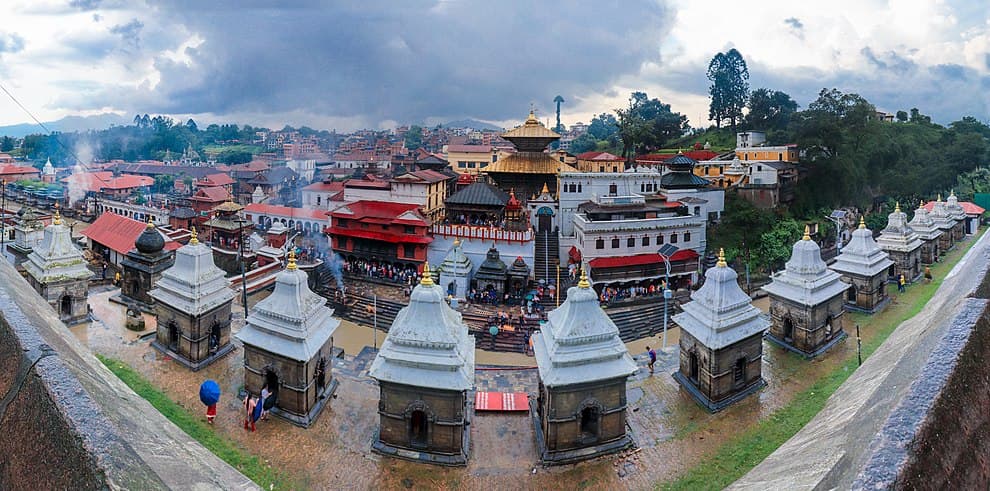
Pashupatinath is a large complex of temples, shrines, ghats (riverside steps), ashrams and rest houses along the Bagmati. At its centre is the Shiva temple, a two-roofed pagoda with a gilded roof and silver-clad doors. Shiva is worshipped here as Pashupati, "Lord of Animals".
It is part of the Kathmandu Valley UNESCO World Heritage listing. For Hindus in Nepal and India it is a major pilgrimage site, and many older people come here hoping to spend their last days or to be cremated beside the river. The Pashupati Area Development Trust manages the area.
Can non-Hindus enter Pashupatinath?
No. The main temple and inner courtyard are closed to non-Hindus, and guards at the gate do check. Everything else in the public area is open to you: the ghats, the footbridges, the terraces of small shrines on the east bank, the forest hillside, and the viewing points across the river.
From the east bank you can see the main temple roof, the Nandi bull statue and the courtyard walls. You will not see the Shiva lingam. If seeing the sanctum matters to you, be honest about it before you come, so you are not disappointed at the gate.
How much is the Pashupatinath entry fee, and what are the hours?
Most 2026 guides, including the Wego visitor guide, give the same figures:
| Visitor | Fee (reported) |
|---|---|
| Foreign nationals | NPR 1,000 (about US$7–8) |
| Non-Indian SAARC nationals | Reported as the same as foreigners |
| Indian and Nepali nationals | Free |
Published opening hours do not agree. Some sources say the complex is open roughly 4 am to 9 pm. Others give shorter windows for the inner courtyard, such as 4 am to 7 pm, or split morning and evening sessions for the sanctum. The Trust's own pages do not clearly list a ticket price either. So treat any hours or fees you read online, including here, as a guide. Ask your hotel, or your guide, on the day.
If you are also visiting Durbar Squares and Swayambhu, our Kathmandu UNESCO entry fees by passport page covers the other ticketed sites. Check there whether Pashupatinath is counted in the totals before you add it up.
What is there to see beyond the main temple?
Many visitors look at the main roof for ten minutes and leave. There is more.
- The ghats along the Bagmati. Stone platforms line both banks. The main cremation platforms are below the temple on the west side, and the royal ghat is nearby. Smoke and ash are normal.
- The east bank terraces. Cross a footbridge and climb the steps to rows of small stone Shiva shrines, many with a lingam inside. This is the best place to see the temple and the river together.
- Sadhus. Holy men with painted faces and orange cloth sit on the east bank terraces. Many will pose for a photo and then ask for money. Agree on a price first, or politely decline.
- Monkeys. They live on the hillside and will grab food, bags and sunglasses. Keep things zipped.
- Pandra Shivalaya and Ram temple. Smaller shrines in the complex worth a short stop.
- The hillside forest. The wooded slope behind the east bank has paths, shrines and a quieter feel than the river.
Nearby, Guhyeshwari Temple (also Hindu-only inside) and the Bagmati riverside are within walking distance. Boudhanath stoop is a short drive away, so many people pair the two in one morning.
Cremations at the ghats: what will you see and how should you behave?
You may see bodies wrapped in cloth and flowers carried to the platform, family members performing rites, and open-air burning on wood pyres. Cremations happen throughout the day. It is a normal part of life and death here, not a performance.
Some simple rules:
- Do not photograph the dead, the pyres up close, or grieving families. A wide shot of the river from a distance is different from pointing a lens at a person.
- Keep your voice low and stay behind the viewing areas.
- Do not step onto platforms or touch anything used in the rites.
- Do not give money to people who say they are "arranging" a view.
- If the smell or sight is too much, leave. No one will mind.
A local guide can explain what each stage means, which makes it far easier to take in. The Longest Way Home's Pashupatinath guide is another independent write-up, and Lonely Planet's entry on the cremation ghats is worth a look as well.
What is the evening aarati at Pashupatinath?
Aarati is a ritual of lamps, bells, chanting and music. At Pashupatinath it is held on the river's east bank, facing the temple. Priests stand in a row with large oil lamps while singers and drums lead the crowd. It is open to everyone, including non-Hindus.
Sources give different start times. One puts the first evening aarati around 5:15 pm and the Bagmati Ganga Aarati from about 6:00 pm. Arrive 45 minutes early, because security, the walk and finding a spot all take time. The steps fill up on Saturdays, on Mondays (a day linked to Shiva), and at festivals.
We cover this in detail in Pashupatinath evening aarati: what to expect. For the biggest night of the year, with sadhus arriving from India, read our Maha Shivaratri at Pashupatinath guide. If you would like a guide to arrange it for you, see our Pashupatinath Temple Evening Aarati Tour.
How long do you need, and when should you go?
Allow 2 to 3 hours for the complex. Add another hour if you stay for the aarati.
- Morning (before 8 am): cooler, quieter, and good light on the river. You will see pilgrims bathing and morning rites.
- Late afternoon into evening: the best choice if you want the aarati. Stay after dark, when the lamps and the river glow look best.
- Midday: hot, crowded and harsh for photos. Avoid if you can.
Seasons matter less than at altitude, but October to November and March to April give the clearest weather. Monsoon (June to August) means wet steps and a swollen river. Winter mornings are cold but clear. Festival days such as Maha Shivaratri (February or March, depending on the lunar calendar) are extremely crowded.
How do you get to Pashupatinath from Thamel or the airport?
Pashupatinath is in the east of Kathmandu, a short distance from Tribhuvan Airport and roughly a half-hour drive from Thamel in normal traffic. A taxi is the easiest way. Agree on the fare, or insist on the meter, before you get in. Allow longer at rush hour, and on festival days traffic around the area can be heavy.
If you are on a short stay, you can combine it with Boudhanath and the old city. Our private Kathmandu full day sightseeing tour is one way to do this, and the 7 UNESCO heritage sites tour covers more of the valley's listed monuments.
What should you wear and what should you carry?
- Cover shoulders and knees. It is a place of worship.
- Wear shoes you can remove easily and walk in on stone steps.
- Bring small notes for the entry fee and offerings, and keep your phone and wallet in a zipped pocket.
- Leather items and shoes are not allowed inside temple areas in some Hindu sites. Ask at the gate if you carry a leather bag.
- Camera rules vary by area. Ask before you photograph worshippers, and follow any signs.
- Carry water, sun protection and a rain layer, depending on season.
Are there scams or touts at Pashupatinath?
There are a few. Unofficial "guides" near the gate may offer a tour at an unclear price, and some people will ask for money after posing for photos. The rule is simple: agree a price before you start, and say no clearly if you do not want a service. A licensed guide removes most of this, and also gives you the background that a signboard cannot.
A simple half-day plan
- Arrive in the late afternoon, around 3:30 to 4:00 pm.
- Pay the fee, walk along the west bank, and see the main temple from the outside.
- Cross to the east bank and climb the terraces for a view over the river.
- Take a slow walk through the hillside shrines.
- Find a place on the steps 45 minutes before the aarati.
- Stay for the ceremony, then leave with the crowd and take a taxi back to Thamel.
If you want to go deeper into Nepal's spiritual side, such as temples, monasteries and pilgrimage routes, see our Spiritual Journey tours.
Quick facts
- Where: Eastern Kathmandu, on the Bagmati River
- Who can enter the main temple: Hindus only
- Reported foreigner fee: NPR 1,000 (confirm on arrival)
- Time needed: 2 to 3 hours, plus the aarati
- Best for: culture, photography (with care), understanding Hindu rites
- Not ideal for: anyone who cannot be near cremations, or who wants to see inside the sanctum
Frequently asked questions
Can foreigners enter Pashupatinath Temple?
Foreigners and other non-Hindus cannot enter the main sanctum. They can visit the outer complex, the ghats, the east bank terraces and the evening aarati area.
What is the Pashupatinath entry fee for foreigners?
Most 2026 guides report NPR 1,000 (about US$7–8) for foreign nationals, with Indian and Nepali nationals free. The Trust does not clearly publish a price, so confirm at the gate.
How long does a visit to Pashupatinath take?
Allow 2 to 3 hours to walk the complex, and about 1 more hour if you stay for the evening aarati.
Is it okay to watch the cremations?
Watching from the public viewing areas is generally accepted, but treat it as a funeral. Keep your distance, stay quiet, and do not photograph the dead or the mourners.
What time is the evening aarati at Pashupatinath?
Sources vary. One gives about 5:15 pm for the first aarati and about 6:00 pm for the Bagmati Ganga Aarati. Arrive about 45 minutes early and confirm the time that day.
When is the best time to visit Pashupatinath?
Early morning or late afternoon into the evening is best. October to November and March to April have the clearest weather. Maha Shivaratri is very crowded.