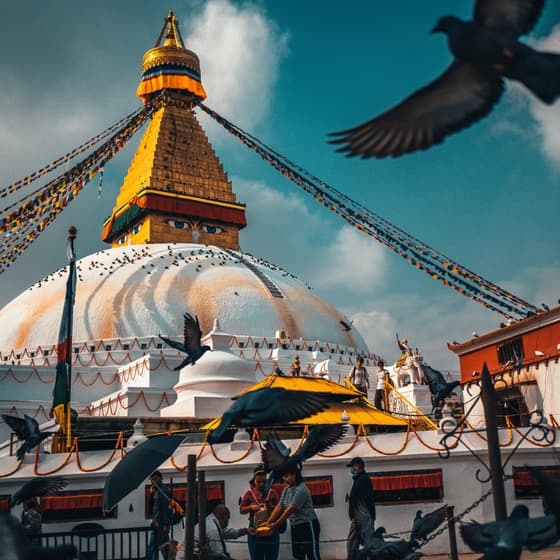



Photo: Bezayoli123, CC BY-SA 4.0, via Wikimedia Commons. The aarati platform by the Bagmati at Pashupatinath shortly before the evening aarati, 10 August 2015. It isn't an HSJ photo and doesn't show a particular tour.
This is a what-to-expect story, not a trip report. It describes the kind of evening HSJ's Pashupatinath Evening Aarati Tour is built around, using HSJ's tour notes and Pashupati Area Development Trust's visitor guidance. It doesn't describe a particular guest, guide, priest or ceremony, and no evening is the same. For Maha Shivaratri, a very different and much busier occasion, see our Maha Shivaratri guide.
The late afternoon starts at your hotel. On HSJ's Pashupatinath Temple Evening Aarati Tour, your guide and driver collect you in Kathmandu and take you to the temple complex on the east side of the city. The whole evening is planned at about three hours, with the return to your hotel included.
Arriving before the light goes
You arrive while there is still daylight, and that helps. Pashupatinath is a large complex beside the Bagmati River, and a first visit can feel like a lot of things at once: shrines, steps, rest houses and people coming and going. Having a guide at your side means you aren't working it out alone.
Your guide will explain the history of the site, who Shiva is to the people who come here and why the river matters. It's worth asking questions at this stage, while you can still walk and talk.
Before you go, know where you'll be standing. Pashupatinath's main sanctum is open to Hindus only, and that applies to every non-Hindu visitor. Visitors of any faith can see the wider complex and watch the evening aarati from the east bank of the Bagmati, as the temple trust's own visitor page explains. HSJ's tour page says the same: non-Hindus can explore the permitted areas and see temples, shrines, ghats and ceremonies from designated places.
Dress, shoes and quiet manners
The temple trust asks for modest, traditional dress, so bring something that covers your shoulders and knees. Shoes come off before any shrine. It's a place of worship, so you'll be speaking softly, walking slowly and watching what the people around you do.
If you'd like to take photographs, ask your guide first. The trust says photography is not allowed in the sanctum or during religious ceremonies, but that the ghats and public outside areas can be photographed respectfully. Other sources are stricter, so your guide's advice on the day is the one to follow. Sadhus, the holy men who sit around the complex, may expect a payment for a portrait, and that's another thing to ask about before lifting a camera.
The ghats and what you may see
HSJ's tour notes say that, depending on what is happening during your visit, you may see Hindu cremation ceremonies at the ghats along the river. These are sacred family rites, not a spectacle. Your guide will explain what's going on in general terms and tell you where to stand. Keep a respectful distance, put the camera away and don't point at anyone. There's no obligation to look.
Finding your place by the river
As evening comes, the crowd begins to gather along the river. The temple trust's schedule has listed the evening aarati at about 6:30 pm, while HSJ's tour page says it usually begins around 6:00 pm and shifts slightly with the season. Your guide will know the timing for that day, so the exact minute isn't something to worry about.
Your guide will help you find a permitted place to stand. Arriving a little early usually means a clearer view across the water than arriving as it starts. You may find yourself standing among local families, other visitors and devotees who have come to worship. Be patient, leave room for others and don't climb on walls or railings for a better angle.
Watching the aarati
An aarati is a ritual of worship in which lamps are offered to the divine. The Nepal Tourism Board describes the Bagmati Aarati at Pashupatinath as three priests with oil lamps, chanting mantras, with bhajans sung by devotees. HSJ's tour page also mentions bells, incense and devotional music. What you actually hear and see will depend on the evening, and we can't tell you the order of events or what any person says. A guide can tell you what is happening as it unfolds.
You don't have to understand everything. It can work well to stand quietly, listen and notice what is going on around you. If the guide offers an explanation, take it. If you'd rather be silent, that's fine too.
Leaving with your guide
When the aarati ends, many people leave at once, and the paths can be crowded. Your guide will take you back to the driver, and the return drive takes you to your hotel. Allow a few minutes to talk through what you've seen. Questions like "What was that?" are easier to ask while the evening is fresh.
What this evening isn't
It isn't an entry to restricted areas or the sanctum.
It isn't a guarantee of a particular view, ceremony or weather.
It isn't a Maha Shivaratri tour. The everyday tour is not a special-festival ticket or departure, and HSJ Operations must confirm any festival service.
What's included
According to HSJ's tour page, the tour includes hotel pickup and drop-off within Kathmandu, private transport, a licensed English-speaking guide, the Pashupatinath entrance fee and the guided visit with the evening aarati. Food and drinks, personal expenses and tips for the guide and driver aren't included. To get a price for your dates, ask HSJ for a quote.
If you're thinking about a wider day, HSJ's Kathmandu 7 UNESCO Heritage Sites Day Tour is the other option. When you're ready, see the Pashupatinath Temple Evening Aarati Tour page.
Reviewed by Amrit Sapkota, Himalayan Social Journey