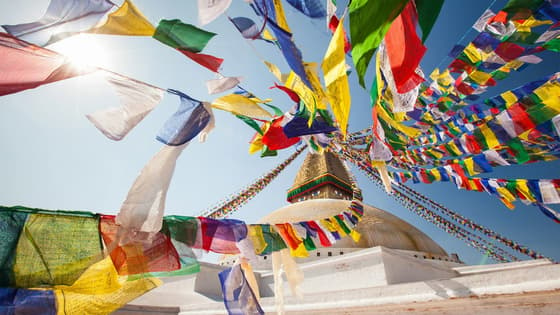

Photo: Jorge Láscar, CC BY 2.0, via Wikimedia Commons. Prayer flags strung from the spire of Boudhanath Stupa, Kathmandu, April 2014 (not taken during Losar).
Short answer: Nepal doesn't have one Losar. It has three, each a new year for different communities: Tamu Lhosar (Gurung), Sonam Lhosar (Tamang) and Gyalpo Lhosar (Sherpa and other Himalayan Buddhist communities). In Nepal's official holiday list for 2083 BS, they fall on 30 December 2026, 7 February 2027 and 9 March 2027. So not every Losar is in February. In Kathmandu, Boudhanath is the place most visitors go to see the season, along with other stupas and monasteries. Go as an observer. Ask before you photograph people, follow monastery rules, and don't expect to be invited into a family celebration.
Dates on this page come from the Government of Nepal's Ministry of Home Affairs (MoHA) public-holiday notice for 2083 BS (14 April 2026 to 13 April 2027), published on 2 March 2026. We checked them against the Nepal Rastra Bank 2083 holiday list and Pradhan & Associates' English summary of the MoHA notice on 18 November 2026. For the community background we used the Nepal Tourism Board. If you're planning beyond April 2027, confirm the date on the official calendar for that year. Losar dates follow lunar calendars and change every year.
What is Losar, and why does Nepal have three?
Losar (often spelled Lhosar in Nepal) means "new year". Several of Nepal's Himalayan and hill communities count the year by their own lunar calendars, so each community's new year lands on a different day. According to the Nepal Tourism Board, Tamu Lhosar usually falls in December or January, Sonam Lhosar in January or February, and Gyalpo Lhosar in February or March. Each one is a public holiday in Nepal.
When is Losar in 2026–27?
Festival | Main community | 2026–27 date (official) | How the date is set | Source |
|---|---|---|---|---|
Tamu Lhosar | Gurung (Tamu) | Wednesday 30 December 2026 (15 Poush 2083) | Gurung calendar. NTB says it usually falls in mid-Poush, at the end of December. | MoHA 2083 holiday notice; NRB 2083 list (which pairs it with Dura Mhaipru Nakuma) |
Sonam Lhosar | Tamang | Sunday 7 February 2027 (24 Magh 2083) | Buddhist lunar calendar. NTB says it usually begins on the new-moon day of Magh. | MoHA 2083 holiday notice; NRB 2083 list |
Gyalpo Lhosar | Sherpa and other Himalayan Buddhist communities | Tuesday 9 March 2027 (25 Falgun 2083) | Tibetan calendar: the first day of the first lunar month | MoHA 2083 holiday notice; NRB 2083 list |
The holiday list gives one official day for each festival. Celebrations can start earlier and go on for longer. The Nepal Tourism Board says Lhosar rituals and celebrations last five to fifteen days, depending on the region and community. If you want to see the preparations as well as the day itself, plan a few days either side, and confirm the details nearer the time.
How are Tamu, Sonam and Gyalpo Lhosar different?
Tamu Lhosar is the Gurung new year and the start of the Tamu year. The Nepal Tourism Board says monasteries are decorated, homes raise a flag on the roof, and families hold parties for relatives and friends, with food, music, dance, greetings and gifts. Gurung communities in Nepal and abroad also organise social events and cultural programmes.
Sonam Lhosar is the Tamang new year. The Nepal Tourism Board describes prayer flags at Namobuddha, Swayambhunath, Boudhanath and other monasteries. In Kathmandu, cultural programmes with food stalls are held at Tundikhel, with music played on the damphu, a traditional drum.
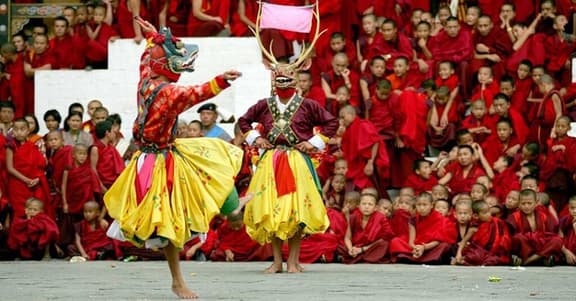
Gyalpo Lhosar follows the Tibetan calendar and is celebrated by the Sherpa community, among others. The Nepal Tourism Board says people visit monasteries in traditional dress, monks perform masked dances and rituals, and families take blessings, followed by feasts at home.
These are community festivals, not tourist events. What happens, where and when varies from one community, monastery and family to the next. Treat any description, including this one, as an outline. Ask locally for the details.
Where can visitors see Losar in Kathmandu?
Boudhanath Stupa. One of the largest stupas in the Kathmandu Valley and a centre for Kathmandu's Tibetan Buddhist community. The Nepal Tourism Board names it among the monasteries decorated for Sonam Lhosar. Most of what a visitor sees happens in public, on the circuit around the stupa.
Swayambhunath. Also named by the Nepal Tourism Board for Sonam Lhosar decorations. Expect steps up the hill.
Tundikhel. The open ground in central Kathmandu where, according to the Nepal Tourism Board, Lhosar cultural programmes with food stalls are held.
Monasteries. Many take part, but each sets its own rules for visitors. Some may be closed to outsiders during rituals.
For a narrower, visitor's-eye look at Boudha in the days before the new year, read our story Around Boudha Before Losar: What a Respectful Visitor Can Notice and Ask.
Can I visit Boudhanath on a guided day tour around Losar?
Yes. Boudhanath and Swayambhunath are both stops on HSJ's Private Kathmandu Full Day Sightseeing Tour, together with Kathmandu Durbar Square and Pashupatinath. It's a general heritage tour, not a Losar event tour. Your guide explains the sites, but the tour can't promise any particular ritual, dance or gathering.
Tour detail | What HSJ offers |
|---|---|
Stops | Kathmandu Durbar Square, Swayambhunath, Boudhanath, Pashupatinath |
Start time | 8:00, 8:30, 9:00, 9:30, 10:00 or 10:30 am |
Included | Hotel pickup and drop-off, private car, van or Hiace, English-speaking guide, government tax and service charge, one bottle of drinking water |
Not included | Entrance fees (pay in Nepali rupees, in cash), lunch (about USD 4–7), personal expenses |
Price | From USD 55 per person, with lower rates from USD 25 per person for larger groups. Ask HSJ for a quote for your date and group size. |
On or near a Losar day, ask HSJ when you book how the plan might change: time at Boudhanath, the order of stops, and whether a different day would work better for you. Entrance fees at Boudhanath and Swayambhunath are paid at the gate. Check the current amounts there. For the other sites, see our Kathmandu UNESCO entry fees by passport guide.
How should I plan ahead for Losar?
Pick the right Losar. Decide which festival you'll be in Nepal for: late December, February or March in 2026–27.
Allow a spare day. Each festival is a public holiday, and celebrations can run over several days. Keep a flexible day either side for your Boudha visit.
Reconfirm nearer the time. Check the official date again a few weeks before. If you're visiting a particular monastery, ask locally what it plans and whether visitors are welcome.
Book your guide early. If you want a guided day, tell HSJ your dates and that you're hoping to see Boudhanath around Losar, so the tour can be planned around them.
Carry rupees. Entrance fees are paid in cash, and small notes are useful for offerings if you choose to make one.
How do I visit respectfully?
Walk around the stupa clockwise, in the same direction as everyone else, and spin prayer wheels clockwise.
Ask before photographing people, especially anyone praying, making offerings, or in ritual or traditional dress. If someone says no or turns away, put the camera down.
Inside monasteries, follow the posted rules and your guide's advice on shoes, photography and where to sit or stand. Some rituals aren't open to visitors.
Dress modestly, covering shoulders and knees.
Don't walk through a ritual, step over offerings or stand in front of people who are praying.
Remember that Losar is a family festival. Homes and family gatherings are private unless someone personally invites you.
Frequently asked questions
Is Losar always in February?
No. In 2026–27 the three Losars fall on 30 December 2026, 7 February 2027 and 9 March 2027, according to the official holiday list. The dates move every year.
Which Losar is celebrated at Boudhanath?
The Nepal Tourism Board names Boudhanath among the monasteries decorated with prayer flags for Sonam Lhosar. Boudhanath is also a centre for Kathmandu's Tibetan Buddhist community, whose new year follows the Tibetan calendar, as Gyalpo Lhosar does. Ask locally what's planned for the date you're there.
Is Losar a public holiday in Nepal?
Yes. Tamu Lhosar, Sonam Lhosar and Gyalpo Lhosar are all on the national public-holiday list for 2083 BS.
Can tourists join Losar celebrations?
You can watch whatever happens in public spaces, such as the circuit around a stupa or a public cultural programme. Family celebrations and some monastery rituals are private. Don't expect an invitation, and don't try to join without one.
Can I photograph Losar at Boudhanath?
Photographing the stupa itself is generally fine. For people, ask first. Inside monasteries, follow the rules at each one and your guide's advice.
Does HSJ run a special Losar tour?
No. HSJ's full-day Kathmandu sightseeing tour includes Boudhanath and Swayambhunath and can be booked on dates around Losar, but it doesn't guarantee any festival activity.
Plan your Kathmandu festival days
For other festival dates and street etiquette, see our Kathmandu Valley jatra calendar and what to expect on a Kathmandu festival day. When you're ready to book a day at Boudhanath and the other heritage sites, see the Private Kathmandu Full Day Sightseeing Tour.
Reviewed by Amrit Sapkota, Himalayan Social Journey