
The best Upper Mustang trek operator is a Nepal-registered agency that handles your restricted area permit directly, runs a guide who knows Mustang specifically, and offers both the 5-day jeep route and the 17–18 day trek on foot to Lo Manthang at roughly 3,800 metres. HSJ is one such Kathmandu-based company, and this guide covers the checks, costs and seasons that matter before you book, with anyone.
Why operator choice matters more in Upper Mustang than elsewhere
Upper Mustang is a restricted area, not an open trekking region like the Annapurna Circuit or Everest Base Camp. You cannot walk in without a government-approved guide and a registered agency handling your restricted area permit. That one rule changes everything about how you plan the trip:
- You must book through a licensed Nepali trekking company — solo, permit-free trekking is not an option here.
- Permits are normally issued for a minimum of two trekkers travelling together, so your operator needs to either match you with another group or confirm a private rate for two.
- The guide has to be familiar with Mustang's dialect, monastery etiquette and the jeep-track shortcuts that locals use, not just the main trekking trail.
A poor operator in an open region costs you comfort. A poor operator in Upper Mustang can cost you the permit itself, or leave you stuck when the only road out is a single jeep track.
What to check before booking an Upper Mustang trek operator
Run through this list with any company you're considering, including HSJ:
- Nepal Tourism Board registration and trekking agency license. Ask for the registration number; it should be verifiable with the Nepal Tourism Board.
- Experience specifically in Mustang, not just general Annapurna-region trekking. Ask how many Upper Mustang groups they ran in the last year.
- Who handles the restricted area permit and ACAP card. This should be included in your package price, not left for you to arrange at the border.
- Group size and pacing options. Some travellers want five brisk days by private jeep; others want three weeks on foot with rest days in Lo Manthang. A good operator offers both, not one fixed template.
- What happens if the Pokhara–Jomsom flight is cancelled. Wind cancels Jomsom flights often, especially after mid-morning. Ask what backup plan (road transfer, extra night in Pokhara) is already built into the cost.
- Local guide and staff from the Mustang/Thakali community where possible — it changes the quality of monastery visits and homestays considerably.
- Clear, written cost breakdown: permits, accommodation, meals, transport, guide and porter wages, and what is not included (personal gear, tips, drinks).
How HSJ's Upper Mustang itineraries compare
HSJ runs four different ways to see Upper Mustang, built around different time budgets and travel styles. None of these are generic templates — they follow the actual route through Kagbeni, Chele, Ghami, Tsarang and Lo Manthang.
| Itinerary | Days | Style | Best for |
|---|---|---|---|
| Exclusive Upper Mustang Journey | 5 | Private jeep, starting from Shinta Mani Mustang | Travellers short on time who still want Lo Manthang and Chhoser caves |
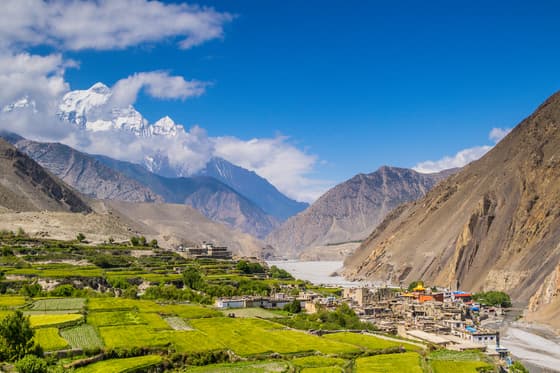
| Lower Mustang / Jomsom Muktinath Tour | 9–12 | Walking and jeep, Kagbeni–Muktinath–Jomsom | Those who want Mustang's landscape and culture without the restricted-area permit |
| Upper Mustang Trek with Rafting | 17 | Trekking plus Pokhara leisure days and Trishuli rafting | Travellers combining a full Mustang trek with relaxation and an adventure add-on |
| Private Upper Mustang Trek | 18 | Classic walking itinerary, full restricted area, private pace | Trekkers who want the complete on-foot experience without a fixed group schedule |
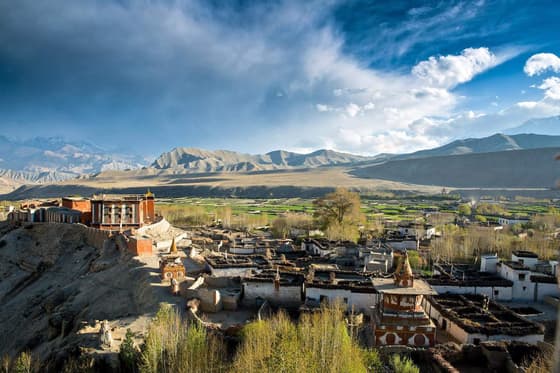
The 5-day private jeep journey begins at Shinta Mani Mustang and runs through Kagbeni, Chhusang, Chele, Ghami and Tsarang to Lo Manthang, with a side trip to the sacred Ghar Gompa and the cave dwellings of Chhoser Valley, before returning via Ghami, Kagbeni and Jomsom. It is built for travellers who have limited time but still want the walled city and the full cultural route, not just a flyover.
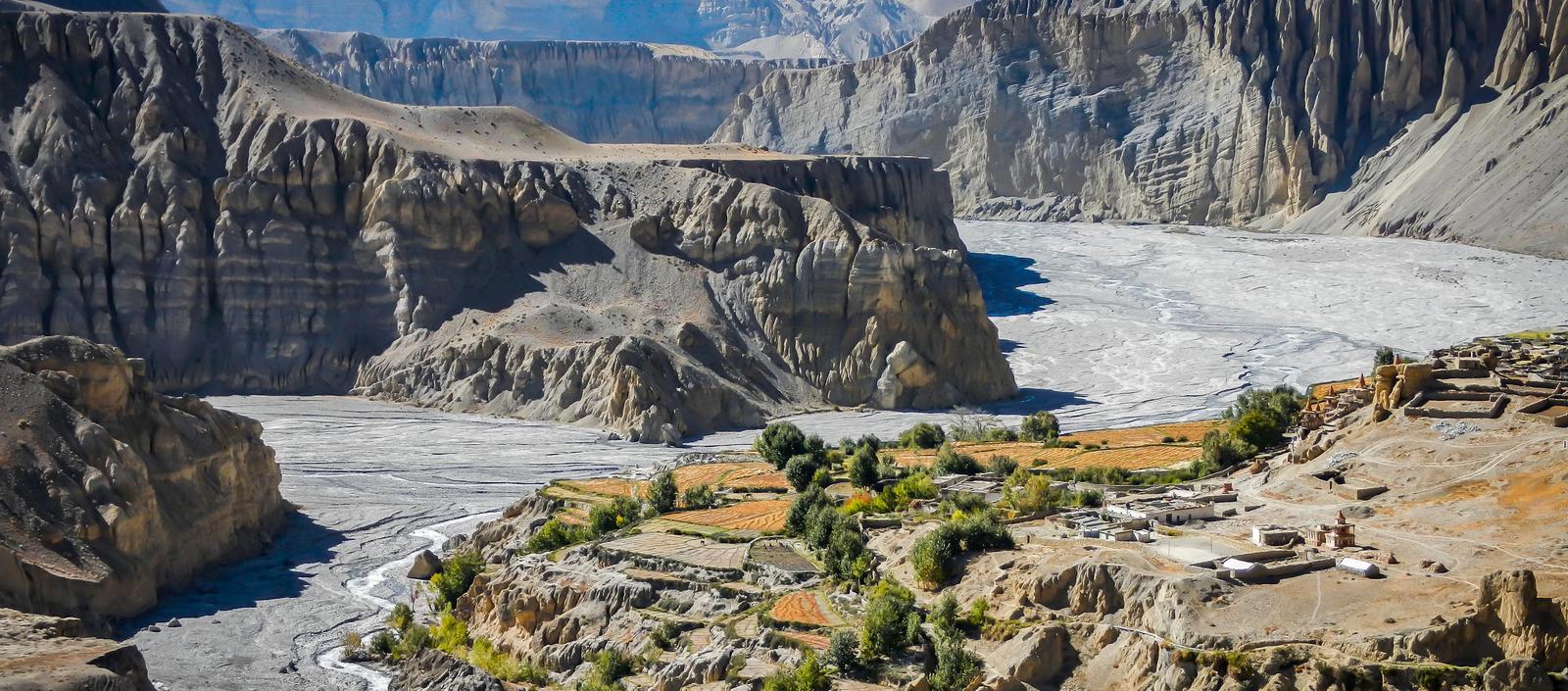
The 17- and 18-day itineraries follow the on-foot trekking route from Jomsom, through the Kali Gandaki gorge and Mustang's walled villages, to Lo Manthang at roughly 3,800 metres, with time built in for Chhoser, Ghar Gompa and the monasteries around the old capital. Lower Mustang, by contrast, stops at Kagbeni and Muktinath and does not need the restricted area permit — useful if your time or budget doesn't stretch to the full Upper Mustang entry fee.
How much does the Upper Mustang restricted area permit cost?
As of recent seasons, the Upper Mustang restricted area permit has been priced at roughly USD 500 per person for the first 10 days, with an additional daily fee for each extra day beyond that — payable only through a registered trekking agency, since solo applications are not accepted. On top of this you also need an Annapurna Conservation Area Permit (ACAP), because the trek starts inside the Annapurna Conservation Area before entering the restricted zone.
Fees for restricted areas change periodically, so confirm the exact current rate with your operator before you commit to dates — this is one figure worth double-checking rather than assuming. A properly licensed company will quote the live rate in your package cost, not an outdated one.
When is the best time to trek Upper Mustang?
Upper Mustang sits in the rain shadow of the Annapurna and Dhaulagiri ranges, so it behaves differently from the rest of the Himalaya.
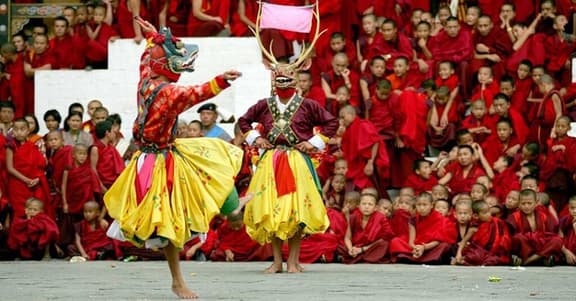
- Spring (March–May): Clear mornings, windy afternoons, and the Tiji Festival in Lo Manthang — a three-day masked dance usually held in May, dates set by the Tibetan lunar calendar each year.
- Summer/monsoon (June–August): This is actually a good window for Upper Mustang, since the rain shadow keeps the region mostly dry while the rest of Nepal is under monsoon cloud. The Yartung horse-racing festival takes place in August.
- Autumn (September–November): The most popular season for stable weather and long mountain views, with cooler nights as November approaches.
- Winter (December–February): Upper Mustang gets very cold and windy; most operators, including HSJ, run trips from late March through early November and pause for winter.
If you want to see the Tiji or Yartung festivals, lock in dates early — rooms in Lo Manthang and flight seats from Pokhara fill up fast that week.
How do you get to Jomsom and Upper Mustang?
Two main options:
- Fly Pokhara–Jomsom. A short flight of around 20 minutes operating out of Pokhara's airport. Flights are scheduled for early morning because wind picks up by mid-to-late morning and cancels later departures — build a buffer day into your plan around this leg.
- Drive overland. A rough but motorable road runs from Pokhara through Beni to Jomsom and on toward Kagbeni and Lo Manthang. This is slower but far more reliable than flying, and it's the route HSJ's jeep-based Exclusive Upper Mustang Journey uses from end to end.
Most multi-day trekking itineraries combine the two: fly or drive to Jomsom, then walk (or jeep) north into the restricted area, returning the same way.
Why travellers book Upper Mustang through HSJ
HSJ is a Kathmandu-registered local operator, not a reseller. For Upper Mustang specifically, that means:
- We handle the restricted area permit and ACAP paperwork directly, with current fees quoted upfront.
- We run both walking and private-jeep versions, so the itinerary matches your time and fitness rather than forcing you into one format.
- Guides are briefed on Mustang's monastery etiquette, Tiji and Yartung festival calendars, and the alternate jeep tracks used when the main trail is affected by weather.
- Groups of two are matched where possible to meet the restricted-area minimum, or priced privately if you'd rather not share.
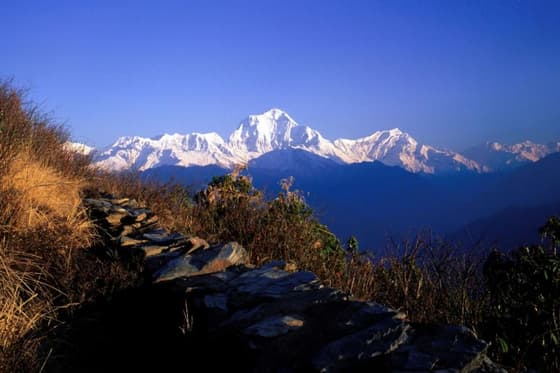
If Upper Mustang's full restricted-area cost or time commitment doesn't fit your trip, HSJ's Lower Mustang and Ghorepani Poonhill itineraries cover nearby landscapes without the restricted permit. For trekkers who want to pair Mustang's desert scenery with Nepal's bigger ranges, HSJ also runs full Annapurna region and remote area treks across Dolpo, Manaslu and beyond.
Frequently asked questions
Is Upper Mustang trekking safe without a guide?
No — it isn't legally possible. Upper Mustang is a restricted area under the Nepal government's permit system, so every trekker must travel with a licensed guide from a registered agency. Independent, guideless entry is not an option here, unlike open regions such as the Annapurna Circuit.
How many days do you need for Upper Mustang?
Plan for 5 days if you're travelling by private jeep from Shinta Mani Mustang to Lo Manthang and back, or 17–18 days if you want the full on-foot trekking route including acclimatisation and rest days in Lo Manthang and Chhoser.
What is the minimum group size for the restricted area permit?
Restricted area permits for Upper Mustang are generally issued for a minimum of two trekkers travelling together through one agency. Solo travellers normally need to be grouped with at least one other person, or pay a private group rate.
Can you see Upper Mustang without the restricted area permit?
Yes, partly. A Lower Mustang trip to Kagbeni and Muktinath only needs a standard ACAP entry permit, not the restricted area permit, since it doesn't cross into the area north of Kagbeni toward Lo Manthang.
When is the Tiji Festival in Lo Manthang?
Tiji is a three-day masked dance festival usually held in Lo Manthang in May, with exact dates set each year by the Tibetan lunar calendar — confirm the current year's dates with your operator before booking flights.
Is it better to fly or drive to Jomsom for Upper Mustang?
Flying is faster when it operates, but afternoon wind causes frequent delays and cancellations on the Pokhara–Jomsom route. Driving overland takes longer but is more predictable, which is why some operators, including HSJ's jeep-based itinerary, run the whole route by road.