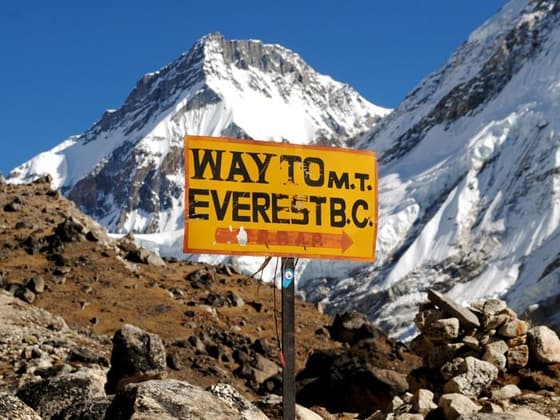

A 14-day Everest Base Camp trek booked with a good local company in Nepal typically costs US $1,350 to $2,200 per person in a small group, all-inclusive from Kathmandu back to Kathmandu. Luxury versions with lodge upgrades or helicopter returns run $2,800 to $4,500+. The spread comes down to guide quality, group size, lodge standard, and what's actually included.
Below is the real cost breakdown — permits, flights, food, staff wages, and the extras that cheap quotes often leave out.
What "a good local company" means for pricing
A licensed Nepali trekking company registered with the Nepal Tourism Board pays its guides and porters according to the government's minimum wage guidelines, carries insurance for staff, and holds a trekking agency license issued by the Department of Tourism. This costs more to run than an unregistered broker reselling a trek online.
When you see EBC packages advertised at $900–$1,000, something is usually missing: porter insurance, a second acclimatisation day, a licensed (not just English-speaking) guide, or an emergency evacuation plan. It isn't always a scam — some operators simply cut staff pay and safety margins to hit a low headline price.
Everest Base Camp trek cost breakdown (2026)
| Item | Typical cost (USD) | Notes |
|---|---|---|
| Sagarmatha National Park entry permit | ~$23–28 (NPR 3,000 + VAT) | Paid once, checked at Monjo |
| Khumbu Pasang Lhamu Rural Municipality permit | ~$20–23 (NPR 2,000–3,000) | Replaced the old TIMS card for this region |
| Kathmandu–Lukla flight (return) | $340–$400 | Higher in peak season; from Manthali/Ramechhap March–May and Sept–Nov |
| Direct Kathmandu–Lukla helicopter upgrade | +$300 per person | Skips the Ramechhap road transfer and weather delays |
| Teahouse lodging (12 nights on trail) | Usually included in package | Twin-share, basic rooms, hot showers extra at altitude |
| Meals on trail (breakfast, lunch, dinner) | Usually included in package | Dal bhat, noodles, soup — prices rise with altitude |
| Licensed guide + porter | Usually included in package | 1 porter per 2 trekkers is standard |
| Nepal tourist visa | $30 (15 days) / $50 (30 days) on arrival | Paid directly to Nepal immigration |
| Travel/rescue insurance with helicopter evacuation cover | $100–$250 (buy before arrival) | Not sold by trekking companies — arrange this yourself |
| Tips for guide and porters | $150–$250 per trekker | Expected, not included in any quoted price |
As of the latest permit update, the TIMS card is no longer required for the Everest/Khumbu region — the Khumbu Pasang Lhamu Rural Municipality permit replaced it. Always check this with your operator before the trek, since rules in Nepal's permit system do shift year to year.
What a $1,400–$2,200 package from a good company should include
- Airport pickup/drop in Kathmandu and a pre-trek briefing
- Kathmandu–Lukla–Kathmandu flights
- All teahouse accommodation on the trail (twin-share)
- Three meals a day while trekking
- A government-licensed English-speaking guide, plus porters
- Sagarmatha National Park and Khumbu Rural Municipality permits
- A duffel bag, first-aid kit, and a pulse oximeter the guide carries for altitude checks
- Two acclimatisation days (Namche and Dingboche) built into the schedule
What it usually does NOT include: your Nepal visa fee, international flights, travel insurance, boiled/bottled water and showers on the trail (roughly $3–6 a day at altitude), Wi-Fi, battery charging, and tips.
Why prices vary so much between companies
| Price band | What you're likely getting |
|---|---|
| Under $1,000 | Often a broker, not the operator on the ground; shared guide across groups; no insurance guarantee for staff |
| $1,300–$1,800 | A standard, well-run local company trek: licensed guide, small group, standard teahouses |
| $1,900–$2,500 | Private guide/smaller group, better lodges in Namche and Tengboche, sometimes a helicopter return added |
| $2,800+ | Luxury lodges where available (Namche, Deboche), helicopter options both ways, higher guide-to-client ratio |
A trek booked directly with a Kathmandu-based company, rather than through an overseas reseller who takes a cut, also tends to land at the lower end of a given quality band — you're paying the operator, not a middleman.
How many days should you budget for?
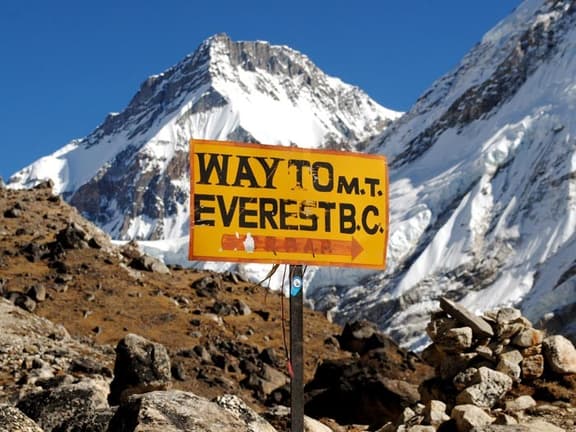
The classic route needs 12–14 days on the ground. HSJ's Everest Base Camp Trek – 14 Days follows the standard Lukla–Namche–Tengboche–Dingboche–Lobuche–Gorak Shep route, with rest days in Namche and Dingboche, reaching Everest Base Camp (5,364 m) and Kala Patthar (5,545 m) for sunrise.
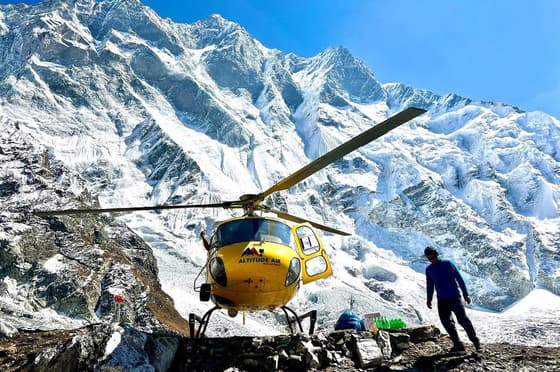
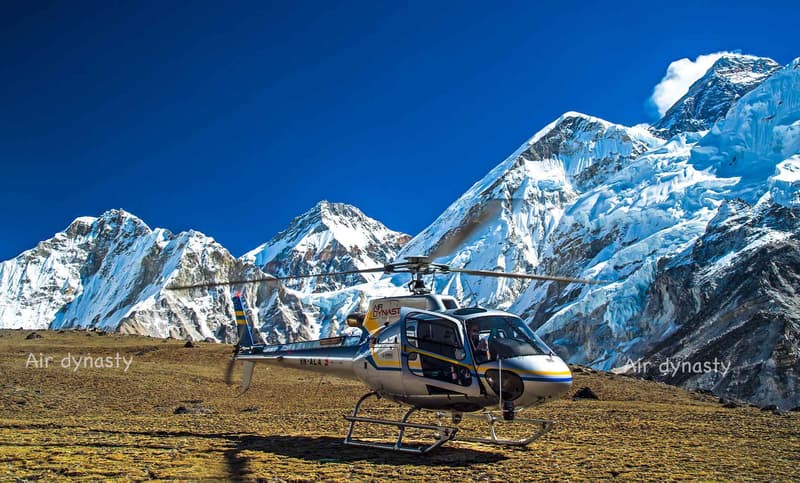
If you'd rather skip the two-day walk back down, HSJ also runs a shared-helicopter-return version that compresses the trip and flies you from Gorak Shep straight to Lukla — see the Everest Base Camp Trek with Helicopter Return (12 Days).
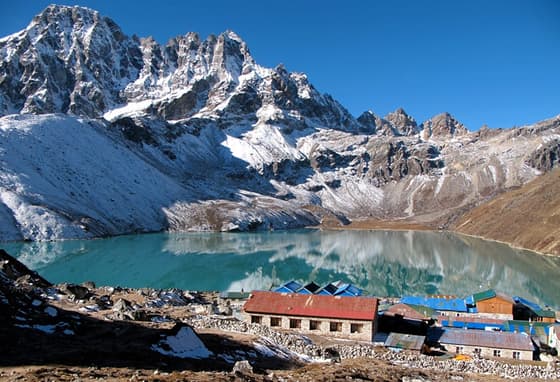
Trekkers with more time who want fewer crowds can combine EBC with the turquoise lakes of Gokyo and the 5,420 m Cho La Pass on the Gokyo Ri & Everest Base Camp Trek (17 Days) — a harder but less crowded alternative to the standard trail.
Lukla flights and why the season changes your cost
Kathmandu–Lukla is a 35-minute flight in the off-season (January, February, June–August, December). But in the busiest trekking months — March to May and September to November — Nepal's civil aviation authority routes Lukla flights through Manthali Airport in Ramechhap, a 4–5 hour drive from Kathmandu, to ease congestion at Kathmandu's single runway. That means a 1:00–3:00 AM hotel pickup during peak season.
A direct Kathmandu–Lukla helicopter costs about $300 more per person than the fixed-wing/Ramechhap combination, but it removes the early-morning drive and the small risk of multi-day weather delays that fixed-wing flights face in cloud and wind.
Permits: what you actually pay and to whom
Two permits cover the standard EBC route:
- Sagarmatha National Park entry permit — collected at the park checkpoint in Monjo, a short walk past Jorsalle.
- Khumbu Pasang Lhamu Rural Municipality permit — collected at Lukla or Chaurikharka, depending on your entry point.
Your trekking company arranges both in advance or at the checkpoint; you don't need to queue at a government office in Kathmandu. Check current fees on the Nepal Tourism Board site or ask your operator to confirm the latest NPR amount before you fly, since local municipality fees are adjusted periodically.
Nepal visa cost (separate from your trek package)
Most nationalities get a visa on arrival at Tribhuvan International Airport: $30 for 15 days, $50 for 30 days, or $125 for 90 days, paid in cash or card. This is never included in a trek package price — budget for it separately. Confirm current rules on the Department of Immigration, Nepal website before you travel, as fees and accepted payment methods do change.
Insurance: the cost most people forget
Rescue by helicopter from above Namche can run $3,000–$8,000 if you need it and aren't insured — this is the single biggest financial risk on the trek, not the trek price itself. A travel insurance policy with high-altitude trekking cover and helicopter evacuation up to at least 6,000 m typically costs $100–$250 for two weeks, depending on your home country and age. Buy this before you leave home; Nepali trekking companies cannot sell it to you.
A realistic total for a 14-day EBC trek
Putting it together, here's what a well-run local company trip looks like all-in, per person, double occupancy:
- Package price (guide, porter, teahouses, meals, flights, permits): $1,350–$1,800
- Nepal visa: $30–$50
- Insurance with heli-rescue cover: $100–$250
- Extras on the trail (water, charging, Wi-Fi, showers): $150–$250 for 12 days
- Tips for guide and porters: $150–$250
Realistic all-in total: roughly $1,800–$2,600 per person, before international flights to Kathmandu.
If you want to skip the return walk and fly out by helicopter from Gorak Shep, add $300–$500 depending on group size and weather-dependent operator confirmation.
How to compare quotes from different companies
Ask every company the same five questions before comparing prices:
- Is the guide government-licensed, and how many treks has this guide led to EBC?
- What is the guide-to-trekker ratio, and is there one porter for every two trekkers?
- Are both park permits and insurance for staff included in the quoted price?
- How many acclimatisation days are built into the itinerary (should be at least two)?
- What happens, cost-wise, if the Lukla flight is delayed for two or three days?
A company that answers all five clearly and in writing is usually the safer and fairer-priced choice, even if its number is a little higher than the cheapest quote in your inbox.
For more on choosing between operators, see our guide on the Best Company to Book an Everest Base Camp Trek With, and our detailed Everest Base Camp Trek 14 Days: Route, Cost & Permits page.
Frequently asked questions
How much does a 14-day Everest Base Camp trek cost with a local company?
Expect $1,350–$1,800 for the package itself (guide, porter, teahouses, meals, flights, permits), and $1,800–$2,600 all-in once you add your visa, insurance, trail extras, and tips.
Is Everest Base Camp trek cheaper if I book directly with a Nepali company instead of an agent abroad?
Usually yes. Overseas resellers add a margin on top of what the Kathmandu-based operator charges, so booking directly with the company running the trek on the ground tends to be 15–30% cheaper for the same service.
Do I need a TIMS card for the Everest Base Camp trek?
No. The TIMS card was replaced for this region by the Khumbu Pasang Lhamu Rural Municipality permit. You still need the Sagarmatha National Park entry permit and the municipality permit, both arranged by your trekking company.
Why do Lukla flights cost more and start so early in March–May and September–November?
During these peak months, Lukla flights are routed through Manthali Airport in Ramechhap, 4–5 hours by road from Kathmandu, to reduce pressure on Kathmandu's single runway. This means an earlier hotel pickup (often 1:00–3:00 AM) and a longer travel day, though the flight price itself only rises moderately.
Is travel insurance included in the trek price?
No. Nepali trekking companies cannot sell insurance. Buy a policy with high-altitude trekking and helicopter evacuation cover (up to at least 6,000 m) before you leave home — budget $100–$250 for two weeks.
Can I do Everest Base Camp on a tighter budget than $1,800?
Yes, but check what's cut. A sub-$1,300 all-in trip usually means a shared guide, no insurance guarantee for porters, or fewer acclimatisation days — all of which raise your personal risk on the mountain rather than genuinely lowering the real cost of running the trek.
Other Everest region options if budget or time is tight
- Everest Region Tours & Treks in Nepal — the full list of Khumbu itineraries HSJ runs, from short heli tours to the Three Passes trek
- A shorter, lower-altitude introduction to the region without reaching base camp
- Combining EBC with Gokyo for a longer, quieter alternative to the standard trail
HSJ is a Kathmandu-based, licensed local operator. We quote guide, porter, permit, and flight costs separately so you can see exactly what you're paying for, rather than a single bundled number that hides where the money goes.
Frequently asked questions
How much does a 14-day Everest Base Camp trek cost with a local company?
Expect $1,350–$1,800 for the package itself (guide, porter, teahouses, meals, flights, permits), and $1,800–$2,600 all-in once you add your visa, insurance, trail extras, and tips.
Is Everest Base Camp trek cheaper if I book directly with a Nepali company instead of an agent abroad?
Usually yes. Overseas resellers add a margin on top of what the Kathmandu-based operator charges, so booking directly tends to be 15–30% cheaper for the same service.
Do I need a TIMS card for the Everest Base Camp trek?
No. The TIMS card was replaced for this region by the Khumbu Pasang Lhamu Rural Municipality permit. You still need the Sagarmatha National Park entry permit and the municipality permit.
Why do Lukla flights cost more and start so early in March–May and September–November?
During these peak months, Lukla flights are routed through Manthali Airport in Ramechhap, 4–5 hours by road from Kathmandu, meaning an earlier hotel pickup (often 1:00–3:00 AM) and a longer travel day.
Is travel insurance included in the trek price?
No. Nepali trekking companies cannot sell insurance. Buy a policy with high-altitude trekking and helicopter evacuation cover (up to at least 6,000 m) before you leave home — budget $100–$250 for two weeks.
Can I do Everest Base Camp on a tighter budget than $1,800?
Yes, but check what's cut. A sub-$1,300 all-in trip usually means a shared guide, no insurance guarantee for porters, or fewer acclimatisation days, which raises personal risk rather than genuinely lowering the real cost.