If you want one of Nepal’s highest trekking peaks and a more straightforward glacier climb, choose Mera Peak (6,470 m, 16 days, from USD 2,000). If you want to walk the Everest Base Camp trail and then stand on a summit, choose Island Peak (Imja Tse, 6,165 m, 19 days, from USD 2,000) or Lobuche East (6,119 m, 18 days, from USD 2,200). All three are grade 3 (strenuous) Everest-region trips that Himalayan Social Journey (HSJ) runs for groups of 2–12, and a licensed guide is required.
Heights follow the Nepal Mountaineering Association list, checked on 25 November 2026. Package prices were checked on HSJ’s live trip pages the same day and can change, so confirm the details on the trip page or ask HSJ for your dates.
The three peaks at a glance
| Island Peak (Imja Tse) | Mera Peak | Lobuche East | |
|---|---|---|---|
| Altitude (NMA) | 6,165 m / 20,226 ft | 6,470 m / 21,227 ft | 6,119 m / 20,075 ft |
| Days | 19 days, 18 nights | 16 days, 15 nights | 18 days, 17 nights |
| Grade | 3 of 5, strenuous | 3 of 5, strenuous | 3 of 5, strenuous |
| Technical difficulty | Glacier, rocky ridge, then a 50–60° ice headwall on fixed ropes. No prior experience needed; clinic at base camp. Graded PD by HSJ. | Highest of the three. Little technical climbing: glacier walking, with fixed ropes on some sections. | East is the trekking peak. Lobuche West (6,135 m) is a separate expedition peak, not this trip. |
| Best season | February–June and September–December. Most stable: March–May and October–November. | Same months. HSJ also highlights April, May and September–November. | Same months. HSJ highlights March–May and September–November. |
| From price (HSJ) | From USD 2,000 | From USD 2,000 | From USD 2,200 |
| Region | Khumbu / Imja valley, after the Everest Base Camp trail | Hinku valley, over Chetra La from Lukla | Khumbu, above Lobuche village and the Khumbu Glacier |
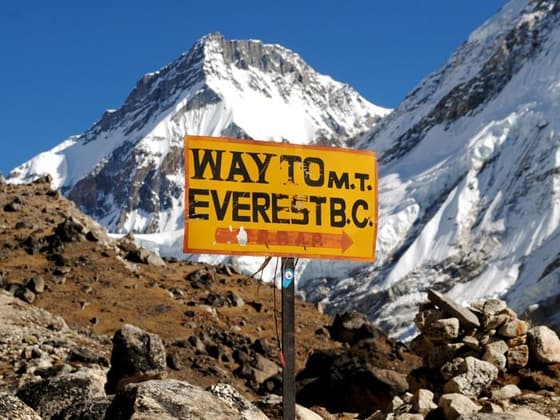
| Combined with Everest Base Camp? | Yes — visits Base Camp (5,364 m) and Kala Patthar | No — stays in the Hinku valley | Yes — visits Base Camp and Kala Patthar |
Island Peak (Imja Tse), 6,165 m
Island Peak is a 19-day trip that joins the Everest Base Camp trek with a climb of Imja Tse. It costs from USD 2,000 per person. HSJ says no prior mountaineering experience is needed, only good fitness.
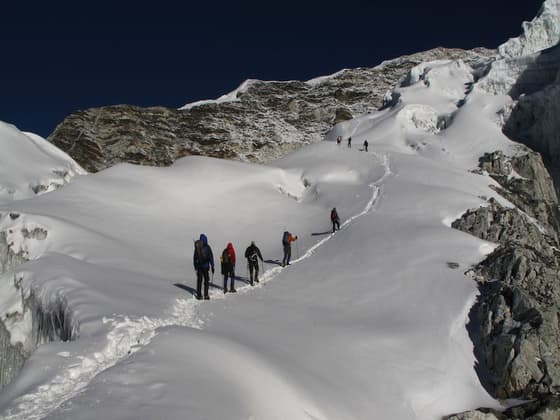
You fly to Lukla, walk the Khumbu trail to Everest Base Camp and Kala Patthar, then cross to Chhukung and Island Peak High Camp. The summit route crosses a rocky ridge and a glacier, then a steep ice headwall with fixed ropes, and you walk out via Chhukung to Lukla. On HSJ’s itinerary you sleep at High Camp, leave around 3 a.m., climb for about 5–6 hours to the summit, and descend to Chhukung the same day. Other guided trips that use a high camp also set off between 1:00 and 3:00 a.m. The whole day is commonly 10–14 hours once you count the walk down. The hardest section is the 50–60° headwall; you clip into fixed ropes with an ascender. There is a climbing clinic the day before, and HSJ uses a 1:2 guide-to-climber ratio on summit day. Base camp sits at about 5,100 m.
The price includes Kathmandu or Ramechhap–Lukla flights, the Kathmandu hotel, teahouse rooms and all meals on the trek, a tented camp while climbing, all permits including the climbing permit, a USD 500 garbage deposit, technical gear, a climbing clinic, and a Sherpa climbing guide.
Mera Peak, 6,470 m
Mera Peak is a 16-day climb of one of Nepal’s highest trekking peaks, from USD 2,000 per person. HSJ also describes three summits on the mountain; this article uses the official NMA height of 6,470 m.
This route does not visit Everest Base Camp. After the flight to Lukla you trek over Chetra La into the Hinku valley — Kothe, Thagnak and Khare — then on to high camp. Summit day starts before dawn, with several hours on snow and glacier, and you return to Khare the same day or the next. A spare day is built in for weather.
HSJ describes this as a trip with little technical climbing: fixed ropes are used on some sections, but no advanced ice or rock skills are required. Some hiking experience and comfort with cold camping matter more than a climbing résumé. The price includes Kathmandu–Lukla flights, breakfast on trekking days, all meals during the climbing period, the climbing permit, a USD 500 garbage deposit, park or trekking fees, a Sherpa climbing guide, and technical gear. Lunch and dinner on trekking days are not included (about USD 4–8 per item).
Lobuche East, 6,119 m
Lobuche East is an 18-day trip that also combines the Everest Base Camp walk with a guided summit, from USD 2,200 per person. This trip climbs Lobuche East, the trekking peak. Lobuche West (6,135 m) is a more technical expedition peak and is not the HSJ summit.
The itinerary flies to Lukla, follows the Khumbu trail to Lobuche, visits Kala Patthar and Everest Base Camp from Gorakshep, then climbs from Lobuche High Camp and walks out via Pangboche and Namche. There are acclimatisation days in Namche and Dingboche, and a climbing clinic at base camp. A typical day is 6–7 hours of walking or climbing.
The price includes Kathmandu–Lukla flights, the Kathmandu hotel (bed and breakfast), teahouse rooms with breakfast while trekking, a tented camp and full-board meals while climbing, the climbing permit, a USD 500 garbage deposit, technical gear, trekking and national park entry fees, a climbing clinic, and staff insurance. Lunch and dinner in Kathmandu and on trekking days are not included.
Which peak should you choose?
Choose Island Peak if you want the Khumbu trail, Everest Base Camp and a 6,000-metre summit in one trip. It is the most clearly technical of the three on the HSJ pages, because of the fixed-rope headwall, but it is written for fit trekkers who have not climbed before. You need the stamina for a long summit day, often 10–14 hours including the descent.
Choose Mera Peak if summit height matters most, and you would rather walk a quieter valley than the Everest Base Camp trail. It is one of Nepal’s highest trekking peaks, less technical than Island, and at 16 days the shortest of the three.
Choose Lobuche East if you want Everest Base Camp and a summit above the Khumbu Glacier in 18 days rather than 19. The East summit is a little lower than Island Peak. Breakfast is included on the walk in and out; lunch and dinner on those days are extra, as on Mera.
Choose a trek with no summit if a 6,000-metre climb feels like a step too far. HSJ’s 14-day Everest Base Camp trek reaches Base Camp (5,364 m) and Kala Patthar (5,545 m), is also grade 3, and starts from USD 1,195. See the Everest Base Camp trek cost guide for what that package includes.
On all three climbs you should be comfortable walking 5–7 hours a day. Travel insurance must cover climbing above 6,000 m and helicopter evacuation. A licensed guide is required.
What the climbs cost
Package prices per person, 25 November 2026:
- Island Peak, 19 days: from USD 2,000, including flights, all meals on the trek, the climbing permit, a USD 500 garbage deposit and gear.
- Mera Peak, 16 days: from USD 2,000. Group prices are USD 2,500 for one person, USD 2,200 per person for two to six people, and USD 2,000 per person for seven or more. Lunch and dinner on the walk in and out are extra.
- Lobuche East, 18 days: from USD 2,200, including flights, the climbing permit, a USD 500 garbage deposit, breakfast on the trek and full board while climbing.
Every climber also needs a Nepal Mountaineering Association royalty of USD 350 per person in spring (March–May) and USD 175 in the other seasons. The same fee applies to all three peaks and is included in the HSJ price. Also included are the Sagarmatha National Park entry fee (NPR 3,000, about USD 20) and the Khumbu Pasang Lhamu Rural Municipality permit (the fee Island Peak’s page calls the Lukla entrance fee). Visa and insurance are not included.
For everyday Khumbu costs, see the Everest Base Camp trek cost guide.
Frequently asked questions
Which is harder, Island Peak, Mera Peak or Lobuche East?
All three are grade 3 (strenuous). The difference is the summit day. Mera is the highest, at 6,470 m, but has little technical climbing: you walk on the glacier, with fixed ropes on some sections. Island Peak finishes on a 50–60° ice headwall with fixed ropes. Lobuche East is the trekking-peak summit; the West face is a separate expedition climb.
How much does it cost to climb Island, Mera or Lobuche with HSJ?
Island Peak is from USD 2,000 for 19 days. Mera Peak is from USD 2,000 for 16 days: USD 2,500 for one person, USD 2,200 each for two to six people, and USD 2,000 each for seven or more. Lobuche East is from USD 2,200 for 18 days. Ask HSJ for a quote for your dates.
Do I need previous climbing experience?
For Island Peak, HSJ says no prior mountaineering experience is needed, only good fitness. Guides teach crampon, ice axe and ascender use at a base-camp climbing clinic, and they fix ropes on the headwall. Mera Peak suits trekkers with some hiking experience and reasonable fitness, not technical climbers only. A licensed guide is required on all three peaks.
What permits do I need, and what do they cost?
Each climb needs a Nepal Mountaineering Association royalty of USD 350 per person in spring (March–May) and USD 175 in other seasons, plus Sagarmatha National Park entry and the Khumbu Pasang Lhamu Rural Municipality permit (Island Peak’s Lukla entrance fee). A USD 500 garbage deposit is required. HSJ includes these in the Island, Mera and Lobuche prices.
Can I combine these climbs with the Everest Base Camp trek?
Yes, on two of the three trips. HSJ’s 19-day Island Peak itinerary follows the Everest Base Camp trail to Base Camp (5,364 m) and Kala Patthar, then crosses to Chhukung for the climb. The 18-day Lobuche East itinerary also visits both. Mera Peak goes through the Hinku valley and does not visit Everest Base Camp.
When is the best time to climb Island, Mera or Lobuche?
HSJ runs all three climbs from February to June and from September to December. The most stable weather is usually in spring (March–May) and autumn (October–November). February and December are colder. June and September sit at the edge of the monsoon, so there is often more cloud and rain.
How high are Island Peak, Mera Peak and Lobuche East?
Island Peak (Imja Tse) is 6,165 m (20,226 ft) on the Nepal Mountaineering Association list. Mera Peak is 6,470 m (21,227 ft), one of Nepal’s highest trekking peaks. Lobuche East is 6,119 m (20,075 ft). Everest Base Camp is 5,364 m and Kala Patthar is 5,545 m.
What is included in an HSJ peak-climbing trip?
All three trips include a Sherpa climbing guide, Kathmandu–Lukla flights, the climbing permit, a USD 500 garbage deposit, a tented camp and technical gear. Island Peak also includes all meals on the trek. Mera and Lobuche include breakfast on the trek and all meals while climbing. Lunch and dinner on Mera and Lobuche trekking days are extra.