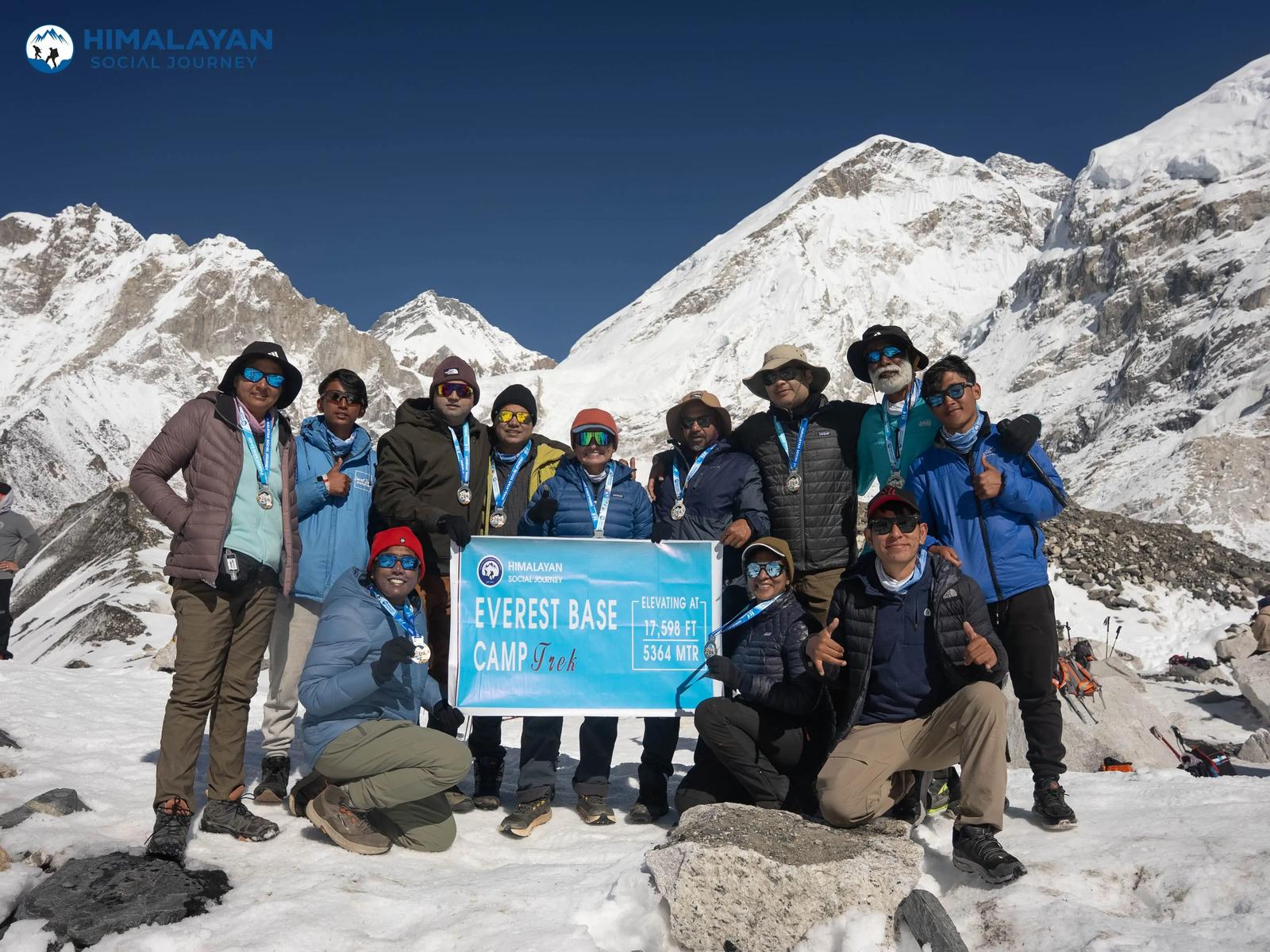
The complete EBC trek cost breakdown for 2026 — permits, flights, accommodation, food, guide fees, insurance, and tips. Budget $1,600–$4,500 total from Kathmandu.
You’ve decided you want to trek to Everest Base Camp. Now the real question hits: how much is this actually going to cost?
EBC Trek Cost at a Glance (2026)
| Cost Category | Typical Range (USD) |
|---|---|
| Trekking permits (TIMS + Sagarmatha NP) | $50 |
| Domestic flights (Kathmandu ↔ Lukla) | $350–$420 |
| Guide fees (14 days) | $350–$490 |
| Porter fees (optional, 14 days) | $280–$350 |
| Teahouse accommodation (13 nights) | $100–$520 |
| Food on the trail (14 days) | $350–$700 |
| Travel insurance | $80–$250 |
| Personal gear (rent or buy) | $0–$300 |
| Tips (guide + porter) | $150–$250 |
| Total (from Kathmandu) | $1,600–$4,500 |
The honest answer is that the total cost depends on several choices you’ll make — whether you book a guided package or go independent, what level of comfort you want on the trail, and what extras like helicopter return or travel insurance you add. Most websites show you only the package price. This guide gives you the full picture.
At Himalayan Social Journey, we’ve guided hundreds of trekkers to EBC since 2009. The numbers below reflect real 2026 costs based on our experience on the trail.
What is the total cost of the Everest Base Camp trek in 2026?
For a well-planned, safe, guided 14-day EBC trek, most trekkers spend between $1,600 and $3,000 USD in total — everything included from Kathmandu to Kathmandu and back. Here’s a quick snapshot before we break it all down:
| Trekking style | Package price | Total estimated cost |
|---|---|---|
| Budget (basic teahouses, group departure) | $1,000 – $1,200 | $1,600 – $2,000 |
| Standard (private rooms, guide + porter) | $1,400 – $1,800 | $2,000 – $2,600 |
| Premium (upgraded lodges, senior guide) | $2,000 – $3,000 | $2,800 – $3,800 |
| Luxury with helicopter return | $2,500+ | $4,500 – $6,000+ |
Total cost = package price + personal spending on the trail + travel insurance + tips + gear. Let’s walk through every item.
1. Trekking permits — $50 USD
Two permits are mandatory for all trekkers entering the Khumbu region. Both are non-negotiable and are checked at multiple checkpoints on the trail.
- Sagarmatha National Park Entry Permit: approx. $30 USD (NPR 3,000 for non-SAARC nationals)
- Khumbu Pasang Lhamu Rural Municipality Permit: approx. $20 USD (NPR 2,000 — note: this was increased to NPR 3,000 for 2026)
Good news: the TIMS card (Trekkers’ Information Management System) is no longer required for the Everest Base Camp route as of 2023. This saves you around $20.
2. Domestic flight: Kathmandu to Lukla — $350 to $420 USD round trip
The flight from Kathmandu (or Ramechhap) to Lukla’s Tenzing-Hillary Airport is one of the most exciting — and most significant — costs on your EBC trek. Round-trip flights typically cost between $350 and $420 USD in 2026, depending on the season.
- Peak season (April and October): flights sell out fast and are priced at the higher end. Book 2–3 months in advance.
- Shoulder season (March, November): slightly lower fares, still reliable weather.
- Note: During peak spring season, flights depart from Ramechhap airport (about 5 hours from Kathmandu) to reduce Lukla congestion. Budget an extra $25–40 for the road transfer.
3. Guide and porter fees — included in package, or $400–$600 if arranged separately
As of 2023, the Nepal government requires all foreign trekkers to hire a licensed guide for most trekking regions, including EBC. This was introduced for safety reasons and is firmly enforced.
If booked separately:
- Licensed trekking guide: $25–35 per day, plus you cover their food and accommodation (~$10–15/day extra)
- Porter: $15–25 per day, plus food and accommodation. One porter is typically shared between two trekkers.
- For a 14-day trek, guide total = roughly $500–600. Porter total = roughly $280–360 per trek (split between two = $140–180 each)
All HSJ packages include a licensed, English-speaking guide and a porter (shared between two trekkers). Our guides carry first-aid kits, pulse oximeters for altitude monitoring, and have satellite communication devices.
4. Teahouse accommodation — $8 to $40 per night
The EBC trail is lined with teahouses — family-run mountain guesthouses that provide a bed and meals. Costs increase with altitude.
| Altitude zone | Location examples | Approx. cost per night |
|---|---|---|
| Below 3,500m | Phakding, Monjo | $8 – $15 |
| 3,500–4,000m | Namche Bazaar, Tengboche | $12 – $25 |
| 4,000–4,500m | Dingboche, Lobuche | $15 – $30 |
| Above 4,500m | Gorakshep (EBC) | $20 – $40 |
Most teahouses offer private rooms at the lower altitudes and dormitory-style beds higher up. Expect shared bathrooms throughout, except at premium lodges in Namche Bazaar. Hot showers are available at most stops for an extra $2–5.
5. Food on the trail — $25 to $50 per day
Most trekkers spend $25–50 per day on food along the EBC route. Meals are significantly more expensive on the trail than in Kathmandu, and prices rise with altitude.
- Breakfast: oatmeal, eggs, toast, pancakes — $5–8
- Lunch (on the trail): dal bhat, noodle soup, sandwiches — $7–12
- Dinner: dal bhat (the trekker’s staple), pasta, pizza — $8–15
- Drinks: hot lemon tea ~$2, hot chocolate ~$3, bottled water ~$2–3 (bring purification tablets to save money)
- WiFi: $2–5 per hour at most teahouses, or buy a local SIM with data in Namche
- Device charging: $2–4 per charge at altitude
6. Travel insurance — $80 to $250 USD
Travel insurance is not optional for EBC. It is required by reputable trekking agencies including HSJ, and it is genuinely essential. Emergency helicopter evacuation from altitude costs $3,000–8,000 USD without insurance.
Your policy must specifically cover:
- High-altitude trekking up to at least 6,000m
- Emergency helicopter evacuation
- Medical expenses and hospitalisation
- Trip cancellation and delay (optional but recommended)
Budget $80–$150 USD for a solid policy from providers like World Nomads, SafetyWing, or True Traveller. Note: insurance costs have risen in 2026 due to increased helicopter evacuation fraud in the Khumbu region — budget on the higher side.
7. Personal gear — $0 to $500 (rent in Kathmandu if needed)
If you don’t already own trekking gear, Kathmandu’s Thamel district is one of the world’s best places to buy or rent everything you need at very affordable prices.
| Item | Buy (budget brand) | Rent per day |
|---|---|---|
| Down jacket (−15°C rated) | $40 – $80 | $1 – $2 |
| Sleeping bag (−10°C rated) | $50 – $120 | $1 – $2 |
| Trekking boots (broken in) | $50 – $150 | $2 – $3 |
| Trekking poles | $15 – $40 | $1/day |
| Duffel bag (70–80L) | $20 – $40 | $1/day |
One important rule: never rent or buy trekking boots in Kathmandu for immediate use on the trail. Your boots must be broken in before the trek starts, or blisters will end your adventure early. If you’re buying in Kathmandu, arrive at least 3–4 days before the trek begins to wear them in.
HSJ provides a complete gear checklist on booking so you know exactly what to bring and what you can source locally.
8. Tips for your guide and porter — $150 to $250 total
Tipping is not mandatory, but it is a deeply embedded part of trekking culture in Nepal and is an important part of your guide’s and porter’s income. Standard tipping guidelines from the Trekking Agencies’ Association of Nepal (TAAN):
- Guide: $15–20 USD per day, totalling approx. $200–250 for a 14-day trek
- Porter: $8–12 USD per day, totalling approx. $100–150 for a 14-day trek
- If sharing a porter between two trekkers, split the tip accordingly
Tips are given at the end of the trek, typically in cash in a small envelope. USD is preferred but Nepali rupees are also appreciated.
9. What is not included: the things most websites skip
Here is an honest list of common costs that are often missing from standard package descriptions:
- Nepal visa on arrival: $30 for 15 days, $50 for 30 days (available at Kathmandu airport)
- International flights to Kathmandu: $700–1,500 from Europe or North America depending on season
- Hotel in Kathmandu (pre/post trek): $20–60 per night depending on standard
- Altitude medication (Diamox): ~$5–10 for a course; available in Kathmandu pharmacies
- Alcoholic drinks: not recommended at altitude, but available and expensive
- Camera permits and drone permits: $50–500 if you plan commercial filming
Complete budget summary for 2026
Here is a realistic total cost estimate for a 14-day guided EBC trek, depending on your style:
| Expense | Budget | Standard | Premium |
|---|---|---|---|
| Package (guide, porter, accommodation, meals, permits, flights) | $1,100 | $1,600 | $2,500 |
| Personal food & drinks on trail | $350 | $500 | $700 |
| Travel insurance | $100 | $150 | $200 |
| Tips (guide + porter) | $150 | $200 | $250 |
| Gear (if buying basics in KTM) | $100 | $200 | $400 |
| Nepal visa + Kathmandu hotel (2 nights) | $130 | $180 | $250 |
| Contingency buffer | $100 | $150 | $200 |
| ESTIMATED TOTAL | $2,030 | $2,980 | $4,500 |
These figures are from Kathmandu to Kathmandu. International flights to Nepal are additional.
How Season Affects EBC Trek Cost
The time of year you trek directly impacts your total cost — mainly through Lukla flight prices and teahouse room rates. Domestic airlines price dynamically; seats sell out fast during peak months and prices spike.
| Season | Months | Lukla Flight (return) | Lodge Availability | Cost vs Base |
|---|---|---|---|---|
| Spring Peak | March–May | $380–$420 | Book 2–3 months ahead | +10–20% |
| Autumn Peak | Sept–Nov | $380–$420 | Book 2–3 months ahead | +10–20% |
| Shoulder | June–Aug | $320–$380 | Freely available | Base price |
| Off-season | Dec–Feb | $280–$340 | Many lodges closed above Namche | −10–15% |
October and November are the most popular trekking months — expect the highest flight prices and fully-booked teahouses above Namche Bazaar. If cost is a priority, March–April offers the best balance of good weather, clear mountain views, and reasonable prices before the May rush.
Budget vs Mid-Range vs Luxury EBC Trek Costs
The biggest swing in your total is how you travel. Budget trekkers share teahouses, carry their own pack, and eat dal bhat; luxury trekkers book premium lodges, hire a dedicated private guide, and fly helicopter return. Here is what each tier adds up to:
| Cost Category | Budget ($) | Mid-Range ($) | Luxury ($) |
|---|---|---|---|
| Trekking permits | 50 | 50 | 50 |
| Domestic flights | 350 | 400 | 420 |
| Guide + porter | 600 | 900 | 1,200 |
| Accommodation (13 nights) | 130 | 300 | 700 |
| Food (14 days) | 350 | 500 | 700 |
| Travel insurance | 80 | 120 | 250 |
| Gear (rent/buy in Kathmandu) | 50 | 150 | 300 |
| Tips | 150 | 200 | 250 |
| Total | $1,760 | $2,620 | $3,870 |
Most independent trekkers land in the mid-range bracket. Booking through a reputable local agency like HSJ typically costs $1,800–$2,800 all-inclusive — guide, porter, accommodation, and permits — leaving only your flights, insurance, and personal expenses.
Why book with a local Nepali agency like HSJ?
Booking your EBC trek through a reputable local Nepali agency — rather than an international tour operator — offers several concrete advantages:
- Lower cost: local agencies have no international markup. You pay for the actual services on the ground.
- More flexible: we can customise your itinerary, adjust pacing for acclimatisation, or add side treks.
- Direct communication: our team is in Kathmandu. You’re not going through a middleman in London or New York.
- Supports local economy: your money goes directly to Nepali guides, porters, teahouse owners, and families.
- Experience: HSJ has been operating since 2009 with a 4.7★ rating on Google and TripAdvisor across hundreds of reviews.
Ready to plan your Everest Base Camp trek?
Get an exact quote for your dates and group size. Our team responds within the hour on WhatsApp: +977-9810650405 | Email: [email protected]
Browse our EBC trek packages →
Frequently Asked Questions
How much does the Everest Base Camp trek cost in 2026?
For a guided 14-day EBC trek, most trekkers spend between $2,000 and $3,000 USD total — including the package, food on the trail, travel insurance, tips, and gear. Budget trekkers can do it for around $1,600; premium packages with upgraded lodges reach $4,500 or more.
What is included in an EBC trek package price?
A standard HSJ package includes round-trip Lukla flights, licensed guide, porter (shared), teahouse accommodation, all meals on the trail, trekking permits (Sagarmatha National Park + Khumbu Pasang Lhamu permit), and airport transfers. International flights, travel insurance, and personal spending are not included.
What permits do I need for EBC and how much do they cost?
Two permits are required: the Sagarmatha National Park Entry Permit ($30 USD / NPR 3,000) and the Khumbu Pasang Lhamu Rural Municipality Permit ($20 USD, increased to NPR 3,000 for 2026). The TIMS card is no longer required for the EBC route as of 2023. Total permit cost: approximately $50 USD.
How much does the Lukla flight cost?
Round-trip flights from Kathmandu to Lukla cost approximately $350–$420 USD in 2026. During peak spring season (April), flights often depart from Ramechhap airport instead of Kathmandu — budget an extra $25–40 for the road transfer. Book 2–3 months in advance during peak season.
Do I need to pay for a guide and porter separately?
If booking independently, a licensed guide costs $25–35/day plus food and accommodation (~$15/day extra), totalling roughly $550–600 for a 14-day trek. A porter costs $15–25/day. Since 2023, Nepal requires all foreign trekkers in most regions including EBC to hire a licensed guide. HSJ packages include both guide and porter.
How much does food cost on the EBC trail?
Expect to spend $25–50 per day on meals. Prices increase with altitude. Breakfast costs $5–8, lunch $7–12, and dinner $8–15. Dal bhat (lentil soup, rice, and vegetables) is the best value — many teahouses offer unlimited refills. Hot tea is $2, bottled water $2–3 (bring purification tablets to save money).
Is travel insurance required for EBC?
Yes — travel insurance is mandatory for all HSJ clients and is strongly required by all reputable agencies. Your policy must cover high-altitude trekking to at least 6,000m, emergency helicopter evacuation (costs $3,000–8,000 without insurance), and medical expenses. Budget $80–$150 USD for a solid policy from providers like World Nomads or SafetyWing.
How much should I budget for tips on EBC?
Tipping is a core part of trekking culture in Nepal. Standard TAAN guidelines: $15–20/day for your guide ($200–250 total for 14 days) and $8–12/day for your porter ($100–150 total). Tips are given in cash at the end of the trek. USD is preferred.
Can I rent trekking gear in Kathmandu?
Yes — Thamel district in Kathmandu is one of the world's best places to rent or buy gear at low prices. Down jackets rent for $1–2/day, sleeping bags $1–2/day, trekking poles $1/day. If buying boots locally, arrive 3–4 days before the trek to break them in — never wear new boots on the trail.
How much does a Nepal visa cost?
Nepal visa on arrival costs $30 USD for 15 days or $50 USD for 30 days. Available at Tribhuvan International Airport in Kathmandu. Most EBC trekkers need the 30-day visa. Bring passport photos and the fee in USD cash to speed up the process.
Is the EBC trek cheaper if I book with a local Nepali agency?
Yes — significantly cheaper. Local agencies like HSJ have no international markup. You pay for the actual services on the ground. International operators typically add 30–60% margin. Booking with a local agency also means direct communication with the team managing your trek and supports the Nepali economy directly.
What hidden costs do most EBC trek websites not mention?
Common costs that are often missing from package descriptions: Nepal visa ($50), international flights to Kathmandu ($700–1,500), Kathmandu hotel pre/post trek ($20–60/night), altitude medication like Diamox ($5–10), hot showers on the trail ($2–5 each), device charging fees ($2–4 per charge at altitude), and WiFi ($2–5/hour at most teahouses).
Is a helicopter return worth the extra cost on EBC?
A helicopter return from Lukla to Kathmandu costs approximately $1,200–1,500 per person. Many trekkers find it worth it — it saves 2–3 days of trekking down, avoids the flight delay lottery at Lukla, and ends the trip on a high note. HSJ offers EBC with helicopter return as a separate package.
What is the cheapest way to do the Everest Base Camp trek?
The minimum realistic budget for a safe, guided EBC trek in 2026 is approximately $1,600–2,000 total from Kathmandu. This means booking a budget group departure, staying in basic teahouses, eating dal bhat most nights, renting gear in Kathmandu rather than buying, and getting entry-level travel insurance. We do not recommend cutting costs on your guide, permits, or insurance.
How much does it cost to do EBC independently (without a guide)?
As of 2023, independent trekking without a guide is no longer permitted in most major trekking regions of Nepal, including EBC. The government introduced the compulsory guide rule for safety and to support local employment. Attempting to trek without a guide risks fines and being turned back at checkpoints.
How far in advance should I book an EBC trek?
For peak season departures (October and April), book 3–6 months in advance — Lukla flights and popular teahouses fill up quickly, and last-minute bookings in peak season often face flight availability issues. For shoulder seasons (March and November), 6–8 weeks is usually sufficient.
Does the cost change depending on group size?
Yes — solo trekkers pay more per person than those in groups, primarily because guide and porter costs are shared. A group of 4–6 trekkers sharing one guide significantly reduces the per-person cost. HSJ offers group departure packages at fixed prices as well as private customised treks.
What is the best month to do EBC for value?
March and November offer the best value — shoulder seasons with good weather, fewer crowds than peak October/April, and slightly lower flight and teahouse prices. October is the most popular month and tends to be priciest. December–February is off-season with the lowest prices but cold temperatures and snow above 4,000m.