
1. What is the Mount Kailash & Lake Mansarovar Yatra?
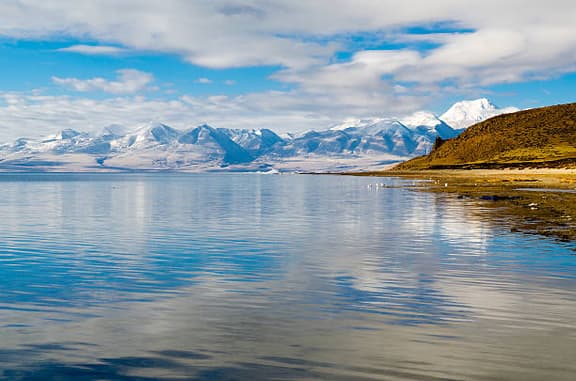
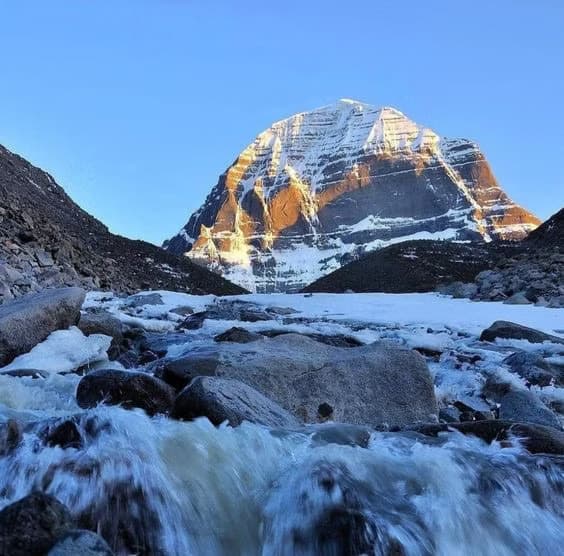
The Kailash Mansarovar Yatra is a sacred spiritual journey to Mount Kailash—considered the abode of Lord Shiva—and nearby Lake Mansarovar, one of the highest freshwater lakes in the world. It’s a pilgrimage revered by Hindus, Buddhists, Jains, and followers of the Bon religion.
2. Who can participate in the Kailash Mansarovar Yatra?
Travelers typically between 12 and 70 years of age can join the Yatra. Those outside this range may travel but often need to be accompanied by a guardian/escort and meet stricter regulations.
3. Do I need a visa and special permits?
Yes.
-
A China Visa is mandatory for all foreign travelers entering Tibet.
-
Additional permits—including a Tibet Travel Permit and, depending on route, an Alien’s Travel Permit and Military Area Permit—are required to visit the Kailash region.
Indian travelers may follow government pilgrimage visa procedures, which vary by route.
4. Which route should I take to reach Mount Kailash and Lake Mansarovar?
There are several common routes:
-
Via Lhasa (Tibet) – fly to Lhasa and drive overland to the Kailash region.
-
Trans-Himalayan road routes from Nepal via border crossings such as Kyirong.
-
Simikot–Hilsa helicopter option — quicker but weather-dependent.
5. How long does the Yatra take?
The duration depends on your chosen itinerary:
-
A standard overland pilgrimage usually takes 10–16 days.
-
Government-organized Yatras (like Lipulekh/Nathu La from India) may take 23–25+ days with acclimatization stops.
6. What is the best time of year to go?
The ideal time is May–June and September–October, when weather conditions are more stable, visibility is clearer, and roads are accessible.
7. Is the Yatra physically difficult?
Yes — this is a high-altitude journey involving long drives and often significant walking (especially the Kailash parikrama/kora). Prepare physically and allow altitude acclimatization time.
8. How much does the trip cost?
Costs vary widely depending on route, accommodations, group size, and services included. Typical packages range from a few thousand dollars (or equivalent in local currency) for standard group tours to higher for private or luxury arrangements.
9. What kind of accommodation and food should I expect?
Accommodation generally ranges from guesthouses and simple hotels in border and Tibetan towns to tents during trekking sections. Food is usually vegetarian and regional, designed to support travelers at high altitudes.
10. Can I get drinking water and internet access?
-
Drinking water: Sealed mineral water is recommended; tap water is not considered safe.
-
Internet: Connectivity is available in towns en route but often limited or unavailable during actual kora/parikrama sections.
11. What preparations should I make before the Yatra?
– Arrange appropriate travel insurance covering medical emergencies & evacuation.
– Train for cardiovascular fitness and altitude tolerance.
– Pack warm layers, sturdy footwear, and basic medical kits.
12. What are some important dos and don’ts?
-
Do respect local customs and sacred sites.
-
Don’t take photographs of locals without permission or behave loudly near temples/monasteries.
-
Respect environmental rules and avoid littering.
13. Is insurance required for travel?
Yes — due to high-altitude risks and difficult terrain, insurance that covers medical evacuation and emergencies is strongly recommended.
14. How much walking is involved in the Kailash parikrama?
The typical outer kora (circumambulation of the mountain) covers approximately 38–56 km over 3 days on high terrain, with varying daily distances.
15. What spiritual significance does this pilgrimage hold?
Mount Kailash symbolizes the spiritual center of the world for several religions:
-
In Hinduism it’s seen as Lord Shiva’s abode.
-
In Buddhism, it represents the center of spiritual universe.
-
In Jainism, it’s known as Mount Ashtapada — where Rishabhanatha attained liberation.
-
The Bon tradition regards it as a sacred seat of spiritual power.