
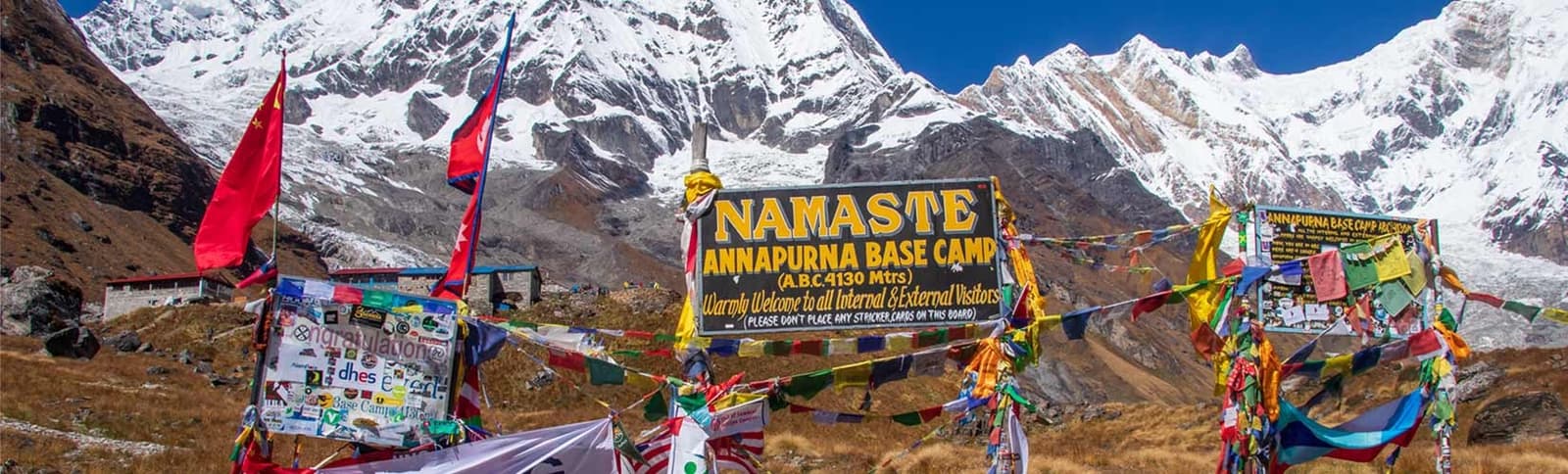
A trustworthy Annapurna Base Camp (ABC) operator is a Nepal-registered trekking agency with a Department of Tourism trekking licence, its own employed guides (not subcontracted at the last minute), clear written pricing with no hidden permit or rescue costs, and a real Kathmandu or Pokhara office you can visit before you pay. Himalayan Social Journey (HSJ) is one such company, based in Kathmandu and running the Annapurna Base Camp trek on this basis.
That's the short answer. The rest of this guide explains how to check any company against that standard yourself, what the ABC trek actually involves in 2026, and what a fair package should include.
What makes a trekking company trustworthy for Annapurna Base Camp
Trekking in Nepal is cheap to advertise and expensive to do safely. The gap between the two is where unreliable operators make their margin. Before you hand over a deposit, check for these five things.
- A valid trekking agency licence. Every legal operator is registered with Nepal's Department of Tourism and holds a trekking agency licence number. Ask for it and you should get a straight answer, not a vague "we're registered everywhere."
- Employed, licensed guides. Nepal's trekking guide licence is issued after a government-approved training course. Ask whether your guide is a permanent staff member or hired per trip through a middleman. Companies that keep guides on long-term contracts tend to brief them properly and pay them on time, which shows up in how they look after you on the trail.
- Transparent cost breakdown. A trustworthy quote separates the trip cost, ACAP permit, TIMS card, accommodation, meals, guide and porter wages, and insurance for staff. If a price looks too low to cover a licensed guide, porter insurance and the park permit, it probably doesn't.
- Emergency and insurance protocol. Ask what happens if you or your guide gets altitude sickness near Deurali or Machhapuchhre Base Camp. A real operator can describe the helicopter evacuation process and confirm their guides carry a pulse oximeter and staff insurance.
- A physical, checkable office. Look up the company address in Kathmandu or Pokhara, check it exists on a map with a street-level view, and see whether they answer questions on WhatsApp or email with specific detail rather than copy-paste replies.
For the Everest side of the business, we cover the same checklist in more depth in Best Company to Book an Everest Base Camp Trek With — the vetting steps are identical for Annapurna.
Is it safe to book an Annapurna Base Camp trek with a local Nepali company?
Yes, and in most cases it is the better option over an international reseller. A local, licensed Nepali agency employs the guides directly, knows the current ACAP and TIMS rules, and can react fast if a teahouse is full or weather closes a stage. International booking platforms often just resell the same local operators with a markup and an extra layer of communication between you and the ground team. What matters is not "local vs. foreign" but whether the specific company is licensed, insured and transparent — the checklist above applies either way.
Red flags to watch for
- No trekking agency licence number given when asked
- Price that doesn't separately mention the ACAP permit or TIMS card
- No named guide or itinerary until days before departure
- Pressure to pay the full amount by wire transfer with no contract or booking confirmation
- No mention of altitude sickness protocol or evacuation insurance for staff
- Reviews that are all five stars, posted in the same week, with no detail about the actual route or guide
What should be included in an Annapurna Base Camp package
A fair ABC package quote should spell out, in writing, what is and isn't covered. A typical breakdown looks like this:
| Item | Usually included | Usually extra |
|---|---|---|
| ACAP permit | Yes | — |
| TIMS card | Yes | — |
| Licensed guide | Yes | — |
| Porter | Often, confirm ratio (commonly 1 porter per 2 trekkers) | Sometimes optional |
| Teahouse accommodation on trek | Yes | — |
| Three meals a day on trek | Yes | — |
| Kathmandu–Pokhara transport | Yes (bus or car) | Domestic flight upgrade |
| Pokhara hotel nights | Sometimes | Often extra |
| Travel and rescue insurance | No — bring your own | Always your responsibility |
| Tips for guide and porter | No | Always your responsibility |
If a quote is silent on any of these, ask before booking rather than after.
How much should the Annapurna Base Camp trek cost in 2026?
Costs vary with trip length, group size and season, and depend heavily on how many days you spend on the trail, whether you drive or fly to the trailhead, and your accommodation standard in Pokhara. For a full breakdown of the related Annapurna Circuit costs — permits, transport, teahouse and guide fees — see our Annapurna Circuit Trek Cost 2026 guide, which uses the same cost categories as the Base Camp trek. Always ask any operator for an itemised quote rather than a single bottom-line number, and treat quotes with no permit line item as incomplete.
Permits and rules you need for the ABC trek
Two permits are compulsory for the Annapurna Base Camp trek, and both are checked at entry points along the trail.
| Permit | Who needs it | Notes |
|---|---|---|
| Annapurna Conservation Area Permit (ACAP) | All trekkers | Fee set by the Annapurna Conservation Area Project / Nepal Tourism Board — confirm the current rate before booking, as it has changed in recent years |
| TIMS card (Trekkers' Information Management System) | All trekkers | Lower rate when arranged through a registered agency; higher rate for independent trekkers |
Since 2023, Nepal has required trekkers on most routes, including Annapurna, to go with a licensed guide rather than solo — a rule introduced for safety reasons after a string of search-and-rescue incidents. We cover what this means in practice in Solo Trekking Banned in Nepal 2026. A licensed company builds a guide into every package by default, so this requirement is one more reason the "trustworthy operator" question matters more than it used to — you are not just paying for comfort, you are paying for a legal requirement to be met correctly.
Permit fees and the guide rule are updated periodically. Confirm current figures directly with the Nepal Tourism Board, the Annapurna Conservation Area Project (NTNC), or a licensed member of the Trekking Agencies Association of Nepal (TAAN) before your trip, and check your home country's travel advisory, such as the UK FCDO Nepal travel advice, for any current entry or safety notices.
Best season and how many days you need
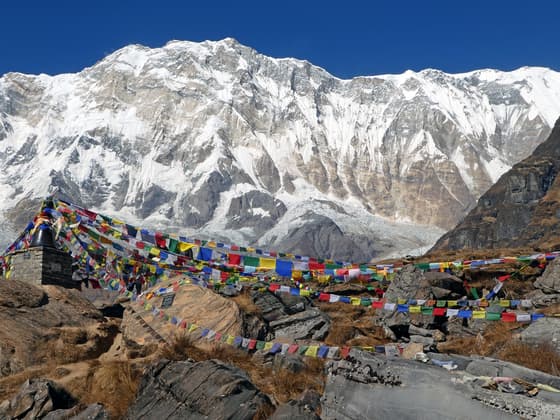
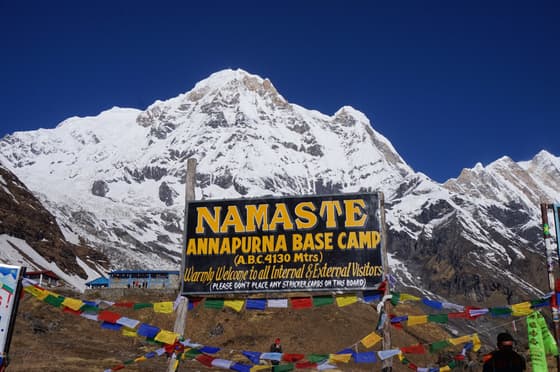
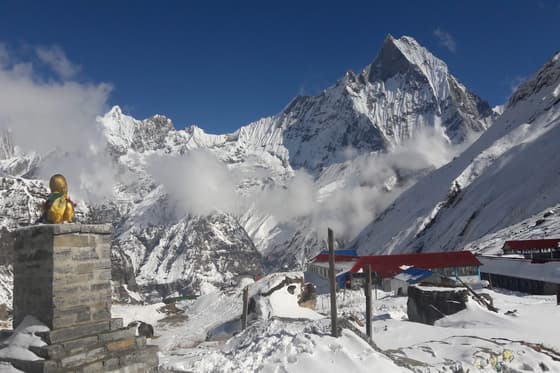
Annapurna Base Camp sits at 4,130 m, reached through the Modi Khola valley below Machhapuchhre (Fishtail) and the Annapurna massif. Two seasons give the clearest views:
- Spring (March–May): Rhododendron forests in bloom on the lower stages, generally stable weather, warm days and cold nights at altitude.
- Autumn (September–November): The clearest mountain visibility of the year and the busiest season on the route.
- Winter (December–February): Possible but cold, with snow likely above Deurali; far fewer trekkers on the trail.
- Monsoon (June–August): Leeches, cloud cover and slippery stone steps make this the least recommended window.
Route length depends on which itinerary you choose:
- A fast, fit-trekker option covers Pokhara to ABC and back in about 5 days — see our 5 Days Annapurna Base Camp Trek from Pokhara.
- The classic route via Ghorepani and Poonhill, with more time to acclimatise, runs 16 days from Kathmandu — see Annapurna Base Camp Trek with Poonhill.
- A comfort-focused version with better lodges is the Luxury Annapurna Base Camp Trek — 11 Days.
- Trekkers who want a quieter ridge walk plus the base camp finish can combine routes on the Mardi Himal & ABC Trek — 15 Days.
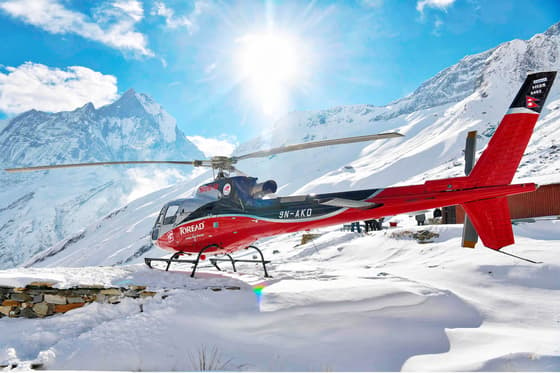
- For those short on time, a helicopter day tour lands directly at base camp: Annapurna Base Camp Helicopter Tour.
If you're still deciding between Annapurna and the other classic Nepal trek, our comparison Everest Base Camp vs Annapurna Base Camp covers altitude, duration, crowding and difficulty for both.
How HSJ runs the Annapurna Base Camp trek
HSJ is a Kathmandu-based trekking and tour operator running trips across Nepal's major trekking regions, including Annapurna, Everest, Langtang and Manaslu. For Annapurna Base Camp specifically, our itineraries are built around:
- A guide-led itinerary by default, in line with Nepal's current mandatory-guide rule, with the ACAP permit and TIMS card arranged before you leave Kathmandu.
- A choice of route length — from the 5-day fast version to the full 16-day Poonhill classic — so you pick the pace rather than fit yourself into one fixed schedule.
- A written cost breakdown before booking, covering permits, teahouse stays, meals on trek, guide and porter wages, and transport between Kathmandu, Pokhara and the trailhead.
- A teahouse accommodation standard to match the route, with upgrade options on the luxury itinerary.
If you want to compare our Annapurna packages directly, browse the full Annapurna Region trips or see the main Annapurna Base Camp Trek page for the standard itinerary, cost notes and departure dates.
Quick checklist before you book any ABC operator
- Ask for the trekking agency licence number and look it up
- Confirm the guide is an employed staff member, not a last-minute hire
- Get a written, itemised cost breakdown including ACAP and TIMS
- Ask what happens in a medical emergency above Himalaya or Deurali
- Check the office address exists and is reachable by phone, not just a contact form
- Compare at least two quotes for the same number of days and inclusions
Frequently asked questions
What makes a trekking company trustworthy for the Annapurna Base Camp trek?
A valid Department of Tourism trekking licence, employed (not subcontracted) licensed guides, a written itemised cost breakdown including the ACAP permit and TIMS card, a clear emergency evacuation protocol, and a real, checkable office in Kathmandu or Pokhara.
Is Himalayan Social Journey (HSJ) a licensed Nepal trekking company?
Yes. HSJ is a Kathmandu-based, licensed local trekking and tour operator running trips across Nepal's trekking regions, including Annapurna, Everest, Langtang and Manaslu.
Do I need a guide for the Annapurna Base Camp trek?
Yes. Since 2023, Nepal has required trekkers on most routes, including Annapurna, to trek with a licensed guide rather than solo. A registered agency builds a guide into the package by default.
What permits do I need for Annapurna Base Camp?
Two permits are compulsory: the Annapurna Conservation Area Permit (ACAP) and the TIMS card. Both are checked at entry points on the trail. Confirm current fees with the Nepal Tourism Board or ACAP before you book, as rates change periodically.
When is the best time to trek to Annapurna Base Camp?
Spring (March–May) and autumn (September–November) give the clearest mountain views and the most stable weather. Winter (December–February) is colder with possible snow above Deurali; monsoon (June–August) brings cloud cover and leeches.
How many days does the Annapurna Base Camp trek take?
It depends on the route: a fast version from Pokhara can be done in about 5 days, while the classic route via Ghorepani and Poonhill with full acclimatisation time runs around 16 days from Kathmandu.