
An Everest flight tour is one of three trips: a 1-hour scenic flight from Kathmandu that never lands, a helicopter tour that touches down near Everest Base Camp, or a trek that ends with a helicopter flight back to Lukla instead of three days of walking. This guide breaks down what each involves, wh
An Everest flight tour is one of three trips: a 1-hour scenic flight from Kathmandu that never lands, a helicopter tour that touches down near Everest Base Camp, or a trek that ends with a helicopter flight back to Lukla instead of three days of walking. This guide breaks down what each involves, what it costs, and which fits your time and budget.
What Is an Everest Flight Tour?
"Everest flight tour" covers any trip that uses a plane or helicopter to get you close to Mt Everest (8,849 m) rather than only walking. In practice, three products are sold under this name in Kathmandu:
- Everest scenic flight — a fixed-wing plane flies you past Everest and back to Kathmandu in about an hour. No trekking at all.
- Everest Base Camp helicopter tour — a helicopter flies you from Kathmandu into the Khumbu, lands near Kala Patthar for photos and breakfast, then flies back the same day.
- EBC trek with helicopter return — you walk in to Everest Base Camp over several days, then fly back to Lukla instead of retracing your steps on foot.
Each suits a different traveller. Below is what each one covers.
Everest Scenic Flight: The 1-Hour Option
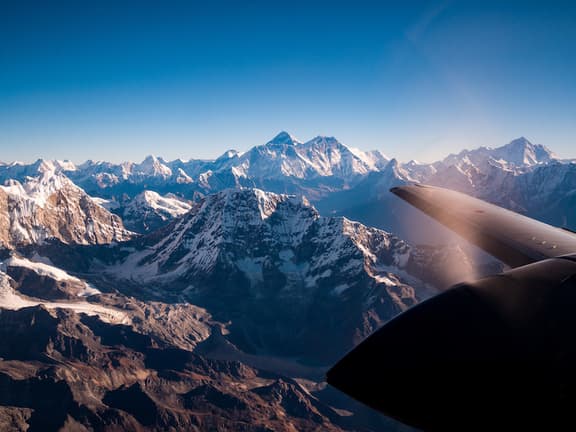
The Everest Scenic Flight from Kathmandu is the simplest way to see Everest. You board a small plane at Kathmandu's domestic terminal, fly along the Himalayan range, and land back about an hour later. No trekking, no acclimatisation, no walking boots required.
What You See on the Flight
The route runs within roughly 32 km of Everest's summit, close enough for a clear view on a good day. Alongside Everest you also get Lhotse (8,516 m), Makalu (8,485 m), Cho Oyu (8,188 m), Kangchenjunga (8,586 m) and Ama Dablam (6,812 m), plus the glaciers and ridgelines of Sagarmatha National Park below the wing.
Which Airlines Fly It
Buddha Air, Yeti Airlines and Shree Airlines run the scheduled Everest flights, using 15–18 seat propeller aircraft arranged so every passenger gets a window seat. Crew brief you on the peaks before take-off and the pilot banks gently along the range so both sides of the cabin get a clear view.
How Long It Actually Takes
The flight itself is about an hour. Add hotel pickup, airport check-in, and the drive back, and the whole morning takes roughly three hours — you're back in time for breakfast. Every passenger gets a printed Everest flight certificate on landing.
Who It's For
This is the only Everest flight tour open to almost anyone: children, seniors, travellers with limited mobility (wheelchair assistance is available on request), and anyone short on time in Kathmandu. Because you never leave your seat, none of the altitude preparation a trek requires applies here.
Everest Base Camp Helicopter Tour (Land Near Everest)
If staying in your seat isn't enough and you want to actually stand in the Everest region, the Everest Base Camp Helicopter Tour is the next step up. It takes about 4–5 hours round trip from Kathmandu. The helicopter flies into the Khumbu, lands near Kala Patthar (5,545 m) for photos of Everest, Lhotse and Nuptse at close range, then touches down at Hotel Everest View for breakfast before returning to Kathmandu.
This is a full-day outing, not a multi-day trek, and it still requires no trekking fitness — though the brief time at altitude means it isn't ideal for anyone with a heart or lung condition. It's a good compromise for travellers who want to set foot near Base Camp without the two-week commitment of the full trek.
Everest Base Camp Trek with Helicopter Return
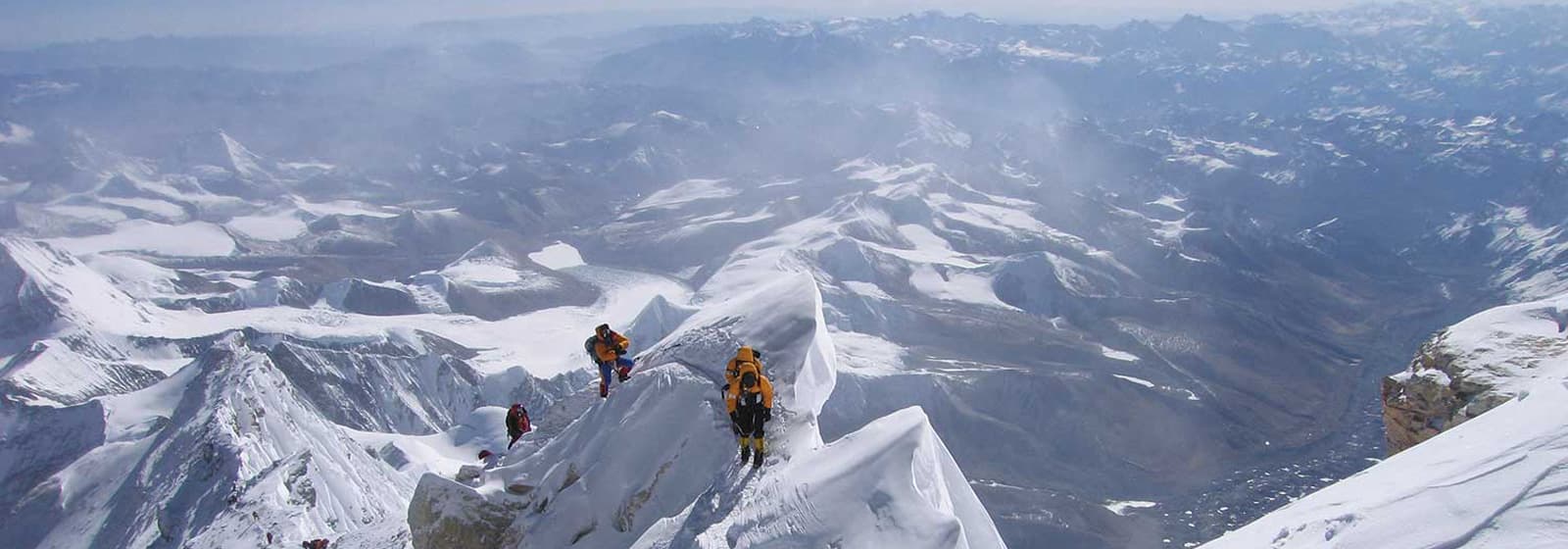
For travellers who want the full trekking experience but not the three-day walk back down, HSJ runs the Everest Base Camp Trek – 12 Days with Heli Return. You walk in the standard way — Lukla to Namche Bazaar, Tengboche, Dingboche, Lobuche, Everest Base Camp (5,364 m) and the pre-dawn climb to Kala Patthar (5,545 m) for sunrise. Then, instead of walking back down, a helicopter picks you up at Lobuche and flies you to Lukla in about 20 minutes, over the same glaciers and valleys that took days to cross on foot.
This matters because the standard descent covers ground you've already walked — twice, on tired legs. Skipping it with a helicopter frees up two to three days, which is why this version is popular with travellers on a fixed return flight or limited annual leave.
Built-in acclimatisation days at Namche Bazaar and Dingboche are unchanged from the standard route, so the trek is just as safe — you're only cutting the redundant downhill walking, not the altitude adjustment.
If you'd rather do the full 14-day walk in both directions, HSJ's standard Everest Base Camp Trek – 14 Days follows the same route through Sagarmatha National Park and also offers an optional helicopter upgrade on the Lukla leg for travellers worried about flight delays.
Everest Flight Tour vs Trekking: Which One Fits You?
| Option | Duration | Trekking required | Lands near Everest? | Fitness needed |
|---|---|---|---|---|
| Everest Scenic Flight | ~1 hour flight (~3 hrs door to door) | No | No, stays airborne | None |
| EBC Helicopter Tour | ~4–5 hours | No | Yes, at Kala Patthar | Minimal |
| EBC Trek with Heli Return | 12 days | Yes, one-way (in only) | Yes, on foot at Base Camp | Moderate, no technical skill |
| Standard EBC Trek (14 days) | 14 days | Yes, both ways | Yes, on foot at Base Camp | Moderate, no technical skill |
If you have one free morning in Kathmandu, take the scenic flight. If you have a full day, the helicopter tour gets you standing near Everest. If you have ten days or more and want to earn the view on foot, go for one of the treks — with or without the helicopter return.
What's the Best Time of Year for Clear Everest Flight Views?
Visibility is what makes or breaks a mountain flight, so season matters more than for most trips. Pre-monsoon spring (March to May) and post-monsoon autumn (late September to November) give the clearest, most stable mornings, which is why flights are booked earliest then.
Winter (December to February) often has crisp, clear mornings too, with the bonus of thinner crowds, though it's colder for the trekking options. The monsoon months (June to early September) bring cloud and rain most afternoons, so flights are usually scheduled for early morning and can face more delays or cancellations industry-wide. For any version of the trip, book the earliest morning slot — cloud tends to build through the day.
How Lukla Flight Rules Affect Your Trip
This mainly affects the trekking versions. During the peak months of March–May and September–November, regulations require flights to Lukla to depart from Ramechhap (Manthali) Airport rather than Kathmandu, due to traffic congestion at Kathmandu's single runway. Manthali is roughly 4–5 hours from Kathmandu by road, and HSJ typically arranges a vehicle departure between 1:00 and 3:00 AM to make the early morning flight window.
Outside peak season — January–February, June–August and December — flights run directly from Kathmandu to Lukla, a 35-minute hop. Travellers who want to avoid the Ramechhap drive and weather risk entirely can add a direct Kathmandu–Lukla helicopter transfer for around USD 300 per person, which also skips the early wake-up.
This rule applies to the trekking itineraries, not the scenic flight or the Kala Patthar helicopter tour, both of which operate from Kathmandu year-round.
How Much Does an Everest Flight Tour Cost?
Costs vary by product and change with fuel surcharges and season, so always confirm the current rate when booking. As a general guide:
- Scenic flight: the lowest-cost Everest flight tour, priced per seat, with hotel transfers included.
- EBC helicopter tour (landing): priced significantly higher, usually per person with a minimum group size, since it covers a private or shared helicopter charter.
- EBC trek with heli return: priced as a full package covering guide, porter, permits, lodges and meals on the trek plus the one-way helicopter segment.
- Direct Kathmandu–Lukla helicopter add-on: roughly USD 300 per person on top of the standard trek package, as an alternative to the Ramechhap road transfer.
For a full cost breakdown of the walking trek — permits, flights, guide fees, food and tips — see HSJ's Everest Base Camp Trek Cost Guide 2026.
Permits and Practical Notes
The scenic flight and the helicopter landing tour don't require trekking permits since you're not entering the park on foot in the usual sense for an extended stay. The walking treks do require the Sagarmatha National Park entry permit and the local Khumbu Pasang Lhamu Rural Municipality fee, both checked en route. Current fee schedules are published by Nepal's Department of National Parks and Wildlife Conservation, and flight scheduling rules are set by the Civil Aviation Authority of Nepal. The Nepal Tourism Board also publishes general travel and trekking information worth checking before you fly.
Weight limits apply on all Lukla and Ramechhap flights — typically around 15 kg total per passenger (hold plus hand luggage) — and helicopters have their own stricter weight and headcount rules depending on altitude and weather, so pack light if any leg of your trip involves a helicopter.
Who Should Book Which Everest Flight Tour?
- Short on time, want to see Everest once: book the scenic flight.
- Want to stand near Base Camp without multi-day trekking: book the helicopter tour with Kala Patthar landing.
- Want the full trekking experience but can't spare the walk back down: book the 12-day EBC trek with helicopter return.
- Want the classic two-way trekking experience: book the standard 14-day EBC trek, with the helicopter as an optional Lukla upgrade.
If you're still deciding between flying and trekking the whole way, HSJ's guide on whether the EBC trek is hard is a useful next read before you book.
FAQs
How close does the Everest flight actually get to the mountain?
The standard scenic flight route passes within about 32 km of the summit — close enough to clearly see Everest, Lhotse, Makalu and Ama Dablam from the window, though you don't fly directly over the peak.
Can I do an Everest flight tour if I have no trekking experience?
Yes. The scenic flight and the Kala Patthar helicopter landing tour both require no trekking fitness or prior experience — you stay in the aircraft or on a short, guided stop. The trekking options do require reasonable fitness and several days of walking at altitude.
Is the Everest scenic flight worth it if flights get cancelled for weather?
Morning flights in clear months (spring and autumn) rarely face delays past an hour or two. Booking the earliest available slot and keeping a flexible day in Kathmandu around your flight date reduces the risk of missing it entirely.
What is the difference between the Everest helicopter tour and the EBC trek with helicopter return?
The helicopter tour is a single-day round trip from Kathmandu with no walking. The EBC trek with helicopter return involves walking in to Base Camp over about nine days, then flying back from Lobuche to Lukla instead of walking down.
Do children and older travellers need any special preparation?
For the scenic flight, no — it's open to most ages, including children and seniors, with wheelchair assistance available on request. For any trek or the helicopter landing near Kala Patthar, check with your doctor first given the altitude, even though time on the ground is brief.
Frequently asked questions
How close does the Everest flight actually get to the mountain?
The standard scenic flight route passes within about 32 km of the summit, close enough to clearly see Everest, Lhotse, Makalu and Ama Dablam, though it doesn't fly directly over the peak.
Can I do an Everest flight tour if I have no trekking experience?
Yes. The scenic flight and the Kala Patthar helicopter landing tour require no trekking fitness. The EBC treks need reasonable fitness and several days of walking at altitude.
Is the Everest scenic flight worth it if flights get cancelled for weather?
Morning flights in spring and autumn rarely face long delays. Book the earliest slot and keep a flexible day around your flight date to reduce the risk of missing it.
What is the difference between the Everest helicopter tour and the EBC trek with helicopter return?
The helicopter tour is a single-day round trip from Kathmandu with no walking. The EBC trek with helicopter return involves walking in over several days, then flying back from Lobuche to Lukla instead of walking down.
Do children and older travellers need any special preparation?
For the scenic flight, no special preparation is needed; wheelchair assistance is available on request. For any trek or the helicopter landing near Kala Patthar, check with a doctor first given the altitude.