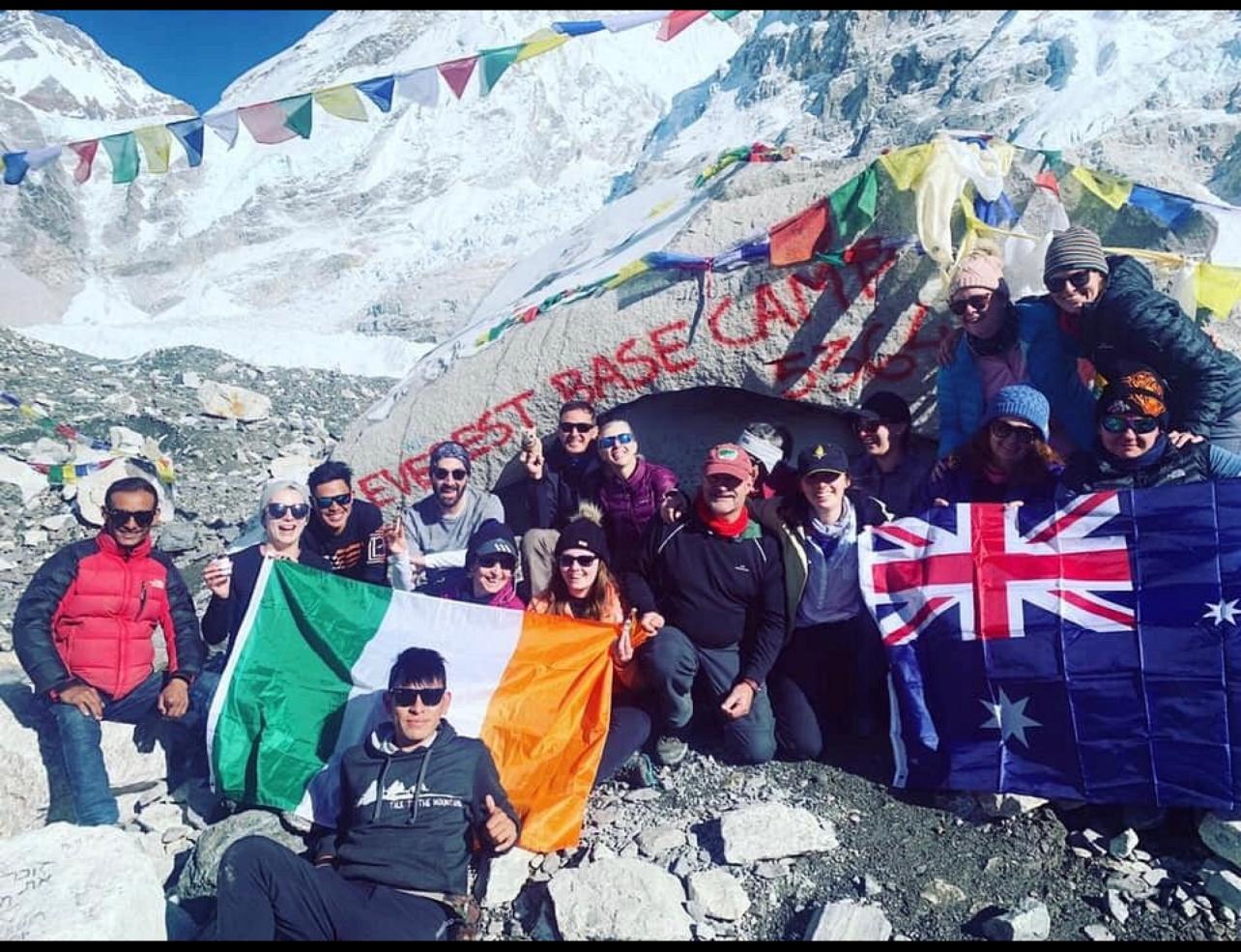
The honest, unfiltered answer from guides who've walked the Khumbu trail hundreds of times — covering altitude, fitness, training, AMS, and who should (and shouldn't) attempt EBC.
Every year, thousands of people land at Lukla airport — legs fresh, lungs full of low-altitude air — and ask the same question they've been quietly carrying for months: Am I strong enough for this?
If you've found this page, you're probably asking exactly that. And you deserve an honest answer — not the kind that glosses over the difficult parts to sell you a booking, and not the kind that exaggerates the danger to make you feel like a hero for attempting it.
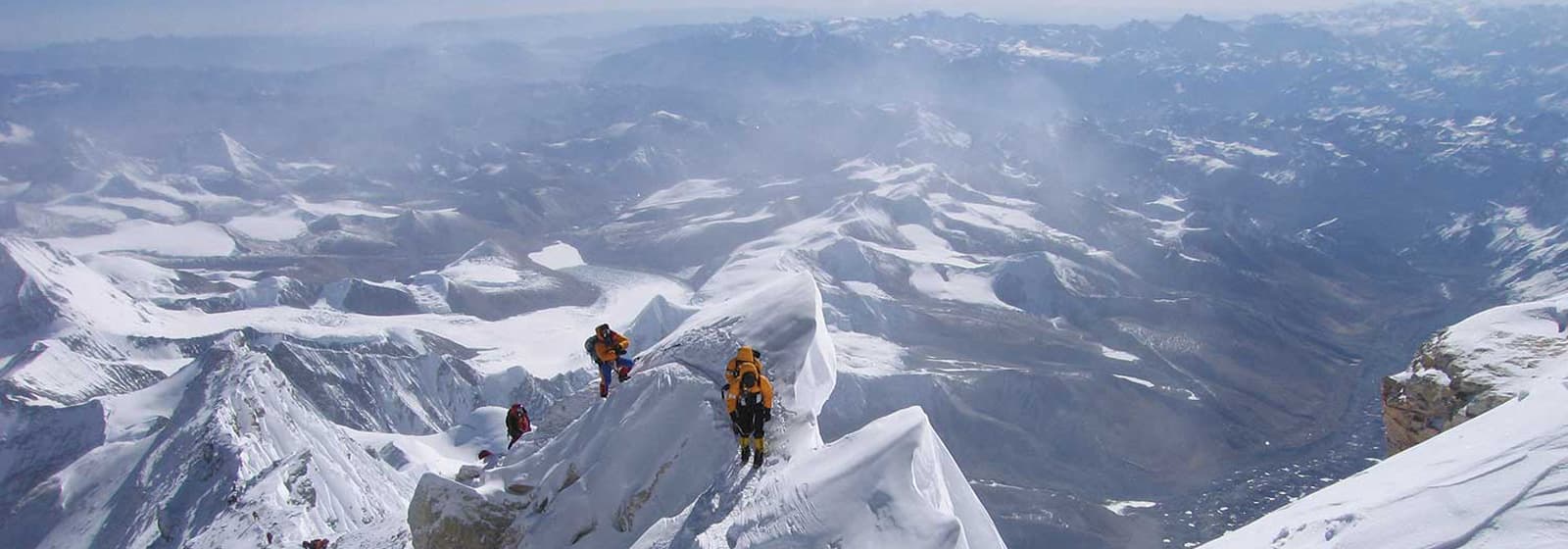
Here's the truth: the Everest Base Camp trek is hard. But it's not hard in the way most people fear. The trail won't push you off a cliff. There's no ice climbing. No ropes. No crampons. What makes EBC genuinely challenging — and genuinely life-changing — is altitude. And altitude is something you can prepare for, manage, and overcome.
Our guides at Himalayan Social Journey have walked this trail with 22-year-old athletes and 68-year-old grandmothers on their first ever multi-day trek. We've guided trekkers as young as 6 and as old as 82 years. We've seen people turn back at Namche Bazaar, and we've seen people with zero hiking experience reach 5,364 metres and stand there with tears streaming down their face — in the best possible way.
This is everything they wish they'd known before they started.
EBC Trek Difficulty — At a Glance
| Factor | What to Expect |
|---|---|
| Overall difficulty | 6/10 — Strenuous |
| Technical skill needed | None — no climbing, ropes, or crampons |
| Daily walking time | 5–8 hours |
| Highest point reached | 5,545m (Kala Patthar viewpoint) |
| Trek duration | 12–14 days |
| Minimum fitness needed | Can walk 5+ hrs with a light pack |
| Altitude sickness risk | ~50% experience mild symptoms |
| Success rate (prepared trekkers) | ~85% |
| Age range we've guided | 6 to 82 years old |
How Hard Is the EBC Trek, Really?
On a scale of 1 to 10, most of our guides rate EBC at a 6 out of 10 in overall difficulty. It's not a casual holiday hike — but it's absolutely within reach of any reasonably fit person who prepares properly and respects the altitude.
The Himalayan trail system grades EBC as "strenuous" — a step above "moderate" but a significant step below "technical." You'll walk 5–8 hours per day for most days, gain and lose thousands of metres of elevation across the two weeks, sleep in teahouses above 4,000 metres, and push yourself harder than you probably have in years.
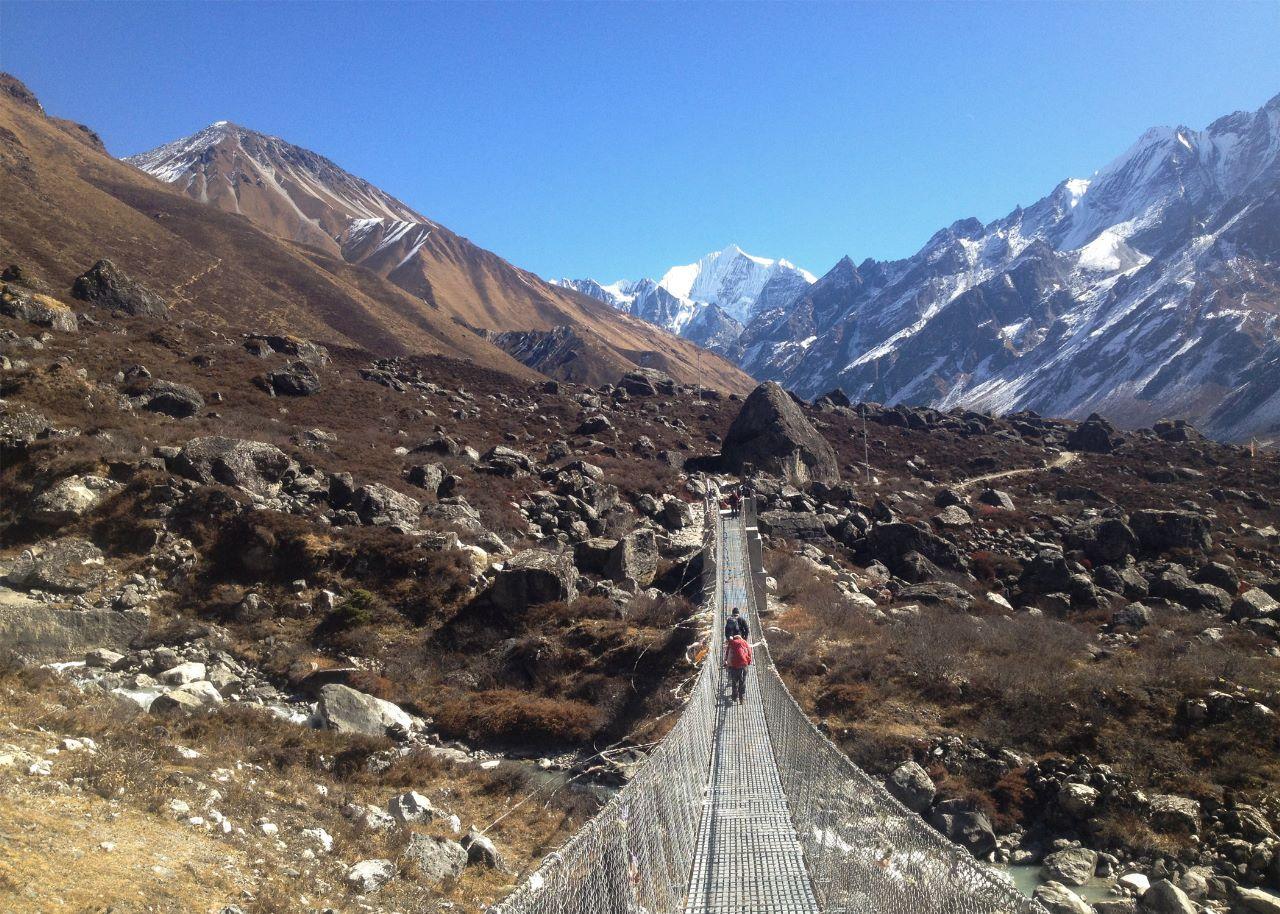
But here's what surprises most first-timers: the trail is well-maintained, clearly marked, and lined with teahouses every few hours. You will not be alone in the wilderness. You'll be walking a route used by thousands of people every season, with hot meals, warm beds, and cold Everest beer waiting at the end of each day. The infrastructure in the Khumbu valley is genuinely impressive. This is not the wild unknown — it's a challenging mountain route with real support systems along it.
What Actually Makes EBC Hard
1. Altitude — the only real enemy
If you took the EBC trail and dropped it to sea level, almost any active adult could walk it without serious difficulty. The terrain is rocky and uneven in places, the paths are clear, and the climbs are long but not technical. It's a long walk — not a climb.
What transforms it from a challenging long-distance hike into something genuinely serious is altitude. At Everest Base Camp (5,364m), the air contains roughly half the oxygen of sea level. Your body works twice as hard to do the same things. Climbing a short flight of steps feels like running. Sleeping becomes difficult. Your appetite disappears. Your head may throb persistently.
Here's the part that surprises people most: altitude affects everyone differently. Highly trained athletes have been forced to turn back by severe altitude sickness. Sedentary people in their 60s have sailed to Base Camp without a headache. There is no reliable predictor — not fitness level, not age, not previous high-altitude experience.
This is exactly why acclimatisation days — and refusing to rush — are the single most important factor in your success.
2. Duration
EBC is not a weekend challenge. A standard itinerary is 12–14 days, with walking days of 5–8 hours each. Even if each individual day feels manageable, the cumulative fatigue builds. By Day 9 or 10, your legs will be tired. Your pack will feel heavier. The climbs will feel steeper than they actually are.
Mental endurance matters as much as physical stamina. Bad weather delays, persistent headaches, long days in cloud with no mountain views — your ability to stay positive and keep moving when everything feels hard is what separates people who finish from people who don't. The trekkers who reach Base Camp aren't always the fittest. They're usually the most stubborn.
3. Cold and mountain conditions
Above Namche Bazaar, temperatures drop dramatically — especially at night. In October (peak season), nights at Gorak Shep, the last village before Base Camp, can drop to −15°C or lower. Teahouse rooms are basic; most have no central heating. You'll sleep in an expedition-rated sleeping bag wearing thermal base layers and still feel the cold creeping in through the walls.
Wind, snow, and trail ice are all possible above 4,000m, even in the best seasons. Your gear must be adequate. This is not the place to test a budget sleeping bag.
What Doesn't Make It Hard (Contrary to What People Assume)
Before you talk yourself out of it, here's what EBC is not:
- No technical climbing whatsoever. Not a single rope, crampon, or ice axe needed. EBC is a trekking route used by ordinary people.
- You don't carry much. Most trekkers hire a porter for their main bag. You walk with a small daypack of 8–10kg.
- Food and shelter every few hours. The Khumbu has a teahouse every 2–3 hours on the trail. You won't go hungry or sleep outside.
- A good guide monitors everything. Professional local guides spot the early signs of altitude sickness before you even notice them yourself.
- No time pressure. You set the pace. Slow is not just acceptable — it's the correct strategy.
What Fitness Level Do You Actually Need?
You do not need to be an athlete. You do not need a history of trekking. But you do need to be honest with yourself about your current fitness and commit to preparation in the months before you go.
The minimum baseline we'd suggest before arriving in Kathmandu:
- You can walk continuously for 5–6 hours without significant distress
- You can handle 600–800m of elevation gain in a single day
- You can repeat this on consecutive days — not just once
- You have no serious unmanaged cardiovascular or respiratory conditions
If you're not there yet, you can reach this level with 3–6 months of consistent preparation. The best training for EBC is simply walking uphill with a pack — no expensive gym memberships required.
| Your Current Fitness | EBC Readiness | Training Time Needed |
|---|---|---|
| Hike regularly (5+ hrs/week) | Ready — fine-tune for altitude | 8 weeks |
| Walk occasionally, active lifestyle | Nearly ready | 12 weeks |
| Gym 3–4x per week, limited hiking | Needs trail-specific work | 12–16 weeks |
| Mostly sedentary but healthy | Possible with commitment | 20–24 weeks |
| Serious unmanaged health conditions | Consult a specialist first | Doctor's guidance required |
What Age Can You Do EBC?
We've guided trekkers as young as 6 and as old as 82. The oldest verified person to reach Everest Base Camp was in their 80s. Age is genuinely not the barrier — health and fitness are.
A 65-year-old who hikes regularly and has no cardiovascular issues will comfortably outperform a 35-year-old who smokes, doesn't exercise, and tries to rush the acclimatisation schedule.
That said, older trekkers should get a full medical check-up before booking, discuss altitude medications like Diamox with their doctor, choose an itinerary with extra acclimatisation days, and be completely honest about pace — there is no shame in being the slowest person on the trail.
For children: we generally don't recommend EBC for children under 10. Young children may not be able to identify or communicate the early symptoms of altitude sickness clearly, which creates a genuine safety risk above 4,000m. Poon Hill or the Annapurna foothills are better family introductions to Nepal trekking.
Altitude Sickness — The Real Talk
Acute Mountain Sickness (AMS) is real, it is common, and it is the primary reason people turn back on the EBC trek. Roughly 50% of trekkers experience some symptoms of AMS — usually mild headaches, fatigue, and reduced appetite — at some point. This is normal. Most cases are mild and resolve with a rest day or a small descent.
Normal — manageable with rest:
- Mild headache that improves with rest or paracetamol
- Fatigue and reduced appetite
- Difficulty sleeping (very common above 3,500m)
- Slight shortness of breath on steep sections
Warning signs — descend immediately, no exceptions:
- Headache that does not improve with rest or medication after several hours
- Vomiting or inability to keep fluids down
- Loss of coordination or balance
- Confusion or unusual behaviour
- Breathlessness at rest
- Persistent dry cough that develops above 4,000m

The golden rule of altitude has never changed: "If in doubt, go down." Descending even 300–500 metres brings rapid relief. Don't wait to see if it improves at altitude — descend now. You can always go back up after recovery.
Diamox (acetazolamide) is a prescription medication that accelerates your body's acclimatisation process. Many trekkers use it preventatively. Talk to your GP or a travel medicine clinic before the trek. It is not a substitute for proper acclimatisation days, but it can make a real difference for susceptible individuals.
How to Train for EBC (A Practical 16-Week Guide)
The best training for EBC is simple: walk uphill with a pack, regularly, for months. Here's a realistic structure that works for most people starting from moderate fitness:
| Phase | Weeks | Weekly Focus | Key Goal |
|---|---|---|---|
| Base | 1–4 | 45–60 min cardio, 4–5x/week (walking, cycling, swimming) | Build aerobic base and consistency |
| Hills | 5–8 | Day hikes with 5kg pack; add stair climbing 3x/week | First back-to-back hike days |
| Endurance | 9–12 | 5–6 hr hikes with 7–8kg pack; add leg strength work | 3 consecutive active days without soreness |
| Peak | 13–16 | Two back-to-back long days (6+ hrs each); maintain strength | Simulate cumulative fatigue of the trek |

Beyond cardio, don't neglect strength. Strong quads and glutes make descents significantly easier — and the long descent back from Base Camp can be brutal on weak legs. Include squats, lunges, and step-ups two or three times a week throughout your training.
One thing most training guides skip: practice sleeping in the cold. A winter camping trip or even sleeping with the window open in cold weather helps your body adjust to the discomfort you'll face above 4,000m.
What Does a Typical Day on EBC Actually Look Like?
Understanding the daily rhythm before you arrive removes a lot of anxiety. Here's an average trekking day on the EBC route:
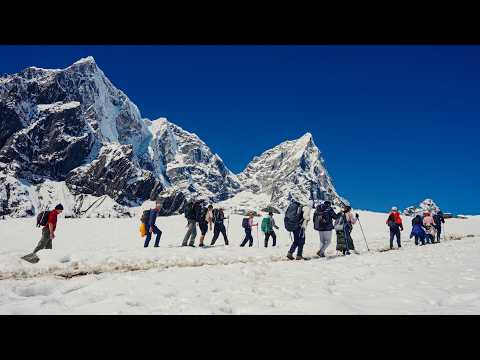
6:30 AM — You wake up to the sound of other trekkers packing in the room next door. Pull on thermal layers before you leave the sleeping bag — the teahouse is cold. Breakfast is porridge, eggs, or toast with jam, washed down with Nepali milk tea or instant coffee. The first meal of the day always tastes better than it should.
7:30–8:00 AM — Hit the trail. The morning air is sharp and clear, and if the weather is with you, the Himalayan peaks glow orange in the early light. The first hour always feels the best — legs fresh, scenery perfect, everything ahead of you.
10:30–11:00 AM — Tea break at a small teahouse. Hot lemon tea, maybe biscuits. Your guide will check in — how's your head? Any unusual breathlessness? How did you sleep? These questions are more important than they sound.
12:30–1:00 PM — Lunch stop. Dal bhat — Nepal's national dish of rice, lentil soup, curried vegetables, and pickles — is the single best thing you can eat on the trail. It's unlimited portions, energy-dense, and after your third day eating it, you'll start craving it. Trust us.
2:30–3:30 PM — Arrive at the day's teahouse. Boots off. Heavy sigh of relief. Order a hot drink and sit somewhere warm. The afternoon hours before dinner are for writing, reading, card games, or simply sitting outside and staring at mountains that make you feel genuinely small. Don't rush this. It's part of the experience.
6:30 PM — Dinner. The menus up here are surprisingly varied — pasta, pizza, momos, thukpa, garlic soup. Eat everything. Force yourself if you have to; the altitude suppresses appetite but your body still needs the calories. By 9 PM you'll be asleep without trying.
How Does EBC Compare to Other Nepal Treks?
| Trek | Max Altitude | Duration | Difficulty | Technical? |
|---|---|---|---|---|
| Poon Hill | 3,210m | 4–5 days | 3/10 — Easy | No |
| Annapurna Base Camp | 4,130m | 10–12 days | 5/10 — Moderate | No |
| Everest Base Camp | 5,364m | 12–14 days | 6/10 — Strenuous | No |
| Annapurna Circuit | 5,416m | 15–18 days | 7/10 — Strenuous | No |
| Manaslu Circuit | 5,160m | 14–18 days | 7/10 — Strenuous | Restricted area |
| Island Peak Climb | 6,189m | 18–20 days | 8/10 — Technical | Yes |
EBC is harder than Annapurna Base Camp primarily due to altitude (5,364m vs 4,130m) and duration. If you've done ABC successfully and want more challenge, EBC is the natural next step.
Who Should NOT Attempt EBC?
Honesty matters here. EBC is not appropriate for everyone, and attempting it with the wrong health profile puts you, your guide, and rescue services at unnecessary risk.
You should not attempt EBC without specialist medical clearance if you have serious uncontrolled heart conditions or previous cardiac events, chronic obstructive pulmonary disease or severe asthma, uncontrolled high blood pressure, severe anaemia, sickle cell disease, or if you've had major surgery within the last 6 months.
If you have any pre-existing conditions, see a doctor who specialises in altitude or travel medicine — not just a general GP. Many conditions are entirely manageable with the right preparation and medication. But you need expert advice tailored to your situation, not a Google search and a hope for the best.
10 Tips From Our Guides to Make Your EBC Trek Easier
- Go slower than you think you need to. Slower than feels necessary. Slower than your pride wants. The porters carrying 30kg packs will still overtake you. That's fine.
- Drink 3–4 litres of water every day. Dehydration accelerates the symptoms of altitude sickness. Start drinking before you feel thirsty. Urine colour is your best hydration check — aim for pale yellow.
- Never skip an acclimatisation day. The rest days in Namche Bazaar and Dingboche exist for a reason. Use them to take a short walk to higher altitude and return to sleep lower. Don't spend them lying in bed.
- Eat, even when you don't want to. Altitude destroys your appetite. Force yourself to eat at every meal. Your body is burning more calories than normal at altitude and needs the fuel to keep functioning.
- Always use a local guide. Not just for navigation — for your safety. A good guide has seen every presentation of altitude sickness. They will spot the warning signs before you notice them.
- Hire a porter. Carrying more than 8–10kg above 4,000m is exhausting and completely unnecessary. A porter costs less than $25 per day and carries your main bag. Tip them generously.
- Break in your boots before you arrive. Not on Day 1 in Kathmandu. In the months before. New boots above 4,000m with developing blisters is a miserable and entirely avoidable experience.
- Dress in layers, not one big jacket. Temperatures swing 25–30°C between a cold morning start and a warm midday valley. You will be putting on and taking off layers constantly.
- Follow "climb high, sleep low." Above 3,000m, never sleep more than 300–500m higher than where you slept the night before. The acclimatisation days in your itinerary are built around this principle.
- Remember why you came. On the hard days — and there will be hard days — come back to the reason you booked this. The view from Kala Patthar at dawn with Everest turning gold in the first light is one of the most extraordinary sights on this planet. Every sore muscle and every cold night is the price of admission for something that very few human beings ever get to see. It is worth it.
Our Honest Verdict: Should You Attempt EBC?
Yes. If you're reading this page with any level of genuine interest, you're probably already the kind of person who should go.
The EBC trek is one of the most accessible high-altitude experiences in the world. It is not easy — but it was designed to be done by ordinary people with ordinary fitness and an extraordinary desire to see something real. The trail infrastructure is excellent. The Sherpa communities along the route are among the most welcoming people you will ever meet. And the mountains — the mountains are unlike anything else on this earth.
We have watched hundreds of people arrive in Kathmandu full of quiet doubt and leave with stories they'll tell for the rest of their lives. The doubt is normal. The summit is real. The only people who regret attempting EBC are the ones who didn't go.
If you want to go, start training today. Our 14-day EBC trek includes an experienced local guide, all accommodation, permits, and the acclimatisation schedule that actually works. If you're still figuring out the budget, our complete EBC cost guide for 2026 breaks down every expense so there are no surprises.
Frequently Asked Questions About EBC Trek Difficulty
Is the Everest Base Camp trek hard for beginners?
Yes, EBC is challenging for beginners — but it's one of the most beginner-accessible high-altitude treks in the world. Many first-time trekkers complete it successfully each year. The key is adequate preparation (4–6 months of training), hiring a local guide, and following the acclimatisation schedule without rushing. Previous trekking experience helps but is not essential.
How many people fail to complete the EBC trek?
Approximately 10–15% of trekkers who begin the EBC trek do not reach Base Camp. The primary reasons are altitude sickness, injury, and weather delays. Among trekkers who travel with a professional guide and follow a proper acclimatisation itinerary, the success rate is significantly higher — around 85–90%.
Do I need prior trekking experience for EBC?
No prior trekking experience is required, but it helps enormously. If you've never done a multi-day hike before, we strongly recommend completing at least one 2–3 day hike with a pack before your EBC trek. This gives you a realistic sense of what your body can handle and helps you identify any gear issues before they become problems at 4,000 metres.
How many hours per day do you walk on the EBC trek?
On a standard 14-day itinerary, most walking days are 5–7 hours of actual trekking. Some days — particularly the approach to Base Camp and the ascent to Kala Patthar — can be 7–8 hours. Acclimatisation days typically involve a shorter 2–3 hour walk to higher elevation and a return to sleep lower.
Can an unfit person complete EBC?
Not without preparation. While EBC requires no technical skills, it demands real physical stamina over 12–14 consecutive days at altitude. Someone who is currently very unfit can absolutely become fit enough — but they need 5–6 months of dedicated training. Attempting EBC without preparation puts you at significantly higher risk of altitude sickness, injury, and failure to complete.
Is EBC harder than Kilimanjaro?
EBC is generally considered harder than Kilimanjaro for most people, for two reasons: duration (14 days vs 7–8 days) and acclimatisation profile. Kilimanjaro involves rapid ascent to 5,895m on a tight schedule, which means altitude sickness rates are actually very high. EBC takes longer and acclimatises more gradually, but the sustained effort over two weeks is more demanding overall.
What is the hardest day on the EBC trek?
Most trekkers say Day 12 — the pre-dawn climb from Gorak Shep (5,140m) to Kala Patthar (5,545m) — is the hardest single day. You start in darkness and bitter cold, the air is thin, and every 10 steps requires a pause. But it delivers the most extraordinary sunrise view in the Himalaya. The second hardest is the long push from Lobuche to Gorak Shep on Day 11.
Do I need to be able to run to do EBC?
No. You do not need to run, and running ability is not a useful predictor of EBC success. Many excellent marathon runners have struggled at altitude. What matters is sustained aerobic endurance — the ability to keep walking at a slow, steady pace for many hours. Walking, hiking, and cycling build this better than running for most people.
How do I know if I'm fit enough for EBC?
A practical test: can you walk uphill with a 7–8kg pack for 5 hours continuously, without significant distress, and then do it again the next day? If yes, you're probably fit enough. If no, you need more training. A doctor's check-up is also important — cardiovascular fitness is the foundation, but heart and lung health matters too, especially at high altitude.
What percentage of trekkers get altitude sickness on EBC?
Roughly 50% of EBC trekkers experience some symptoms of Acute Mountain Sickness (AMS) during the trek — most commonly mild headaches and fatigue. These are generally manageable with rest and proper acclimatisation. Severe AMS requiring emergency descent affects around 5–10%. Proper acclimatisation days, slow ascent pace, and staying well-hydrated reduce your risk significantly.
Is EBC safe for people over 60?
Yes, with proper medical clearance and preparation. Many trekkers in their 60s and 70s successfully complete EBC each year. The most important steps for older trekkers are a thorough cardiovascular check-up before booking, an itinerary with extra acclimatisation days, complete honesty about daily symptoms with your guide, and zero ego about pace.
How does EBC compare in difficulty to Annapurna Base Camp?
EBC is harder than Annapurna Base Camp (ABC). The main differences are maximum altitude — EBC reaches 5,364m vs ABC's 4,130m — and trek duration (14 days vs 10–12 days). The greater altitude at EBC means a significantly higher risk of altitude sickness and more cumulative physical demand. ABC is an excellent warm-up trek for EBC — many trekkers do ABC one year and EBC the next.
Can you do EBC without a guide?
Technically yes — the trail is well-marked and thousands of trekkers do it independently. However, we strongly advise against going without a guide, particularly for first-time visitors. A local guide monitors your health symptoms, manages emergencies, carries altitude medications, communicates with teahouse owners and rescue services in Nepali, and makes the judgment calls about descending that are difficult to make for yourself when you're lightheaded and emotionally invested in reaching Base Camp.
What is the highest point on the EBC trek?
The highest point on a standard EBC itinerary is Kala Patthar at 5,545 metres — not Base Camp itself. Everest Base Camp sits at 5,364m, but it doesn't offer a view of the mountain peak (Everest is hidden behind the Khumbu Icefall from Base Camp). Kala Patthar, reached in the pre-dawn hours, gives the iconic unobstructed view of Everest's south face that you see in all the photographs.
What is the overall success rate for the EBC trek?
Among trekkers who use a professional guide and follow a proper acclimatisation itinerary, the success rate is approximately 85–90%. Among independent trekkers who rush the schedule or push through warning signs, it is significantly lower. The single most reliable predictor of success is not fitness — it is whether you follow the acclimatisation schedule and descend when your guide says to.