


Nepal’s Sacred Pulse - A Guide to Living Culture
In moments like this, Nepal cultural travel reveals itself as something entirely distinct from ordinary sightseeing. You are not looking at history trapped behind museum glass. You are witnessing a living, breathing spiritual ecosystem.
Whether you arrive as a devout practitioner, a secular humanist, or simply a curious wanderer, this country asks only for your presence. Religion here is woven into morning tea, mountain trails, and the greetings passed between strangers.
This in-depth travel guide to Nepal will bring you to its most significant sacred sites. You will gain insight into how to go about it with respect. More importantly, you will gain an understanding of why the spiritual energy of the Himalayas will transform each traveller.
Where Traditions Share a Single Breath
Nepal is known around the world as the birthplace of Siddhartha Gautama, the Buddha. It is also one of the most important homes of the Hindu faith, where epic narratives are rooted into the land.
What is so remarkable about this country is that there is an intangible, genuine harmony of these traditions. Stroll around the Kathmandu Valley, and you will find Hindus and Buddhists worshipping at the same temples. They celebrate the same festivals, worship in the same courtyards and understand the greatness of faith.
The diversity of faiths goes deeper than the two dominant religions. The local Kirant animism dominates the east hills and the pre-Buddhist Bon tradition in Tibet still resonates in the high mountains. And robust Islamic populations have flourished for millennia in the southern Terai region.
For the international traveler, understanding this landscape requires letting go of rigid categories. Religion is not an occasional weekend affair, but the order of the day. It governs the architectural designs of cities and the year's agricultural cycle.
Pashupatinath Temple
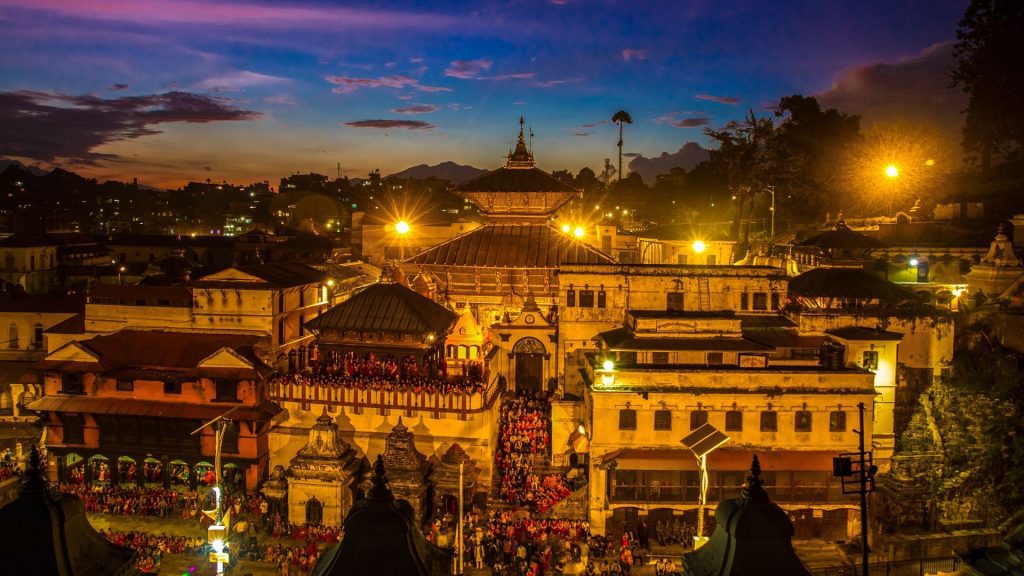
Pashupatinath is the holiest Hindu pilgrimage in Nepal, situated on the east of Kathmandu. It extends along the Bagmati Riverbank, a collection of ashrams, temples and ghats (cremation sites). Here faith confronts the inescapable reality of death. You come just after dawn, the exhalations of marigolds and wood smoke. On the other side of the small river, families tenderly prepare their departed for their final rituals on stone slabs. Nearby, monks smothered in white ash sit in contemplation of life's transience.
Witnessing this cycle requires emotional grace and a deliberate step back. To engage respectfully, you must observe without intruding. Lower your camera during cremations to respect the families' emotions.
A Traveler’s Insight
While the main temple is strictly for Hindus, the eastern terraces offer an open perspective for all visitors. The most powerful moments often happen quietly away from the main ghats. Look for the small, ancient Shiva lingams scattered through the surrounding forest, where solitary pilgrims offer morning water.
Boudhanath Stupa
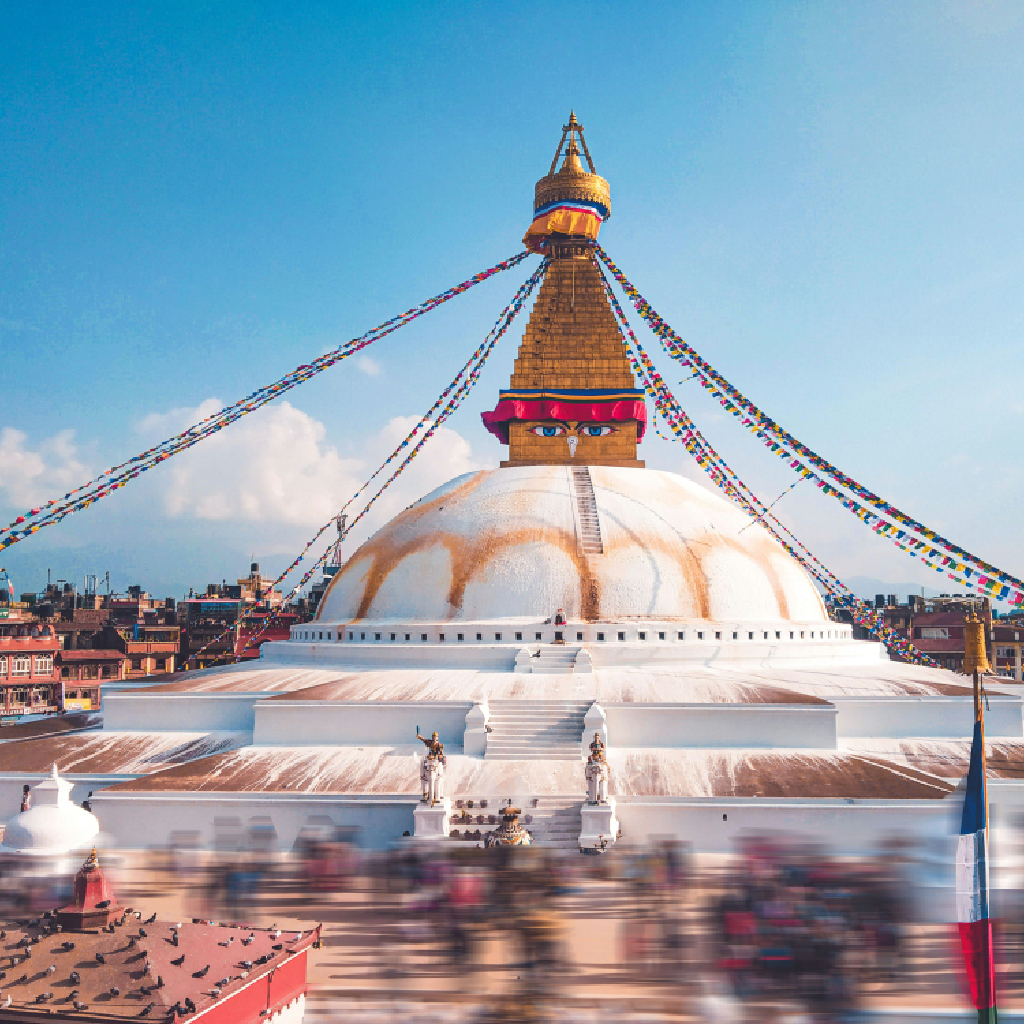
A short drive to the west is the Buddhist stupa of Boudhanath, one of the world's largest. It is the spiritual hub of the Tibetan Buddhist community in Nepal, and home of exiles. The enormous mandala looms large on the horizon, its painted eyes watching over the busy streets.
Join the evening kora, the clockwise circumambulation practiced by hundreds of pilgrims daily. You fall into step beside monks in maroon robes and grandmothers spinning handheld prayer wheels. The collective murmur of ancient mantras vibrates through the courtyard, grounding you in the present moment.
Navigating the Space
Circulate around the stupa and prayer wheels in a clockwise direction. This represents the sun's natural course and follows the natural progression of Buddhist cosmology. Turn the large brass prayer wheels with your right hand and a sense of tenderness.
The Living Goddess
In the heart of Kathmandu’s Durbar Square lives the Kumari, a young girl revered as the living embodiment of the goddess Taleju. Chosen through an intricate, centuries-old ritual process, she resides in the beautifully carved Kumari Chowk courtyard.
A visit to her home provides an insight into an inexplicable tradition. Wandering through the wooden archway, you enter a peaceful brick-paved courtyard, secluded from the bustle of the city. People stand in silence, waiting for the Kumari to emerge from her elaborately carved and painted wooden window.
Courtyard Etiquette
Absolute silence is expected within the courtyard. Photography of the Kumari is strictly forbidden, without exception. When she appears at the window, simply observe the moment with reverence. It is a brief, quiet exchange that connects you directly to a tradition older than the surrounding palaces.
Monastery Life in the Himalayas
Outside the Kathmandu Valley, Nepalese temples and monasteries can be found at the highest settlements on the planet. Monasteries such as Tengboche in the Everest region or Thubten Choling in Solukhumbu are important community spaces. They provide refuge from the elements, and a place for deep reflection.
Imagine waking at dawn in the freezing mountain air to the sudden, deep blast of a traditional horn. You step into a dimly lit prayer hall, wrapping your coat tightly around you. The rhythmic chanting of monks creates a grounding counterpoint to the fierce winds blowing outside.
Visiting with Intention
It's possible to visit many high-altitude monasteries during dawn and dusk prayers. Take off your shoes, make a donation in the small box, and sit on the wall. Don't walk in front of the praying monks, and wear warm clothing - these stone rooms are freezing.
Timing Your Journey Around Sacred Celebrations
Everything in Nepal is governed by the moon and the gods. Unlike the festivals of other countries, which are staged for tourists, festivals in Nepal are civic and spiritual responsibilities that halt the entire valley. When you attend the festivals, you see things differently.
On Tihar, the festival of lights, you walk down streets lit up by thousands of oil-filled clay lamps. On Losar, the Tibetan New Year, you smell the scent of juniper burning and you hear the joyful greeting of blessings. These are moments when life and religion becomes intertwined.
Engaging Meaningfully
Foreign visitors are accepted with open arms during the holidays, if they are polite. Accept invitations to eat ritual foods. If you are offered a tika, a dot of red paste on the forehead, bend your head down. It is a greeting of welcome and blessing.
Discovering Religion Beyond the Monuments
The heart of spiritual Nepal is often found in simple, unheralded places. The great stupas and the famous temples are stunning, but faith is pervasive. It's in the day-to-day, off the beaten track places.
You feel it in the smattering of red vermillion paste on an otherwise ordinary rock along a hiking path. You smell it in the morning incense drifting from a tiny bakery door. You see it in the way a bus driver touches a dashboard deity before starting a mountain engine.
Observing the Details
Pay attention to the small shrines tucked into the walls of ancient alleys. Notice the offerings of rice and marigolds left on doorways before the sun rises. Recognizing these quiet acts of faith helps you appreciate the true scale of Nepal’s living heritage.
Practical Information for Your Journey
A meaningful cultural exploration requires sensible planning. Understanding the logistics ensures you can focus entirely on the experience rather than the stress of navigation. Here are the essentials for planning your perfect Nepal itinerary.
Seasonal Rhythms
The best time to visit Nepal for cultural immersion aligns with major festivals and clear skies.
October to November: The post-monsoon air is crystal clear. This window coincides with Dashain and Tihar, offering spectacular festival experiences.
February to March: Excellent for witnessing Losar celebrations and the vibrant festival of Holi.
April to May: Warmer weather brings Buddha Jayanti, marking Buddha’s birthday, and is ideal for visiting high-altitude monasteries.
Monsoon and Winter: June to August brings heavy rains that complicate travel, while December to January offers clear skies but freezing temperatures in the mountains.
Navigating Logistics
Your Nepal travel cost will depend on your preferences, but cultural travel is relatively affordable. There are affordable guesthouses with clean, basic amenities, while the Kathmandu Valley has beautiful boutique heritage hotels converted from historic palaces. .
Most nationalities can secure a visa-on-arrival at Kathmandu's international airport. When getting around, taxis and local buses are abundant. However, hiring a knowledgeable local guide is the single best investment you can make for interpreting complex religious sites.
Finding Your Bearings with Himalayan Social Journey
Stepping into a culture so layered and rich can occasionally feel overwhelming. Trying to piece together the historical context of a morning prayer ceremony while reading a guidebook often fractures the experience. This is where having a culturally rooted partner transforms your trip entirely.
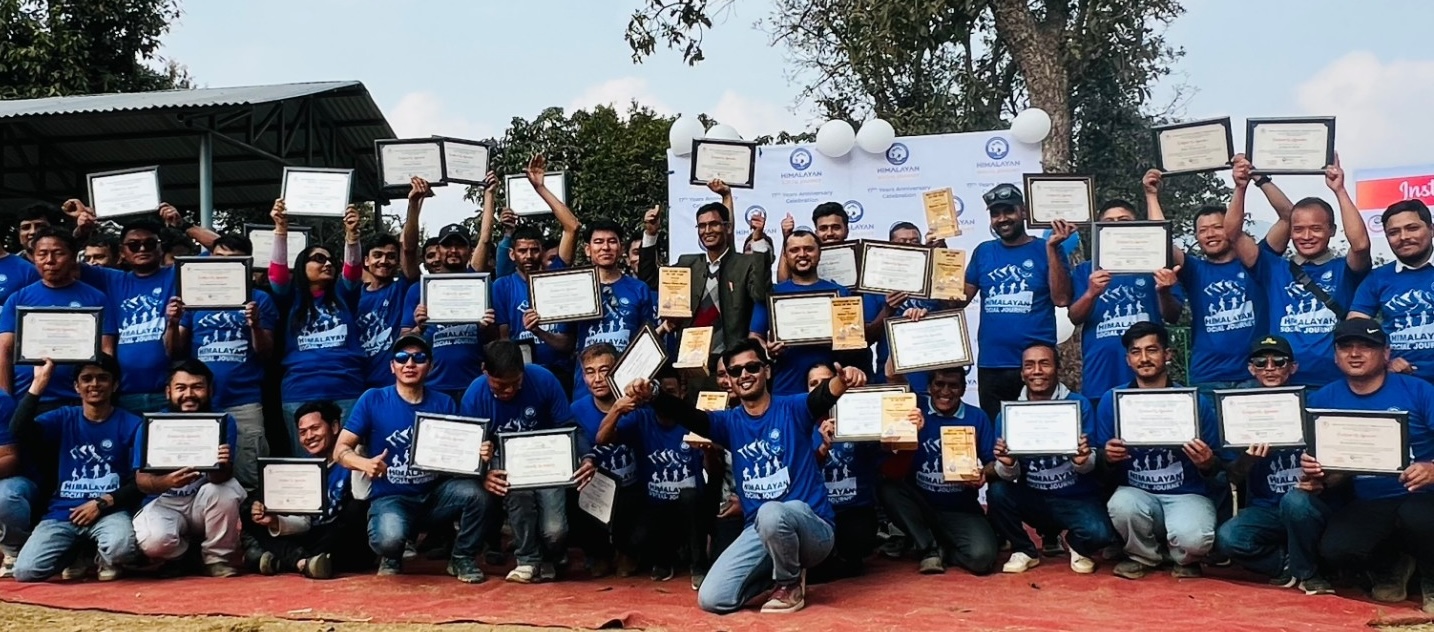
Imagine walking through the quiet, predawn alleys toward Pashupatinath, guided by someone who grew up attending those very rituals. Himalayan Social Journey specializes in exactly this kind of immersive, deeply respectful travel. They help international travelers navigate these profound spaces not as tourists, but as welcome guests.
Through their locally guided itineraries, you gain access to the nuanced, lived realities of Nepal's spiritual landscape. They provide the cultural translation necessary to understand the depth of what you are witnessing, ensuring your presence is always respectful and enriching.
The Journey Inward
Nepal changes the way you see the world because it proves that devotion can still be a communal, lived experience. It is a profound confrontation with humanity’s search for meaning. The rituals performed here have survived empires, earthquakes, and the rush of modernity.
Prepare for an experience beyond the top. Be a student and a spectator to one of the world's longest-running spiritual sites. The tranquility that these valleys bring with them will come home with you.
Long after you leave, the memory will remain sharp. It will be the weight of a brass prayer wheel against your palm. It will be the echo of a temple bell cutting through the morning mist, and the quiet smile of a pilgrim who needs no shared language to wish you well.